

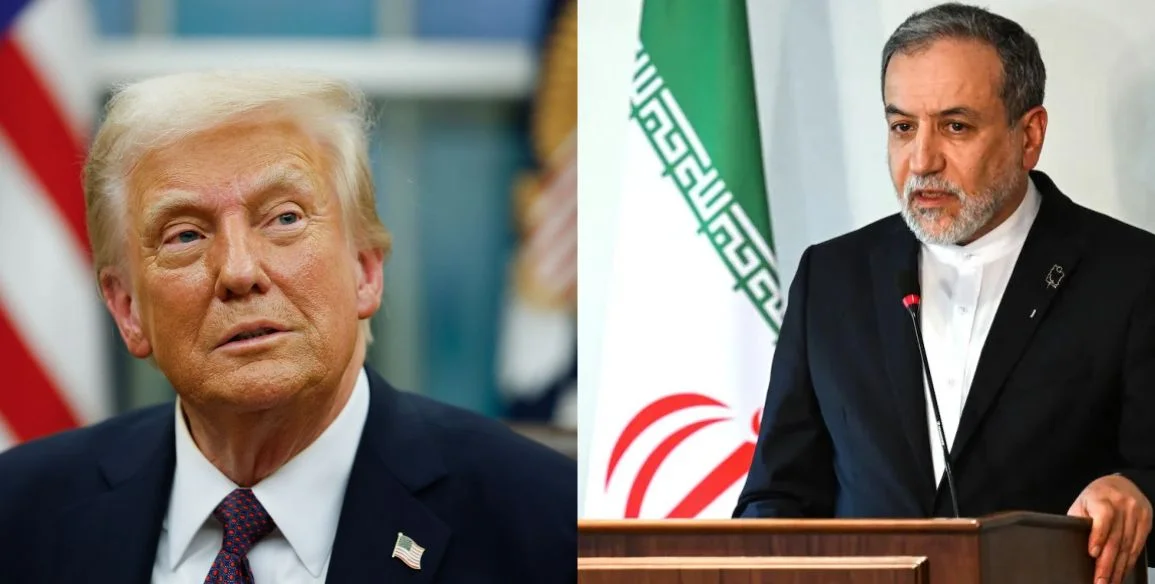

Authorities in Tehran have responded sharply to remarks made by Donald Trump, asserting that Iran—not the United States—will determine when military operations against American and Israeli targets come to an end.
In a statement released Monday, the Islamic Revolutionary Guard Corps (IRGC) said the balance of power in the region had shifted and that Iran’s armed forces now hold control over how the conflict unfolds.
“It is we who will determine the end of the war,” the IRGC said.
“The equations and future status of the region are now in the hands of our armed forces; American forces will not end the war,” the statement added.
The response came after Trump suggested that the ongoing conflict involving Iran, Israel, and the United States could end soon.
Trump Predicts Conflict Could Be Short
Speaking to Republican lawmakers at his golf club near Miami, Trump described the US military action in the Middle East as a limited operation aimed at neutralising threats.
“We took a little excursion to the Middle East to get rid of some evil. And I think you’ll see it’s going to be a short-term excursion,” he said.
However, the US president also warned that the conflict could escalate if Iran attempts to disrupt global oil supplies, particularly through the Strait of Hormuz, one of the world’s most important shipping routes for crude oil.
Hours later, Trump posted a stronger warning on the social media platform Truth Social.
“If Iran does anything that stops the flow of oil within the Strait of Hormuz, they will be hit by the United States of America twenty times harder than they have been hit thus far,” he wrote.
Oil Markets React as Conflict Disrupts Energy Supply
The war has already begun to affect global energy markets. Disruptions across the Gulf region have cut off significant supplies of oil and natural gas, pushing fuel prices higher in the United States and other markets.
Oil prices briefly surged to their highest levels since 2022 after Iran announced that Mojtaba Khamenei would succeed his late father, Ali Khamenei, as the country’s supreme leader. Analysts interpreted the leadership transition as a sign that Tehran intends to maintain a hard-line stance amid the ongoing conflict.
Despite the initial spike, oil prices later eased while US stock markets rose on hopes that the confrontation might not turn into a prolonged war.
Russia Proposes Diplomatic Settlement
Diplomatic efforts are also underway to prevent further escalation.
Trump spoke with Vladimir Putin, the president of Russia, on Monday to discuss the war and potential paths toward de-escalation.
According to Putin’s foreign affairs adviser Yuri Ushakov, the Russian leader suggested ideas for a “quick political and diplomatic settlement” after holding discussions with Gulf leaders and Iranian President Masoud Pezeshkian.
Strait of Hormuz Becomes Global Flashpoint
The conflict has drawn global attention to the Strait of Hormuz, a strategic waterway through which nearly 20% of the world’s crude oil supply normally passes.
Iran has effectively blocked the passage of most oil tankers through the strait in retaliation for US and Israeli strikes. According to a report by the news agency Agence France‑Presse, at least 10 vessels in or near the strait have been attacked since the blockade began.
The disruption has triggered alarm across the global economy and intensified diplomatic efforts to reopen the shipping route.
Europe and Gulf Nations React to Energy Threat
Emmanuel Macron, president of France, said his country and its allies were working on a “purely defensive” mission aimed at restoring safe passage through the strait.
Meanwhile, global shipping giant Mediterranean Shipping Company (MSC) announced that it had halted certain export shipments from the Gulf region, leaving cargo temporarily stranded.
Energy infrastructure in the Gulf has also come under threat. Following strikes on the Bapco oil facility in Bahrain, the state-owned energy company declared force majeure, warning that the attacks could disrupt its export commitments.
Similar warnings have been issued by energy companies in Qatar and Kuwait.
Saudi Arabia Says It Foiled Drone Attack
Regional tensions continued to escalate after Saudi Arabia reported intercepting a drone attack targeting an oil field in the kingdom’s eastern region near the border with the United Arab Emirates.
The Saudi Ministry of Defence said the attack was successfully thwarted before it could damage energy infrastructure.
Growing Risk to Global Economy
The escalating conflict has heightened fears of a broader energy crisis, as prolonged disruptions in the Gulf could impact oil shipments, shipping routes, and international trade.
With military tensions rising and diplomatic efforts intensifying, the future of global energy supply and regional stability may largely depend on how the standoff between Iran, the United States and its allies evolves in the coming weeks.