

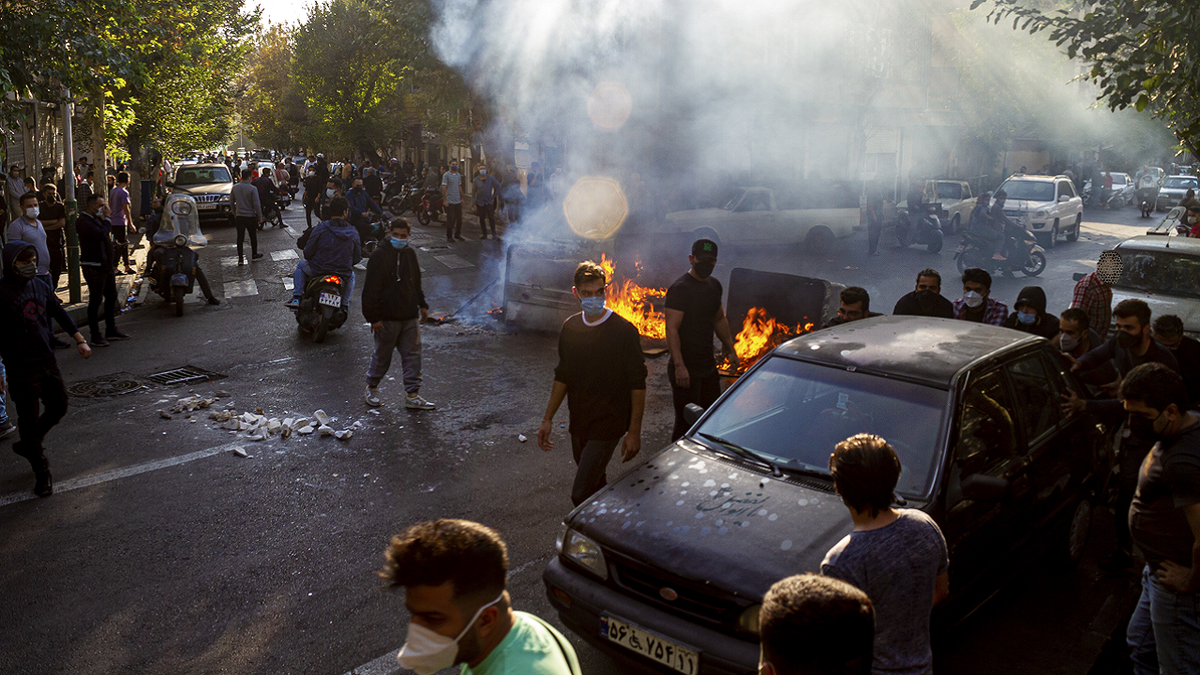

At least 62 people have been killed and more than 2,300 detained as widespread protests across Iran, initially sparked by the country’s worsening economic crisis, have evolved into the most serious challenge to the Islamic Republic in years. The unrest, which began in late December, has drawn sharp reactions from Iran’s leadership, strong condemnation from Europe, and vocal support from US President Donald Trump.
European leaders on Friday urged Tehran to allow peaceful demonstrations without reprisals, after Iranian authorities signalled that security forces would intensify their crackdown on protesters. The appeal came amid growing reports of deadly violence, though the full extent of the unrest remains unclear due to a sweeping internet and communications blackout imposed by the Iranian government.
Khamenei Attacks Trump, Signals Crackdown
Supreme Leader Ayatollah Ali Khamenei dismissed Trump as having hands “stained with the blood of Iranians,” as state television aired footage of his supporters chanting “Death to America!” Addressing a crowd at his Tehran compound, the 86-year-old leader accused protesters of acting at Washington’s behest.
“Protesters are ruining their own streets in order to please the president of the United States,” Khamenei said. “Because he said that he would come to their aid. He should pay attention to the state of his own country instead.”
Iranian state media later labelled demonstrators as “terrorists,” language that many observers believe is setting the stage for a violent suppression similar to previous protest waves.
Iran’s judiciary chief, Gholamhossein Mohseni-Ejei, reinforced that message, warning that punishment for those involved “will be decisive, maximum and without any legal leniency.”
Europe Condemns Violence, Calls for Rights
Late Friday, German Chancellor Friedrich Merz, British Prime Minister Keir Starmer, and French President Emmanuel Macron issued a joint statement condemning reported killings of protesters and urging Iranian authorities to respect the right to peaceful expression.
“The use of lethal force against demonstrators is unacceptable,” the leaders said, calling on Tehran to allow citizens to voice grievances “without fear of reprisal.”
The Associated Press said it could not independently verify reports that Iranian security forces opened fire on protesters in Tehran on Friday.
Internet Blackout, Conflicting Accounts
Despite near-total shutdown of internet and international phone services, short videos shared by activists showed protesters chanting anti-government slogans around bonfires, with debris strewn across streets in Tehran and other cities.
State media blamed “terrorist agents” linked to the US and Israel for violence and arson, claiming public transport, private vehicles, and emergency services were attacked. It acknowledged “casualties” but did not provide nationwide figures.
Iranian television later reported that overnight violence killed six people in Hamedan, two members of the security forces in Qom, and additional casualties elsewhere.
Role of Reza Pahlavi and Growing Anger
The protests have also become the first major test of influence for Reza Pahlavi, the exiled son of Iran’s last shah, who fled the country before the 1979 Islamic Revolution. Pahlavi called for nationwide demonstrations at 8 p.m. on Thursday and Friday, a move analysts say significantly intensified the unrest.
“What turned the tide of the protests was Reza Pahlavi’s call for people to take to the streets,” said Holly Dagres, senior fellow at the Washington Institute for Near East Policy. “It became clear Iranians were responding seriously, aiming to oust the Islamic Republic.”
Chants of “Death to the dictator!” and “Death to the Islamic Republic!” echoed across neighbourhoods in Tehran, while some demonstrators shouted slogans praising the former monarchy — a striking development in a country where such calls once carried the death penalty.
Whether these chants reflect support for Pahlavi personally or simply nostalgia for life before clerical rule remains unclear.
Trump’s Warnings and US Stance
Trump has repeatedly pledged to support Iranian protesters, warning Tehran that the US would “come to their rescue” if peaceful demonstrators were violently killed. His threats have taken on added weight following a recent US military raid that seized former Venezuelan president Nicolás Maduro.
“Iran has been told very strongly that if they violently kill peaceful protesters, they’re going to have to pay hell,” Trump said in a recent interview, reiterating that warning again this week.
Pahlavi, in a statement Friday, appealed directly to Trump to intervene, saying Khamenei was using the communications blackout “to murder these young heroes.” The White House has not responded publicly to the appeal.
Trump stopped short of saying he would meet Pahlavi, suggesting instead that events should be allowed to unfold. In another interview, he even hinted that Khamenei might be looking for a way out of the country, saying, “It’s getting very bad.”
Economic Roots of the Unrest
Iran has experienced repeated waves of protests in recent years, driven by sanctions, inflation, and unemployment. The latest unrest followed the collapse of the rial, which plunged in December to nearly 1.4 million to the US dollar, devastating household purchasing power.
As protests spread to cities including Tehran, Zahedan, Hamedan and Qom, the combination of economic despair, political anger, and fierce repression has pushed the country into a volatile and uncertain phase — one that many analysts say could mark a turning point in Iran’s modern history.