


New Delhi: Iran is reportedly close to finalising a deal with China to acquire advanced anti-ship cruise missiles, even as the United States increases military pressure on the Islamic Republic and expands its presence in the Middle East.
According to a report by Reuters, negotiations between Tehran and Beijing have been underway for nearly two years. However, discussions are said to have accelerated following the 12-day conflict between Israel and Iran in June, which significantly altered the regional security environment.
Deal for CM-302 Missiles Near Completion
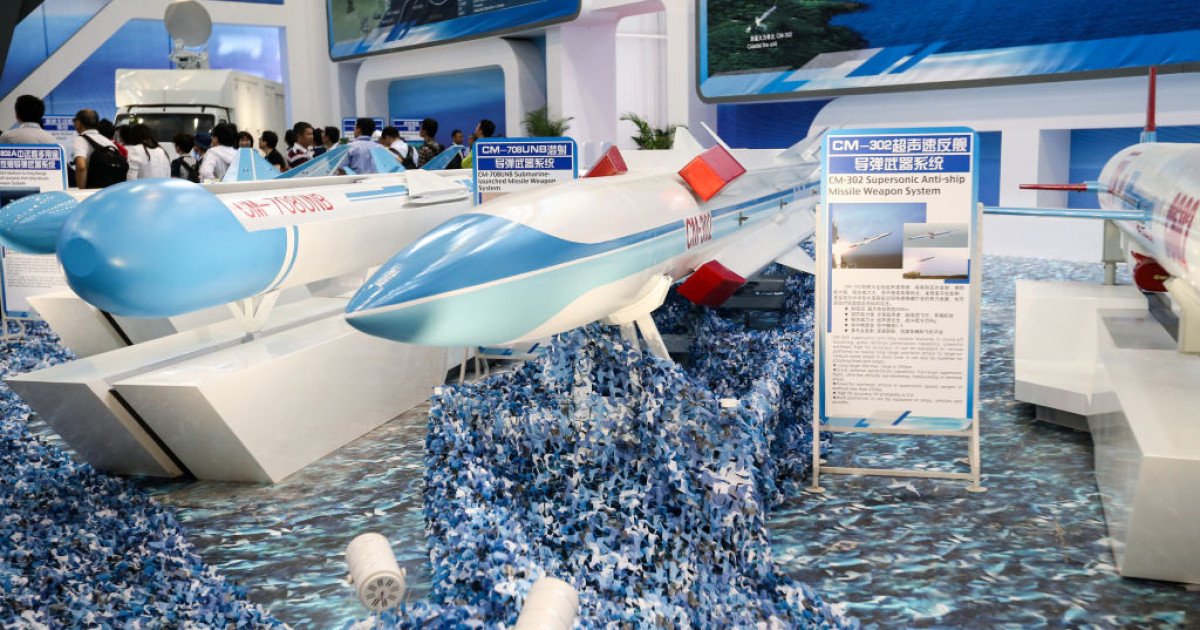
The proposed agreement centres around the Chinese-made CM-302 supersonic anti-ship cruise missile. While the deal is reportedly nearing completion, no delivery timeline has been confirmed so far.
China was a major weapons supplier to Iran during the 1980s, but military cooperation declined in the 1990s under mounting international pressure. The potential sale now signals a renewed phase of strategic engagement between the two nations.
In addition to the CM-302 system, Iran is also believed to be in talks with China for surface-to-air missile systems, man-portable air-defence systems (MANPADS), anti-ballistic weapons, and even anti-satellite capabilities, according to the report.
What Are CM-302 Missiles?
The CM-302 is a supersonic anti-ship cruise missile with an estimated range of around 290 kilometres. Designed to fly low and fast, it is engineered to evade advanced shipborne air defence systems.
China markets the CM-302 as one of the world’s most capable anti-ship missiles, claiming it can target and potentially sink major naval assets such as aircraft carriers and destroyers. The missile system can reportedly be deployed from ships, aircraft, or mobile ground platforms and may also be used against land-based targets.
Weapons experts quoted by Reuters suggest that deployment of such missiles would significantly enhance Iran’s maritime strike capability and pose a serious threat to US naval forces operating in the Gulf region.
Danny Citrinowicz, a former Israeli intelligence officer and now a senior Iran researcher at Israel’s Institute for National Security Studies, described the development as potentially transformative.
“It’s a complete gamechanger if Iran has the supersonic capability to attack ships in the area. These missiles are very difficult to intercept,” he was quoted as saying.
Pieter Wezeman, senior researcher at the Stockholm International Peace Research Institute (SIPRI), added that such a purchase would mark a substantial upgrade for Iran’s arsenal, which was reportedly weakened during last year’s conflict.
Sanctions, Embargoes and Legal Complications
Transfer of advanced missile systems to Iran could complicate existing international sanctions frameworks. A United Nations arms embargo was first imposed on Iran in 2006 over its nuclear programme. While restrictions were eased in 2015 under the Joint Comprehensive Plan of Action (JCPOA), sanctions were later reimposed.
The potential missile deal would test global enforcement mechanisms and could further strain diplomatic ties between Washington and Beijing.
Last year, the US Treasury Department sanctioned several Chinese entities for allegedly supplying chemical precursors to Iran’s Islamic Revolutionary Guard Corps (IRGC) for use in its ballistic missile programme. China rejected the allegations, stating it was unaware of the cited cases and maintains strict export controls on dual-use technologies.
Strategic Implications for the US and the Region
The reported negotiations come at a time when the United States has intensified its warnings to Tehran. Former US President Donald Trump recently stated that Iran had been given a short deadline to reach an agreement over its nuclear programme or face potential military action.
Experts believe that even without immediate missile transfers, the mere possibility of advanced Chinese systems entering Iran’s inventory could alter strategic calculations in Washington.
Alessandro Arduino, affiliate lecturer at King’s College London’s Lau China Institute and associate fellow at the Royal United Services Institute, told Newsweek that discussion of such transfers may serve political signalling purposes.
He argued that without shipping a single missile, China could still introduce uncertainty into US military planning in the region.
Analysts also point out that Beijing has strong geopolitical interests in maintaining stability under Iran’s current regime. Citrinowicz noted that China would likely prefer continuity in Tehran rather than the emergence of a pro-Western government, which could challenge its regional and economic interests.
A Potential Shift in Regional Power Balance
If finalised, the missile agreement would underscore deepening military cooperation between Iran and China and mark one of the most advanced arms transfers between the two countries in decades.
At a time of heightened tensions in the Middle East, the development could significantly impact naval security calculations in the Persian Gulf, complicate US deterrence strategies, and reshape the balance of power in one of the world’s most volatile regions.
For now, both Tehran and Beijing have remained publicly silent on the specifics of the reported deal, leaving global observers closely watching the next diplomatic and military moves.