

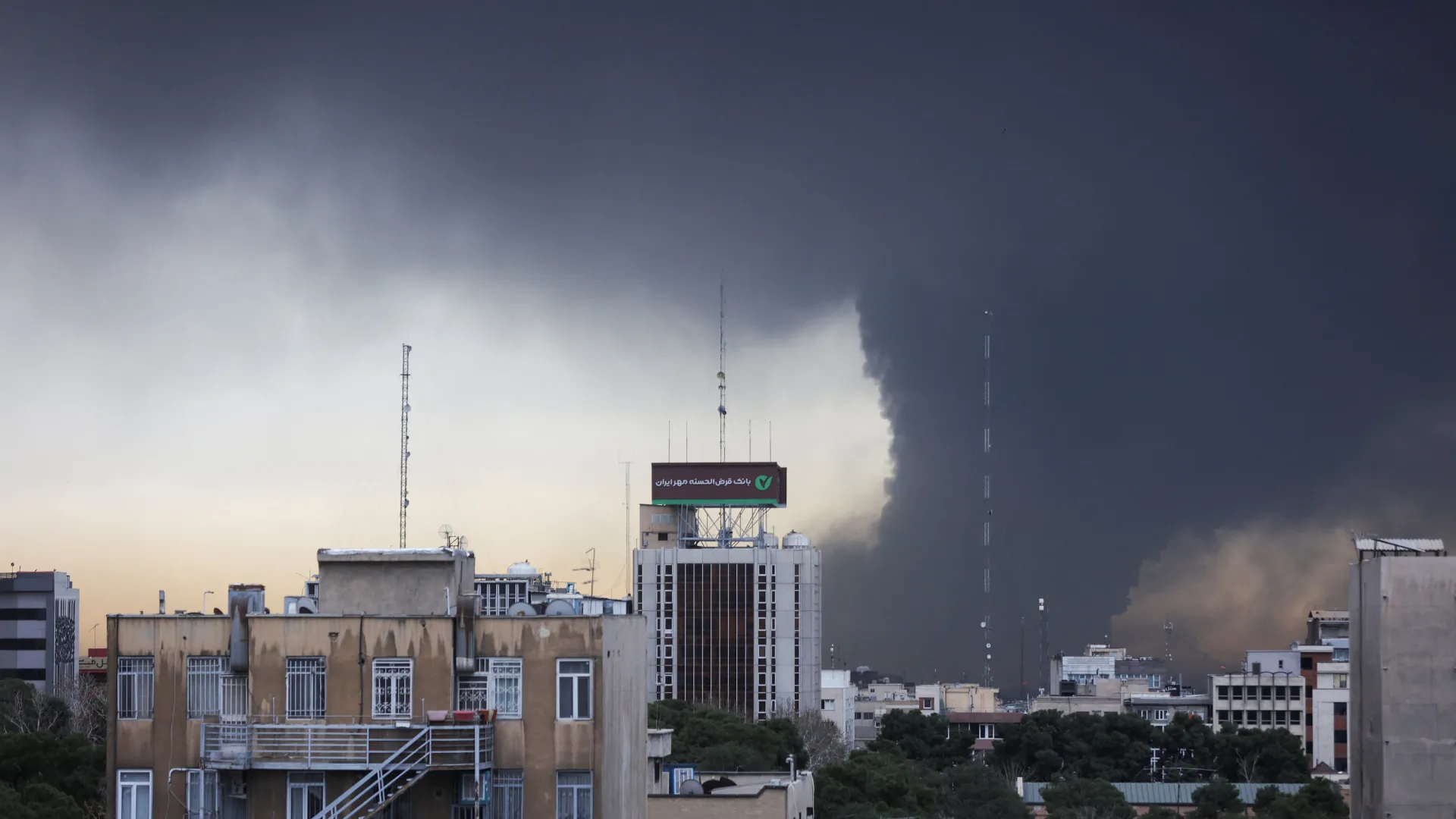

Iran launched drones toward Saudi Arabia and Kuwait early Tuesday as the conflict in the Middle East continues to intensify.
According to the Saudi Defence Ministry, the kingdom’s air defences destroyed two drones over its oil-rich eastern region. Meanwhile, Kuwait’s National Guard reported shooting down six drones targeting the country’s northern and southern areas.
The latest strikes mark another expansion of Iran’s military actions beyond its borders, raising concerns about a wider regional conflict.
Trump Sends Mixed Signals on War’s Duration
The escalation came as Donald Trump, President of the United States, issued contrasting messages about the conflict’s potential duration.
Speaking to Republican lawmakers on Monday, Trump suggested the war could be a “short excursion.” However, hours later he posted a stark warning on social media regarding disruptions to global oil flows.
“If Iran does anything that stops the flow of Oil within the Strait of Hormuz, they will be hit by the United States of America twenty times harder than they have been hit thus far,” Trump wrote.
Iran Signals Long War Ahead
Iranian officials responded strongly to the remarks.
A spokesperson for the Islamic Revolutionary Guard Corps, Ali Mohammad Naini, said Iran would decide when the war ends.
“Iran will determine when the war ends,” Naini said, according to Iranian state media.
Meanwhile, Kamal Kharazi, a foreign policy adviser to the office of Iran’s supreme leader, said the country was prepared for a prolonged conflict and suggested diplomacy had stalled.
He said there was “no room for diplomacy anymore” unless international pressure forced other countries to stop what he called aggression by the US and Israel.
Global Markets React to Uncertainty
Financial markets reacted sharply to the evolving conflict.
Oil prices briefly surged to nearly $120 per barrel, their highest level since 2022, before retreating toward $90 amid hopes the war might not last long.
Meanwhile, US stock markets swung dramatically during Monday’s trading session, shifting from heavy early losses to gains as investor sentiment fluctuated.
Oil Routes and Shipping Under Threat
The conflict has severely disrupted energy supplies and global shipping routes.
Attacks linked to Iran near the Strait of Hormuz—a critical maritime chokepoint that carries about one-fifth of the world’s oil supply—have effectively halted tanker traffic in the region.
Iranian drones and missiles have also targeted oil and gas infrastructure across major producing states.
According to the International Maritime Organization, attacks on merchant ships near the strait have killed at least seven mariners.
Rising Casualties and Evacuations
The fighting has triggered widespread evacuations and humanitarian concerns.
Several US diplomatic missions in the region have ordered non-essential personnel to leave as security conditions deteriorate.
Officials report that the conflict has caused significant casualties across the region:
- At least 1,230 people killed in Iran
- 397 deaths in Lebanon
- 11 deaths in Israel
In addition, seven US service members have been reported killed.
The ongoing war has also forced millions of civilians to seek shelter as strikes hit military bases, government buildings, oil facilities, hotels and even schools, highlighting the widening impact of the conflict.