

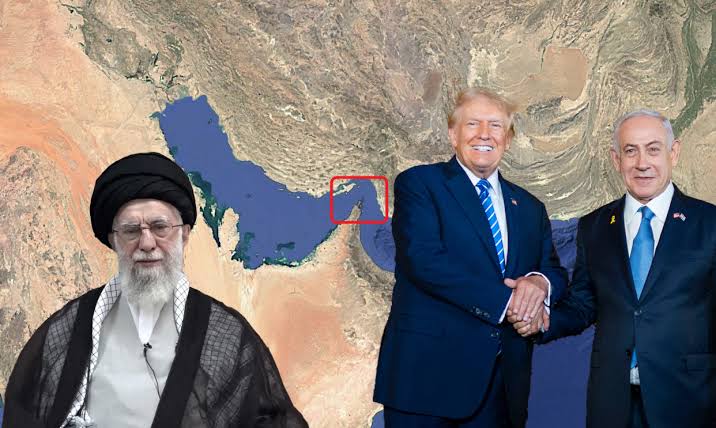

Brussels [Belgium], June 22: Following recent US airstrikes on its underground nuclear facilities, Iran is reportedly considering closing the Strait of Hormuz—one of the world’s most critical energy chokepoints. According to a report by EuroNews, such a move could have severe consequences for global oil markets and Europe’s energy security.
Sardar Esmail Kowsari, a senior commander in Iran’s Revolutionary Guard and a member of parliament, stated in an interview with Iranian media that the option to close the Strait of Hormuz is “under consideration” and that Iran will make a determined decision. “Our hands are wide open when it comes to punishing the enemy,” he said, adding that the recent military action is only a part of Iran’s broader response.
On Sunday, US President Donald Trump confirmed that “very successful” airstrikes had targeted Iran’s key underground nuclear facilities in Natanz, Fordow, and Isfahan. The strikes mark a significant escalation in tensions between the US and Iran.
According to EuroNews, Iran could use its short- and medium-range missiles to target vital oil infrastructure, pipelines, and commercial vessels in the Strait. Airstrikes with drones or manned aircraft could further disrupt major Gulf shipping ports by damaging radar and navigation systems. Iran’s Shahed unmanned drones and surface-to-surface missiles also pose a threat to tankers and energy ports across the region.
There is concern that Iran may use cyberattacks, similar to the one it launched in 2012 against Saudi Arabia’s oil industry, to disrupt regional energy operations. In addition, warships could be deployed to physically obstruct maritime traffic through the Strait.
Security expert and former French intelligence officer Claude Moniquet warned in an interview with EuroNews that the closure of the Strait could trigger terrorist threats across mainland Europe. He called the potential blockade “a disaster for Europe.”
About 20% of the world’s oil supply and a substantial portion of liquefied natural gas (LNG) pass through the Strait of Hormuz. Europe heavily relies on energy imports from Gulf nations like Saudi Arabia, Qatar, and the UAE, much of which is shipped through this narrow waterway. If Iran blocks the Strait, energy prices could skyrocket and Europe could face significant fuel shortages—especially in nations dependent on Middle Eastern resources.