

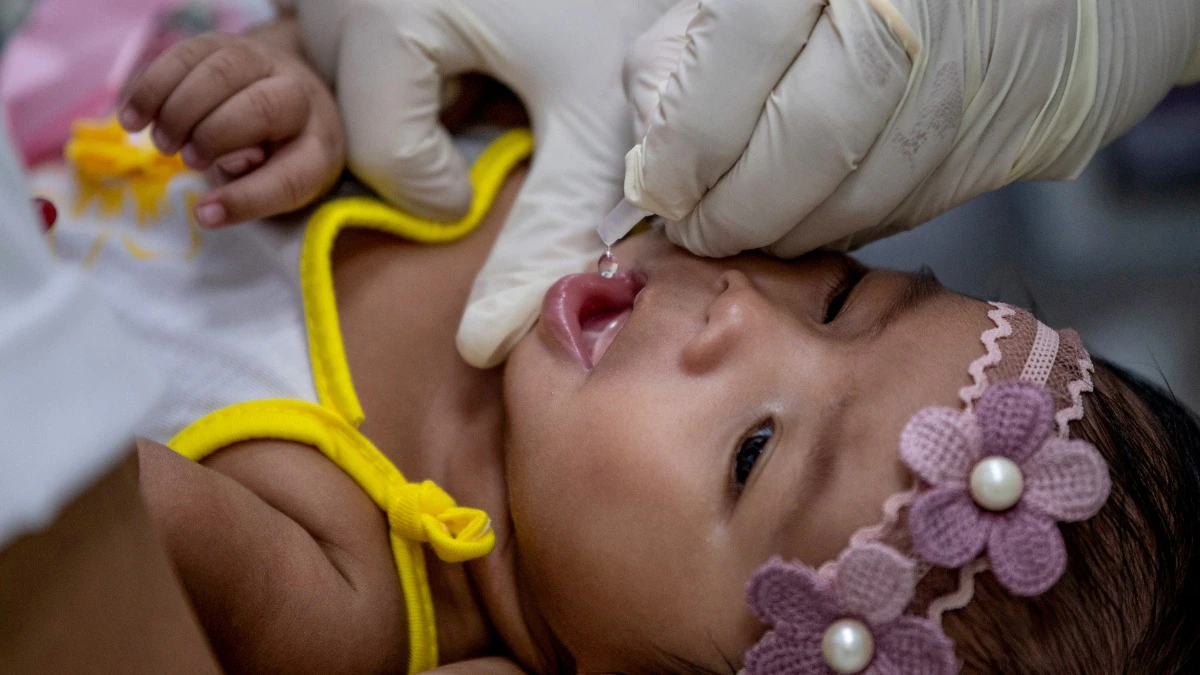

India has recorded a sharp decline in the percentage of zero-dose children—from 0.11% in 2023 to 0.06% in 2024, according to the Union Ministry of Health and Family Welfare. Zero-dose children are those who haven’t received a single vaccine dose. This milestone, the ministry said, is a result of sustained vaccination campaigns and targeted outreach.
This progress has earned India global recognition. The UN Inter-agency Group for Child Mortality Estimation (UN IGME), in its 2024 report, acknowledged India’s immunisation achievements. Furthermore, India received the prestigious Measles and Rubella Champion Award from the Measles and Rubella Partnership (including American Red Cross, BMGF, GAVI, US CDC, UNF, UNICEF, and WHO) at an event in Washington, DC, on March 6, 2024.
The Health Ministry stated that improved immunisation has clearly reduced childhood mortality and morbidity due to diseases like diarrhea, pneumonia, meningitis, and encephalitis.
Decline in Mortality Rates
As per the latest Sample Registration System (SRS 2020-22), India’s Maternal Mortality Ratio (MMR) has dropped from 130/lakh live births in 2014-16 to 88/lakh in 2020-22. According to UN-MMEIG (2000–2023), India’s MMR is now 80/lakh live births, marking an 86% reduction since 1990, compared to the global reduction of 48%.
India has also achieved a 78% decline in Under-Five Mortality Rate (U5MR) and a 70% decline in Neonatal Mortality Rate (NMR) between 1990 and 2023, outpacing the global declines of 61% and 54%, respectively, as per UN IGME 2024.
Expansion of UIP
The Universal Immunisation Programme (UIP) in India has undergone major expansion:
- Till 2013: Only 6 vaccines included.
- From 2014: 6 new vaccines were introduced, including Inactivated Polio Vaccine, Rotavirus Vaccine (RVV), Pneumococcal Conjugate Vaccine (PCV), Measles-Rubella Vaccine, Adult Japanese Encephalitis Vaccine, and Tetanus-Diphtheria Vaccine.
- Now: UIP offers vaccines for 12 preventable diseases.
Targeted Initiatives
Efforts to reach zero-dose children include:
- Zero Dose Implementation Plan 2024: Active in 143 districts across 11 states.
- Mission Indradhanush (since 2014): Vaccinated 5.46 crore children and 1.32 crore pregnant women.
- Pulse Polio Campaigns: Maintained polio-free status since 2014.
- Village Health and Nutrition Days (VHNDs): Regular community-level outreach.
- Multi-tiered Task Forces: STFI, DTFI, and BTFI for coordinated execution.
- IEC Campaigns: To fight vaccine hesitancy and spread awareness.
Use of Technology and Community Engagement
The U-WIN platform digitally tracks immunisation status to ensure no child is missed. ASHAs, ANMs, and healthcare workers go door-to-door not just for vaccination but also to raise awareness. Various platforms such as mass media, social media, community radio, and street plays are being used to educate families.
“To amplify our reach, we are leveraging technology and community engagement. The U-WIN platform tracks immunisation status digitally, ensuring no child is missed. Public awareness campaigns are being intensified… Healthcare workers, ASHAs, and ANMs will go door-to-door, not just to vaccinate, but to sensitise the beneficiaries about the benefits of vaccination,” the ministry said.
Global Comparison
India’s zero-dose rate of 0.06% in 2024 compares favourably with other nations:
- Pakistan (0.16%), Indonesia (0.23%), Ethiopia (0.72%), Nigeria (0.98%), and Yemen (1.68%) (WUNEIC 2023).
- High-income countries like New Zealand (DTP-1: 93%), Germany & Finland (DPT-3: 91%), and Sweden (MCV-1: 93%) show similar or marginally better coverage percentages.
Given its 2.6 crore annual birth cohort, which exceeds the population of countries like Finland and New Zealand, India’s performance is remarkable.
“Any comparison of India with countries having high zero-dose burdens must consider India’s large population and high coverage. Isolated metrics cannot reflect India’s immunisation progress,” the ministry emphasized.
Ongoing Commitment
India’s public health milestones include:
- Polio elimination (2014)
- Maternal & Neonatal Tetanus elimination (2015)
- Measles-Rubella campaign launch (2025)
With a focus on last-mile delivery, India continues to make immunisation free and accessible to 2.6 crore infants and 2.9 crore pregnant women each year.
Vaccination remains among the most powerful, cost-effective public health tools, and India is committed to using it to protect every child.