

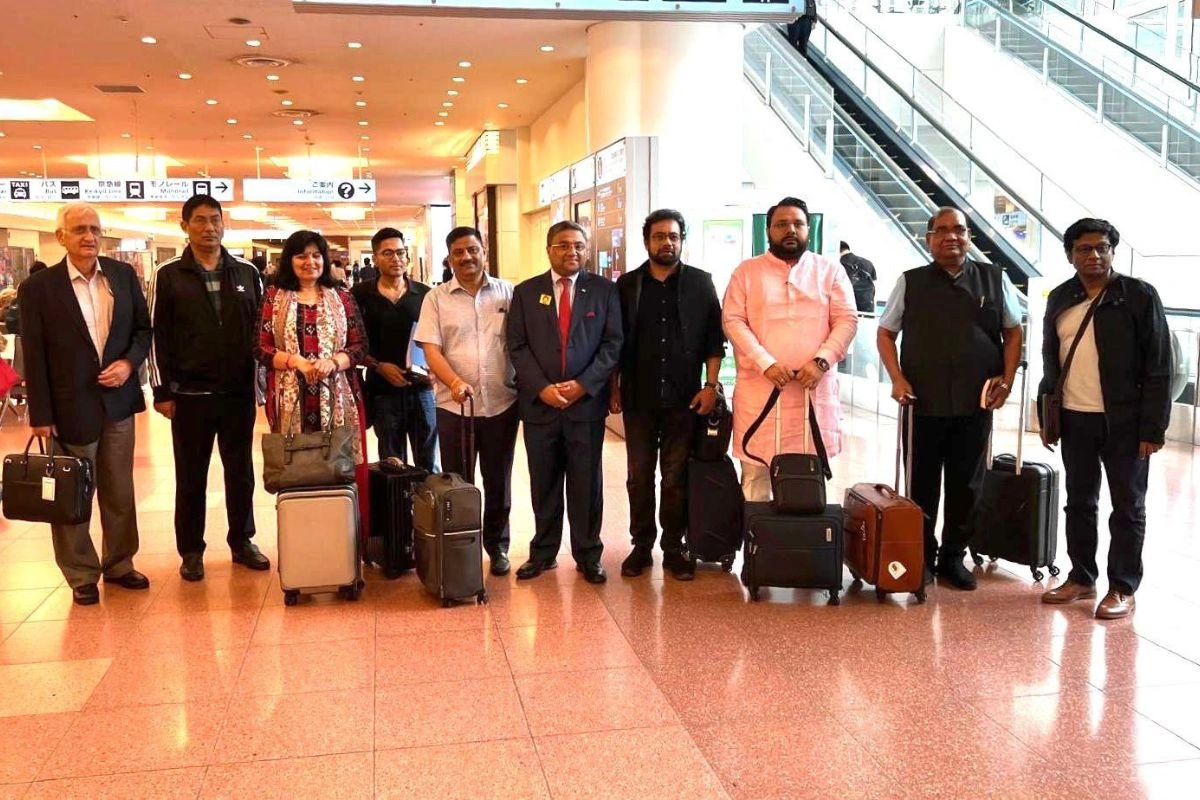

Tokyo (Japan): As part of Operation Sindoor’s global diplomatic outreach, an all-party delegation of Indian Members of Parliament is currently touring key partner nations. Speaking from Tokyo, members of the Indian diaspora voiced strong support for India’s counter-terrorism initiative and praised the rare bipartisan unity it has garnered.
Swapnali, a Tokyo-based Indian national living in Japan for over two decades, highlighted the importance of a unified national voice:
“We want peace. People from different parties and communities should come together and speak in one voice against terrorism, which we saw here in Tokyo. The enemy will never forget India’s response.”
Niharika Jisnu, a 19-year-old university student, echoed this sentiment:
“It is very impressive to see the nation that is viewed as politically diverse coming together as one to fight against the Pahalgam terrorist attack.”
Other community members praised India’s diplomatic strategy of dispatching parliamentary representatives abroad.
“Operation Sindoor was an excellent response. Sending parliamentarians to major global capitals shows diplomatic maturity. They are doing an excellent job,” said one diaspora participant.
India’s Case Against Pakistan: A Strong Message Abroad
During his interaction with the Indian community in Tokyo, BJP MP Brij Lal offered a blunt assessment of Pakistan’s alleged role in cross-border terrorism. Citing a string of deadly attacks—including the 2008 Mumbai attacks, the 2005 Indian Science Congress attack, and more—Lal underscored the strategic importance of maintaining peace to ensure national development and foreign investment.
“Pakistan continues to orchestrate terror to destabilise India and deter investors. Without peace, there is no development,” Lal stated.
He named specific terror groups such as Jaish-e-Mohammed, Lashkar-e-Taiba, and Hizbul Mujahideen, accusing them of operating freely in Pakistan with state backing.
He added that India’s responses—ranging from the 2016 surgical strikes to the 2019 Balakot airstrikes and the recent Operation Sindoor—have made clear the country’s zero-tolerance policy under Prime Minister Narendra Modi.
“They know they can’t win against India directly, so they aim for a thousand cuts. But India now responds with precision. Whenever there’s terrorism, we will consider it war.”
Diplomatic Mission and Delegation
The Indian delegation in Japan is part of a wider diplomatic campaign following the April 22 Pahalgam terror attack, which killed 26 civilians. India launched Operation Sindoor on May 7, targeting terror infrastructure in Pakistan and Pakistan-occupied Kashmir (PoK). The Indian Air Force also responded decisively to further Pakistani aggression before both sides reached a temporary understanding to halt military action.
Led by JD(U) MP Sanjay Kumar Jha, the delegation includes Ambassador Mohan Kumar, BJP MPs Dr. Hemang Joshi, Aparajita Sarangi, Brij Lal, and Pradan Baruah, CPI(M) MP John Brittas, and TMC MP Abhishek Banerjee. The team is set to visit Indonesia, Malaysia, South Korea, and Singapore following the Japan leg.
A Unified Global Message
The delegation’s mission is not merely to engage foreign leaders but also to signal India’s national consensus on terrorism, transcending party lines to safeguard global and regional security. Their efforts reflect a broader strategy to internationalise India’s fight against cross-border terrorism while reaffirming its commitment to peace and democratic values.