

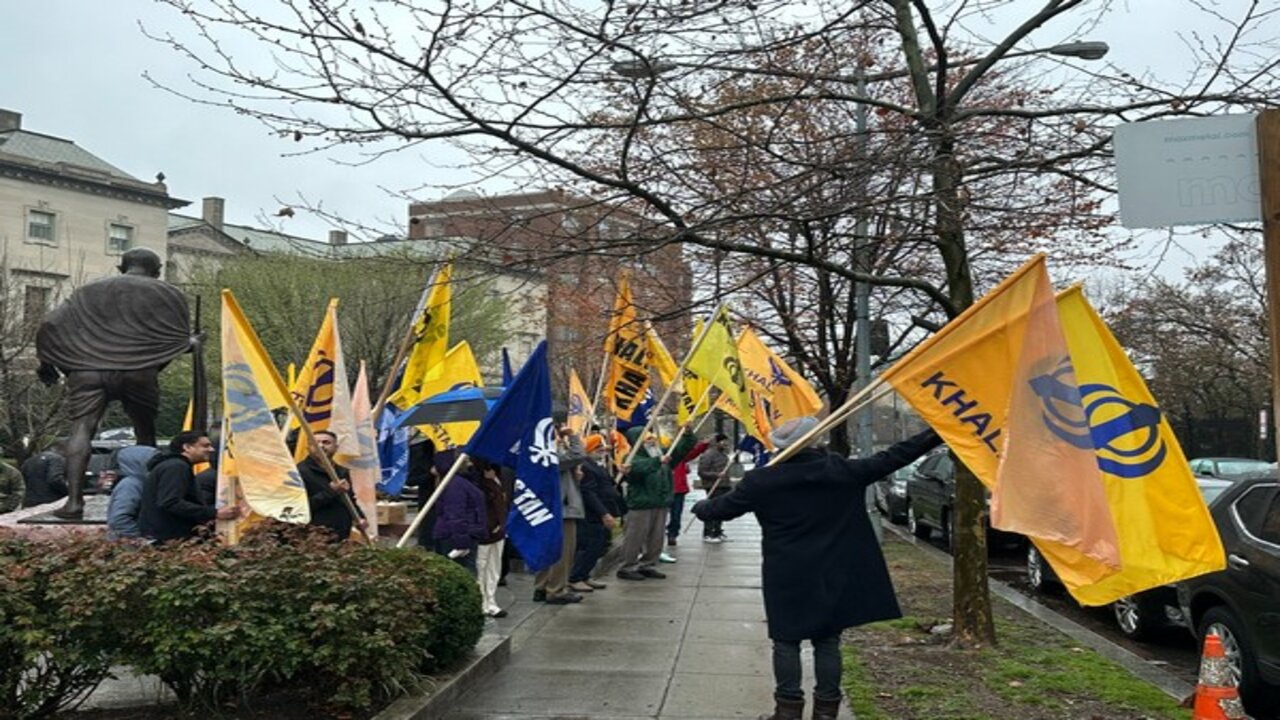

TORONTO — On Saturday, an Indian consular camp in British Columbia went off without a hitch. This was a big accomplishment because earlier camps in Canada had been marred by violence and disturbance. A court ruling that said pro-Khalistan protestors had to stay at least 50 meters away from the camp site made it possible for it to happen at the Khalsa Diwan Society’s gurdwara in Abbotsford.
A representative for the Khalsa Diwan Society said that the camp was set up at the request of the local community, which needed a place to easily handle applications for passport services, Overseas Citizen of India (OCI) cards, and other documents. A request to oppose the event came from pro-Khalistan groups, but only a few demonstrators showed up and were kept away by the court order, chanting anti-India slogans from a distance.
This peaceful outcome stands in stark contrast to events last year. In November, angry protesters assaulted the Hindu Sabha Mandir in Brampton during a consulate camp. This led to multiple arrests and warnings from local police, which caused further planned camps to be canceled.
The successful Abbotsford camp shows that legal steps, like the court orders that the gurdwara and other places like gurdwaras in Vancouver and the Lakshmi Narayan Mandir in Toronto got, can be a good method to keep consular services going.
The protests are happening because of ongoing diplomatic tensions between India and Canada. These tensions got much worse after Canadian Prime Minister Justin Trudeau said in September 2023 that there were “credible allegations” that Indian government agents may have been involved in the murder of pro-Khalistan figure Hardeep Singh Nijjar. India has fiercely disputed these claims. In October 2024, the disagreement got worse when Canada accused six Indian ambassadors of being involved in illegal activities. This led to both countries kicking out diplomats in return.