

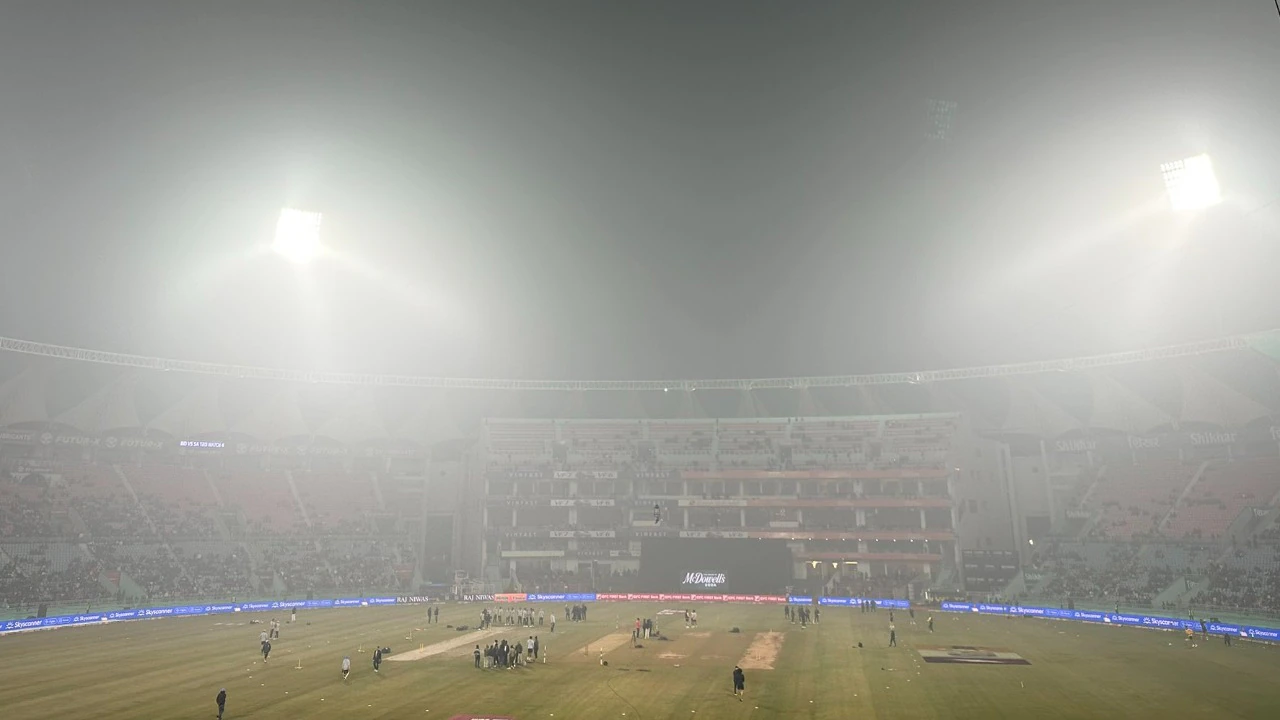

The fourth T20I between India and South Africa was officially called off on Wednesday night without a ball being bowled after poor visibility caused by dense smog engulfed the Ekana Stadium in Lucknow. The abandonment has once again raised serious questions over the Board of Control for Cricket in India’s (BCCI) decision to schedule international matches in northern cities during the peak winter pollution season.
Although the match officials cited “excessive fog” as the reason for abandoning the game, the real issue was a thick blanket of smog that severely reduced visibility across the ground. Lucknow’s Air Quality Index (AQI) remained in the hazardous category, crossing 400 on Wednesday, prompting concerns over player safety and overall planning.
Who organised match in Lucknow ??
— Veena Jain (@Vtxt21) December 17, 2025
Have some sh@me BCCI 🤡 #INDvsSA
pic.twitter.com/9CSgXzyhWx
The match, scheduled to begin at 7 pm, underwent multiple inspections before being officially called off at 9:30 pm following the sixth review. By then, it was evident that conditions were only deteriorating as the night progressed. Players had already abandoned their warm-up sessions by around 7:30 pm and retreated to their dressing rooms, while spectators—who had braved the cold and pollution—began leaving the stadium by 9 pm.
Lucknow’s fog didn’t save anyone—BCCI’s silence raised more questions than answers. pic.twitter.com/sznqpVT9T2
— Arun Shukla🇮🇳 (@arun_shukla__) December 17, 2025
India all-rounder Hardik Pandya was seen wearing a surgical mask during the warm-up, a visual that underlined the severity of the pollution. Social media was flooded with criticism from fans questioning the BCCI’s commitment to player welfare and the logic behind hosting night matches in heavily polluted cities during winter.
BCCI is expecting cricketers to play here. 🤡🤡 pic.twitter.com/cYkCrbWih9
— Aditya Saha (@Adityakrsaha) December 17, 2025
BCCI vice-president and Uttar Pradesh Cricket Association stalwart Rajeev Shukla was seen interacting with match officials during one of the inspections. His body language reportedly reflected disappointment as the likelihood of play faded with each passing minute.
With no reserve day allocated, both teams will now travel to Ahmedabad for the fifth and final T20I on Friday. India currently leads the five-match series 2–1.
The abandoned match has reignited debate over the BCCI’s rotational venue policy. Critics argue that the board could have swapped venues with the upcoming white-ball series against New Zealand, scheduled to begin on January 11 at venues largely located in western and southern India, including Vadodara, Rajkot, Indore, Nagpur, Visakhapatnam and Thiruvananthapuram.
Northern venues such as Lucknow, New Chandigarh and Dharamsala are known to suffer from severe pollution and adverse weather during November and December. Earlier in the series, the second T20I in New Chandigarh was played under ‘severe’ AQI conditions, while the third T20I in Dharamsala took place in sub-10-degree temperatures.
After the Dharamsala game, mystery spinner Varun Chakravarthy admitted the extreme cold made conditions difficult. “I’ve never played at a ground this cold, so I did find it quite challenging,” he said.
The repeated disruptions have led to criticism of the BCCI’s operations team, with observers questioning whether adequate historical weather and pollution data was considered. Many believe that afternoon start times or alternative venue planning could have ensured at least some play for fans and broadcasters.
As pollution-related disruptions become increasingly frequent, the Lucknow washout may force Indian cricket’s administrators to reassess winter scheduling, especially in the northern belt.