

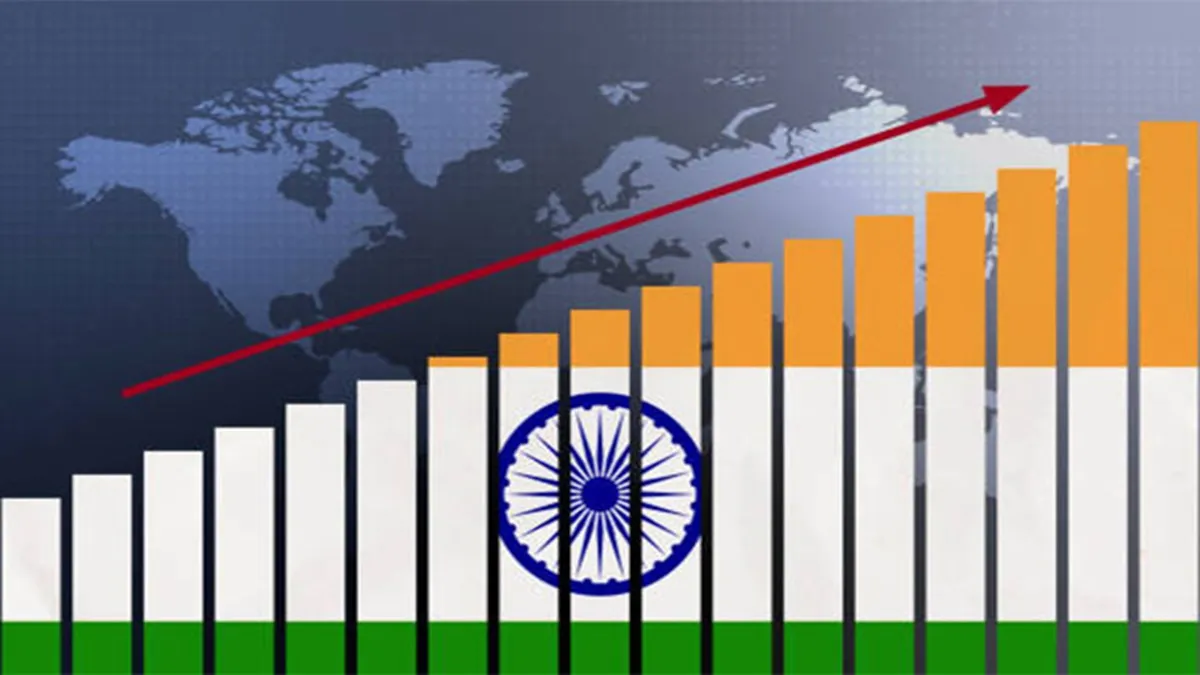

India has officially overtaken Japan to become the world’s fourth-largest economy, with its Gross Domestic Product now valued at USD 4.18 trillion, the government announced on Tuesday. The country, which remains the fastest-growing major economy globally, is projected to surpass Germany in the next 2–3 years and emerge as the world’s third-largest economy by 2028.
According to a statement issued by the Press Information Bureau (PIB), India’s economic growth momentum continues to strengthen despite global challenges. The release highlighted that the nation’s GDP is expected to touch USD 7.3 trillion by 2030.
Currently, the United States holds the position of the world’s largest economy, followed by China in second place.
The PIB report revealed that India’s real GDP grew by 8.2 percent in the second quarter of FY 2025–26, up from 7.8 percent in Q1 and 7.4 percent in the fourth quarter of FY 2024–25. This marks the highest growth rate in six quarters, driven primarily by strong domestic demand and resilient private consumption despite ongoing global trade and policy uncertainties.
Reflecting the positive outlook, the Reserve Bank of India revised its GDP growth projection for FY 2025–26 from 6.8 percent to 7.3 percent. International agencies have also echoed confidence in India’s economic trajectory.
The World Bank has projected India’s growth at 6.5 percent in 2026, while Moody’s expects the country to remain the fastest-growing G20 economy with growth of 6.4 percent in 2026 and 6.5 percent in 2027. The International Monetary Fund has raised its forecast to 6.6 percent for 2025 and 6.2 percent for 2026. The OECD predicts growth of 6.7 percent in 2025 and 6.2 percent in 2026.
Similarly, S&P has estimated growth at 6.5 percent for the current fiscal year and 6.7 percent for the next. The Asian Development Bank has lifted its 2025 projection to 7.2 percent, while Fitch Ratings has revised its FY26 growth outlook to 7.4 percent, citing robust consumer demand as a key driver.
India’s strong domestic fundamentals, rising consumption, structural reforms, and policy stability continue to reinforce its position as one of the most dynamic and resilient economies in the world.