


India has angrily condemned the “baseless and biased observations” made by a United Nations expert on Myanmar, who said that refugees from the Southeast Asian country were experiencing “severe pressure” in India after the Pahalgam terror attack in Jammu and Kashmir in April 2025.
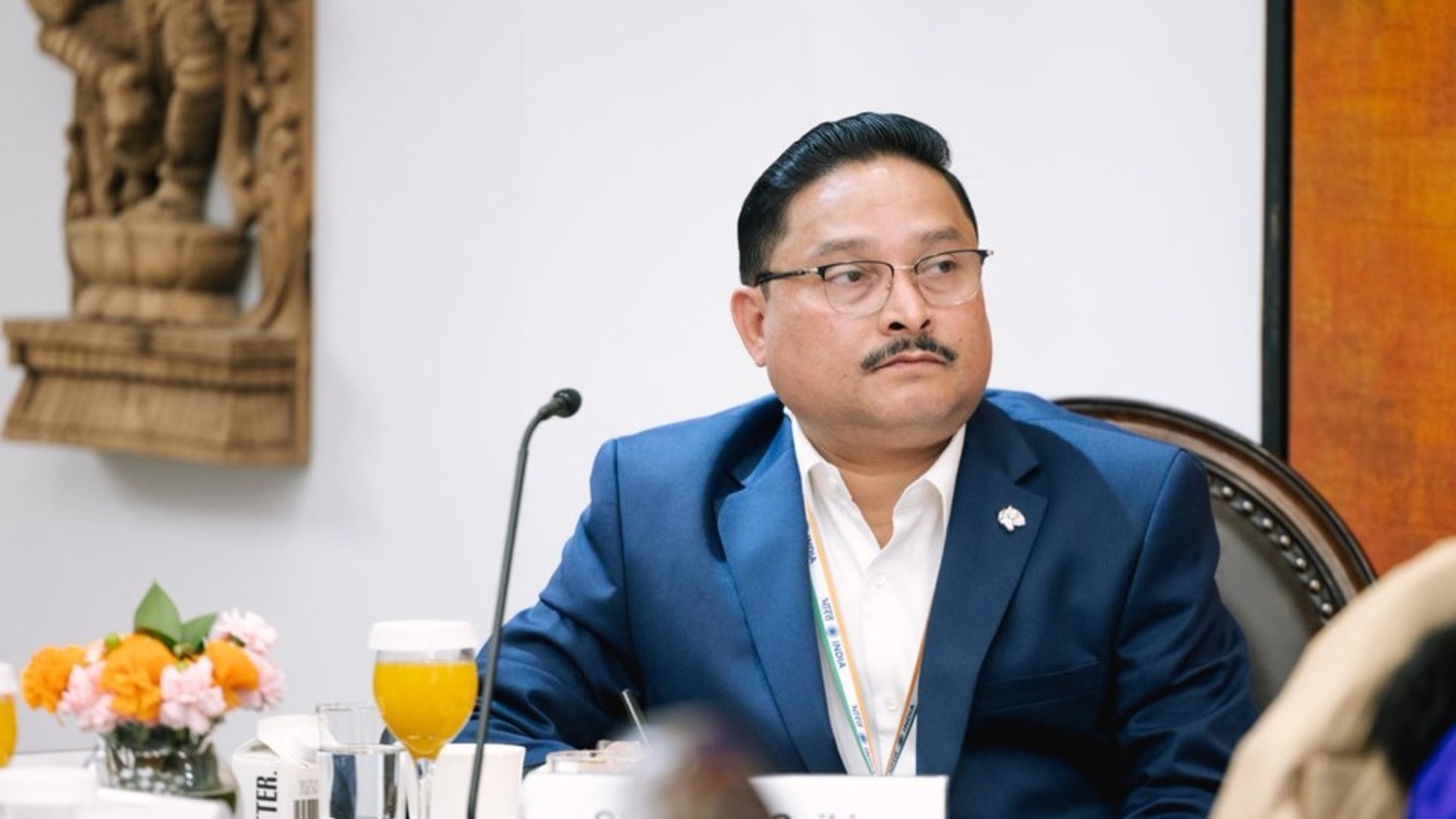
On Tuesday, at the Third Committee of the UN General Assembly, Member of Parliament Dilip Saikia spoke for India at an interactive dialogue about the human rights situation in Myanmar. He criticized the comments made by Thomas Andrews, the UN Special Rapporteur on Human Rights in Myanmar, calling the analysis “biased and narrow-minded.”
India’s Denial of the Main Accusation
The Special Rapporteur’s report notably mentioned the April 22 Pahalgam terrorist incident that targeted Hindu tourists and said:
“After the terrorist attack on Hindu tourists in Jammu and Kashmir in April 2025, refugees from Myanmar have been under a lot of stress in India, even though no one from Myanmar was involved in the attack.”
The report also said that refugees told the Special Rapporteur that Indian officials had “summoned, detained, interrogated, and threatened them with deportation in recent months.”
MP Saikia made it clear that he did not agree with this connection, saying that the claim that the Pahalgam terrorist assault “affected displaced persons from Myanmar has absolutely no factual basis.”
Saikia criticized the Special Rapporteur’s view of the incident’s victims, saying, “I strongly condemn the biased approach taken by the Special Rapporteur of the innocent civilian victims of the April 2025 terrorist attack in Pahalgam through a biased communal lens.”
Worries about radicalization and news reports
Saikia talked about India’s internal problems and said that the country is seeing “an alarming level of radicalization among the displaced persons, which is putting pressure on the law-and-order situation.”
In addition, he told the Special Rapporteur to be careful about where he gets his information from:
He also told the SR (Special Rapporteur) not to rely on unverified and biased media reports that seem to be trying to make my country look bad, where people of all faiths live, including more than 200 million Muslims, which is about 10% of the world’s Muslim population.
India’s Position on the Crisis in Myanmar
Saikia added that India’s foreign policy toward its neighbor has not changed and that the government continues to support efforts that build trust and lead to a “Myanmar-owned and Myanmar-led path toward peace, stability, and democracy.”
India repeated its plea for an “immediate end to violence, the release of political prisoners, the unhindered delivery of humanitarian aid, and political dialogue that includes everyone.”
Saikia also talked about how worried India is about the “deteriorating” security and humanitarian conditions in Myanmar. He mentioned how these problems affect other countries, such as the problems caused by drug, gun, and human trafficking offenses that cross borders.
He talked about India’s “people-centered approach” to humanitarian work, highlighting the start of “Operation Brahma” after the earthquake in March 2025, which sent more than 1,000 metric tons of aid, and “Operation Sadbhav” during Typhoon Yagi in 2024.
Claims of Deporting Rohingya Refugees
The Special Rapporteur’s report also listed specific claims about how India treated Rohingya refugees:
It said that in early May 2025, over 40 Rohingya refugees (including women and children) were arrested in Delhi, flown on an Indian military plane to the Andaman and Nicobar Islands, and then moved on an Indian naval ship.
The article also said that Indian officials “deported scores of Rohingya refugees to Bangladesh in May.”
The last thing the letter said was that the Special Rapporteur had written to the Indian government about these deportations and was waiting for a promised report back after officials looked into what happened.