

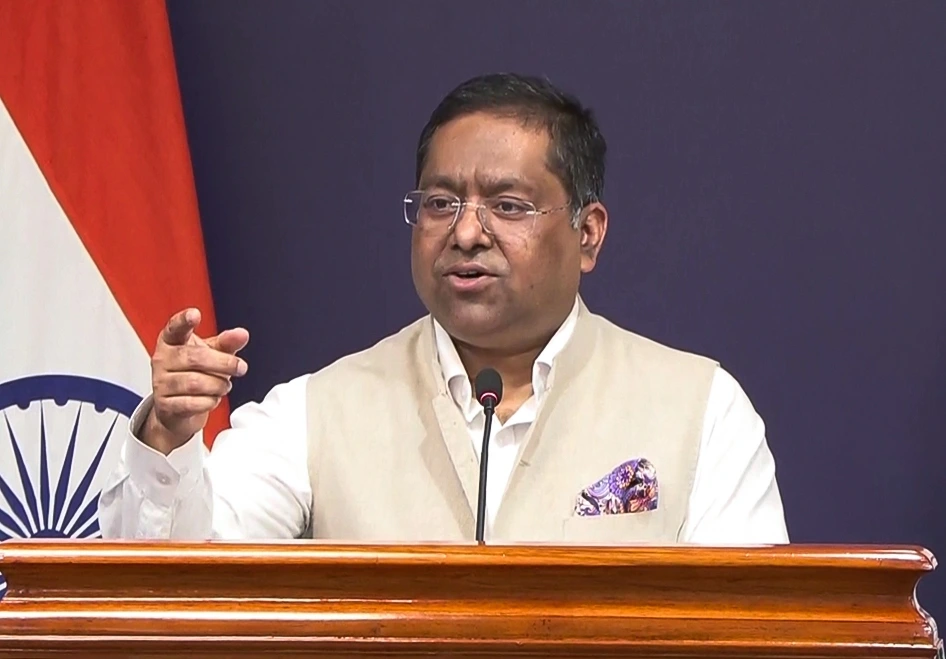

The MEA’s Sharp Rebuttal
MEA spokesperson Randhir Jaiswal issued a strongly-worded statement on Monday, making it clear that India would not accept lectures on human rights from Pakistan.
- “Abysmal Record”: Jaiswal noted that Pakistan’s “horrific and systemic victimization of minorities of various faiths is a well-established fact.”
- Deflecting Attention: The MEA argued that Pakistan uses “finger-pointing” at New Delhi as a tool to distract from its own internal failures and the state-backed marginalization of its Hindu, Christian, Sikh, and Ahmadi communities.
- Lack of Standing: Indian officials previously emphasized that as a country with a “deeply stained record of bigotry,” Pakistan has no moral standing to comment on India’s internal secular traditions.
The Catalyst: Tahir Andrabi’s Remarks
The response was triggered by reports from Pakistani state media where Tahir Andrabi highlighted:
- Christmas Vandalism: Alleged incidents targeting Christian celebrations in December 2025.
- Home Demolitions: Claims of “state-backed” campaigns targeting Muslim properties.
- The Akhlaq Case: Reviving the 2015 Dadri case to allege that Indian authorities shield perpetrators of mob violence.
Historical Context: Pakistan’s Minority Policy in 2025
The MEA’s “systemic victimization” claim is underscored by recent legislative developments in Pakistan. Earlier this month, international human rights committees criticized Pakistan’s new National Commission for Minority Rights, noting it specifically excludes certain communities unless they renounce their faith—a move labeled a “hypocritical sham” by global watchdogs.
Diplomatic Scorecard: Religious Minorities (MEA View)
| India’s Position | Pakistan’s Position |
| Pluralistic Tradition: Upholds secular values and constitutional protections. | Systemic Persecution: State-backed exclusion and discriminatory laws. |
| Legal Recourse: Minorities have access to the judiciary and democratic protests. | Marginalization: Increasing social, economic, and political displacement. |
| MEA Stance: Internal issues are handled via domestic democratic processes. | Internationalization: Frequently attempts to raise domestic Indian issues at the UN/OIC. |