

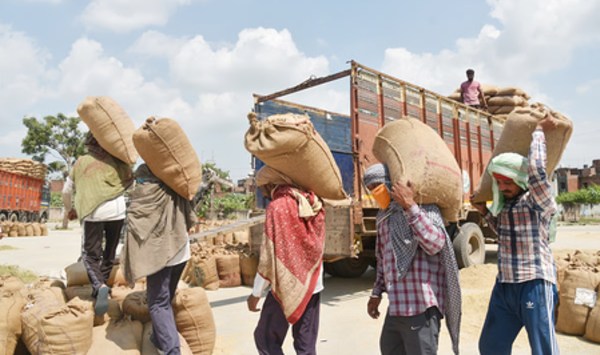

In a significant overhaul of India’s labour laws, the Centre on Friday announced the rollout and implementation of four comprehensive labor codes, replacing 29 fragmented and often outdated central laws that have governed factories and workers for decades. This historic reform is intended to simplify compliance, promote “ease of doing business,” and dramatically strengthen workers’ rights and welfare across the country.
The four codes now implemented uniformly across India are:
- The Code on Wages, 2019
- The Industrial Relations Code, 2020
- The Code on Social Security, 2020
- The Occupational Safety, Health and Working Conditions Code (OSHWC), 2020
Key Highlights and Changes in Workers’ Benefits
The new framework introduces several landmark changes impacting all sectors of the workforce:
1. Fixed-Term Employees and Gratuity
- Gratuity Eligibility: Fixed-term employees are now eligible for gratuity after just one year of continuous service, a major change from the earlier five-year requirement.
- Wages Definition: To ensure consistency in calculating gratuity, pension, and social security, at least 50 per cent of the total remuneration (including basic pay, dearness allowance, and retaining allowance) shall be counted as “wages.”
2. Social Security for Gig and Platform Workers
- Formal Recognition: The codes formally define ‘gig work,’ ‘platform work,’ and ‘aggregators’ for the first time, extending social security to categories previously outside formal regulation.
- Welfare Fund: A dedicated fund will be established to finance schemes for unorganized, gig, and platform workers, covering benefits like life, disability, health, and old-age protection.
- Aggregator Contribution: The new rules mandate that aggregator platforms contribute 1 to 2% of their annual turnover (capped at 5% of the amount paid to the workers) towards this welfare fund.
3. Working Conditions and Hours
- Working Hours: Businesses can employ workers for shifts ranging from 8 to 12 hours in a day, provided the total working hours do not exceed 48 hours in a week.
- Overtime: Overtime work must be compensated at double the normal wage rate.
- Work from Home: The codes formally include a provision for work-from-home in service sectors by mutual consent, acknowledging the necessity and flexibility introduced during the pandemic.
4. Gender Inclusivity and Safety
- Night Shifts for Women: Women are now permitted to work night shifts in all industries, overturning earlier state-level restrictions, subject to their consent and the provision of mandatory safety measures by the employer.
- Maternity Benefits: Maternity benefits, including 26 weeks of paid leave, are now extended to all women workers, including those in the unorganised sectors.
- Equal Pay: The codes mandate equal pay for equal work, prohibiting gender discrimination.
5. Ease of Business and Layoffs
- Layoff Threshold Raised: Under the Industrial Relations Code, the approval limit for lay-offs, retrenchment, or closure has been raised from 100 to 300 workers. This means companies with up to 299 employees can now lay off staff without prior government approval, a move aimed at simplifying compliance and encouraging formalization.
- Single License: Contractors can now obtain a single license, valid for five years, for operating anywhere in the entire country.
6. Universal Wages and Migrant Workers
- Universal Minimum Wage: All workers, across both organized and unorganized sectors, will now be entitled to a statutory minimum wage. A statutory floor wage will be set by the Central Government, and no state can fix minimum wages below this national level.
- Migrant Worker Benefits: The codes provide specific benefits for inter-state migrant workers (ISMWs), including:
- A lump-sum annual travel allowance to their native place once every 12 months.
- Portability of social security benefits and public distribution system (PDS) across states.
- Access to a toll-free helpline.
The implementation of these four Codes marks the next step in building a modern, inclusive, and protected labour ecosystem in India.