

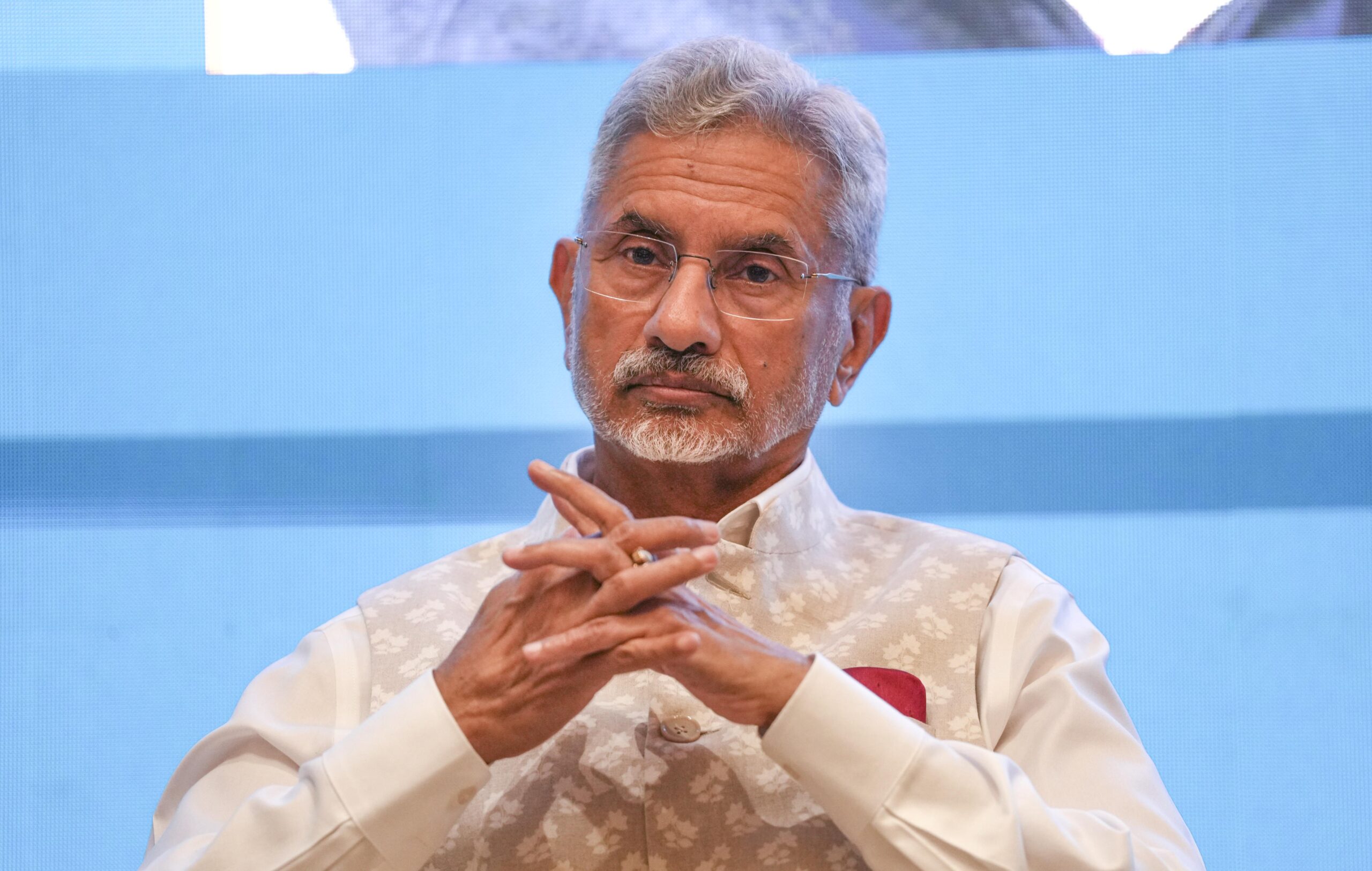

NEW DELHI / LONDON — External Affairs Minister S. Jaishankar has clarified that India has not secured a “blanket arrangement” with Tehran for the passage of its vessels through the Strait of Hormuz. In a high-stakes interview with the Financial Times published on Sunday, March 15, 2026, Jaishankar emphasized that while direct talks have yielded results, every ship’s transit is currently being negotiated and coordinated on an individual basis.
His remarks come as a diplomatic counterpoint to President Donald Trump’s push for a multinational naval coalition to break the Iranian blockade of the world’s most critical oil chokepoint.
1. Diplomacy Yields Tangible Results
Jaishankar pointed to the successful transit of two Indian-flagged LPG carriers, Shivalik and Nanda Devi, on Saturday, March 14, as proof that “reasoning and coordination” are more effective than military posturing.
- The Transit: The two vessels, carrying approximately 92,712 metric tons of LPG, crossed the Strait safely and are expected to dock at Mundra (March 16) and Kandla (March 17) ports.
- The Cost of Passage: Jaishankar explicitly stated that Iran received no reciprocal concessions or “exchange” for the passage. Instead, he attributed the success to a “history of dealing with each other” and a relationship built on mutual trust.
2. Rejection of the “Blanket Deal” Narrative
Despite the safe passage of four vessels in the last week, the EAM was careful to manage expectations for the dozens of ships still waiting.
- No Blanket Immunity: “There is no blanket arrangement… every vessel is moved individually,” Jaishankar told the FT.
- Remaining Vessels: According to the Ministry of Shipping, 22 Indian-flagged vessels with 611 seafarers remain stranded west of the Strait (inside the Persian Gulf).
- The Protocol: Iranian Foreign Minister Abbas Araghchi confirmed on Saturday that the waterway is “open” to all except “enemies” (US and Israel), but emphasized that any transit requires prior coordination with the Iranian Navy.
3. A Model for Europe?
As European nations face a massive energy shock with Brent crude hovering around $106, Jaishankar offered to share India’s diplomatic approach with EU capitals.
- Individual Merits: While acknowledging that “each relationship stands on its own merits,” he noted that France and Italy have already begun testing similar negotiation paths with Tehran.
- The Shift: The EAM suggested that the world is “better off” if nations can find solutions through dialogue, subtlely positioning India’s “Quiet Diplomacy” as a safer alternative to the “Operation Sentinel” naval coalition being organized by the White House.
Strait of Hormuz: India’s Shipping Status (March 16, 2026)
| Metric | Status / Update |
| Ships Safely Crossed | 4 (Including Shivalik, Nanda Devi, and Shenlong) |
| Ships Still Stranded | 22 (West of the Strait/Persian Gulf) |
| Indian Seafarers in Area | 611 (Currently safe; being monitored 24/7) |
| Key Diplomacy | 4 calls between Jaishankar & Araghchi since Feb 28. |
| Market Impact | Crude at $106.40; LPG production in India hiked by 25%. |