


Beijing/New Delhi: India on Thursday refused to sign the joint declaration at the Shanghai Cooperation Organisation (SCO) Defence Ministers’ Meeting in China after its concerns on terrorism were excluded from the final document, the Ministry of External Affairs (MEA) confirmed.
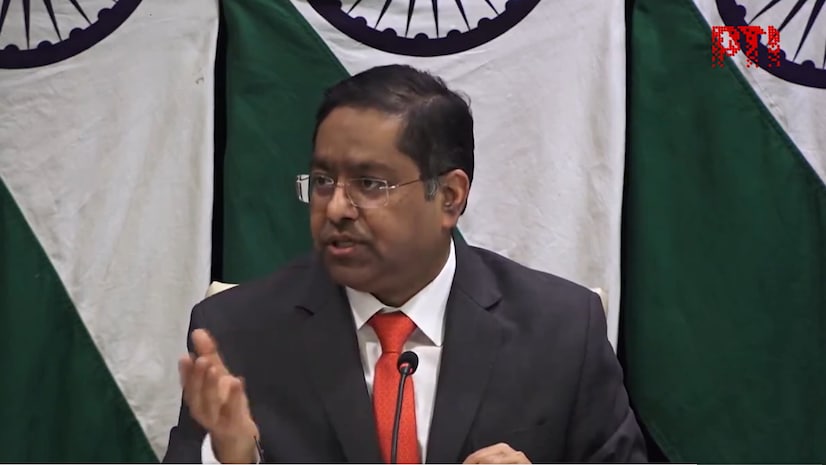
Speaking at a press briefing, MEA spokesperson Randhir Jaiswal explained that India’s proposal to include strong language against terrorism was opposed by “one particular country,” leading to the failure in reaching a consensus—a prerequisite for the adoption of any SCO statement.
“India wanted concerns on terrorism to be reflected in the document, but this was not acceptable to one particular country. Therefore, the joint declaration could not be adopted,” said Jaiswal.
He reaffirmed that Defence Minister Rajnath Singh had strongly raised India’s position on terrorism during his address at the SCO platform, urging member states to unite in combating terrorism “in all its forms and manifestations.”
“The Defence Minister reiterated the need to bring to justice the perpetrators, organisers, sponsors, and financers of terrorism, including cross-border terrorism,” Jaiswal added.
Exclusion of Pahalgam Attack Reference
India’s refusal to endorse the declaration was further influenced by its omission of the April 22 Pahalgam terror attack in Jammu & Kashmir, even as incidents in Pakistan were mentioned.
At the summit, Rajnath Singh made a pointed but indirect reference to Pakistan, saying:
“There should be no double standards on terrorism. Countries that support terrorism must be called out. Terrorism and peace cannot co-exist.”
He stressed that the region’s most pressing challenges stem from radicalisation, extremism, and terrorism, which hinder peace, security, and mutual trust.
WMDs in Terror Hands: A Grave Concern
The Defence Minister also warned of the increasing risk of weapons of mass destruction (WMDs) falling into the hands of non-state actors and terror groups, a scenario he described as a “grave danger to global peace.”
“Peace and prosperity cannot co-exist with terrorism and WMD proliferation. Dealing with these challenges requires decisive, united action,” Singh asserted.
Strategic Implications
India’s bold move to withhold its endorsement of the SCO joint statement sends a strong signal about its unwavering zero-tolerance stance on terrorism and its willingness to stand apart diplomatically when core security interests are overlooked.
This development comes amid increasing geopolitical tensions, and India’s stand reinforces its commitment to counterterrorism leadership in multilateral forums, even when consensus proves elusive.