

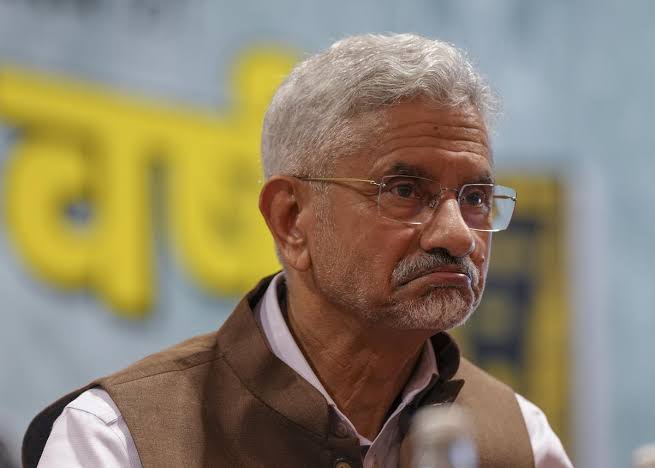

India’s External Affairs Minister S. Jaishankar has revealed that New Delhi chose not to endorse the Shanghai Cooperation Organisation (SCO) joint statement after one member country insisted on removing references to terrorism — despite the fact that counterterrorism is a founding principle of the SCO.
Jaishankar explained the rationale behind Defence Minister Rajnath Singh’s decision to opt out of the joint communiqué at the recent SCO Defence Ministers’ meeting.
“When the main purpose of the organisation is to fight terrorism, and you are not allowing a reference to that… he (Rajnath Singh) expressed his unwillingness to accept,” Jaishankar said.
While Jaishankar did not explicitly name the country that blocked the anti-terrorism language, he hinted strongly, stating, “You can guess which one,”—a clear reference to Pakistan, a country long accused by India of supporting cross-border terrorism.
Pakistan’s Role and Attempt to Deflect
According to a PTI report, Pakistan insisted on including the Balochistan Liberation Army’s hijacking of the Jaffar Express (March 11) in the SCO joint statement, portraying it as a terror incident and reportedly attempting to shift blame towards India. In contrast, Pakistan opposed any mention of the Pahalgam terror attack that recently occurred in Jammu & Kashmir, widely believed to be orchestrated by Lashkar-e-Taiba (LeT).
India’s defence minister Rajnath Singh, in his address at the SCO summit in Qingdao, China, hit back strongly without naming Pakistan directly.
“Some countries use cross-border terrorism as an instrument of policy and provide shelter to terrorists. There should be no place for such double standards,” Singh said, calling for accountability of the “perpetrators, organisers, financiers and sponsors” of terrorism.
India’s Strong Stance on Terrorism
Singh highlighted India’s Operation Sindoor, a military strike targeting terrorist camps in Pakistan and Pakistan-occupied Kashmir, which was launched in retaliation for the Pahalgam attack.
“The pattern of the Pahalgam attack matches with LeT’s previous terror attacks in India. India’s zero tolerance for terrorism was demonstrated through its actions,” he stated.
Despite India’s call for unified condemnation of terrorism, the final SCO communique excluded any mention of the Pahalgam incident or India’s counter-terror efforts, triggering India’s refusal to sign.
SCO’s Composition and Context
The SCO includes India, Pakistan, China, Russia, Iran, Kazakhstan, Kyrgyzstan, Uzbekistan, Tajikistan, and Belarus. India joined the grouping in 2017 and held the rotating Chairmanship in 2023. The organisation was originally conceived with regional security and anti-terrorism cooperation as core objectives.
India’s rejection of the joint statement underscores its growing frustration with what it sees as double standards on terrorism, especially from Pakistan and its allies, and reflects a more assertive foreign policy posture.