


NEW DELHI — India will choose a new Vice President on Tuesday, September 9. This comes after the unexpected resignation of outgoing Vice President Jagdeep Dhankhar in July. C.P. Radhakrishnan, the candidate from the ruling National Democratic Alliance (NDA), is running against Justice (retd.) B. Sudershan Reddy, the candidate from the Opposition’s INDIA group. Members of Parliament from both the Lok Sabha and Rajya Sabha will vote to decide the outcome.
Delhi: Opposition's Vice Presidential candidate B. Sudershan Reddy says, "…I’m extremely grateful to both of them for extending their invaluable support all the way. I consider it a blessing, and my hands are now further strengthened. It makes me feel that my victory is now… pic.twitter.com/rRkF79qrJq
— IANS (@ians_india) September 8, 2025
In his long years in public life, Thiru CP Radhakrishnan Ji has distinguished himself with his dedication, humility and intellect. During the various positions he has held, he has always focused on community service and empowering the marginalised. He has done extensive work at… pic.twitter.com/WrbKl4LB9S
— Narendra Modi (@narendramodi) August 17, 2025
The Competitors
C.P. Radhakrishnan has been a member of the Bharatiya Janata Party (BJP) in Tamil Nadu for a long time. He is currently the Governor of Maharashtra, although he has been given permission to run for office.
B. Sudershan Reddy is a retired Supreme Court judge from Telangana. People have a lot of regard for his important decisions, especially the one that said Salwa Judum, a group of trained tribal youth who worked as special police officers to fight Naxalites, was illegal and against the Constitution.
The Game of Numbers
There are 788 members in the electoral college for the Vice Presidential election. This includes 543 from the Lok Sabha and 245 from the Rajya Sabha, as well as 12 nominated members. There are currently 781 members of the electoral college because there are six empty seats in the Rajya Sabha and one in the Lok Sabha. This signifies that 391 is the magic number for winning.
With 425 MPs, the NDA seems to be in the lead on paper, which puts its nominee Radhakrishnan in a good position to win. The INDIA group of the Opposition, which includes parties like the Trinamool Congress, the Aam Aadmi Party, the Rashtriya Janata Dal, and the DMK, is expected to get 324 votes. Asaduddin Owaisi leads the AIMIM, which has also promised to help the INDIA bloc’s nominee, even though it is not an official member.
The choices made by important groups that are not in either bloc make the figures even more off. The YSR Congress Party (YSRCP), which has 11 MPs, has said it will vote for the NDA. The Biju Janata Dal (BJD) and the Bharat Rashtra Samithi (BRS) have opted not to vote.
Why Are Some Parties Not Voting?
Bharat Rashtra Samithi (BRS): K.T. Rama Rao, the BRS Working President, said that his party will not vote since Telangana’s farmers are “anguished” by the state’s lack of urea. The party thinks that both the Congress and the BJP have not dealt with this important problem.
Biju Janata Dal (BJD): The party from Odisha, led by former chief minister Naveen Patnaik, said that its MPs would not vote. This choice is in line with its long-standing policy of staying “equal distance” from both the NDA, which is led by the BJP, and the INDIA alliance, which is led by the Congress.
How the Vote Works
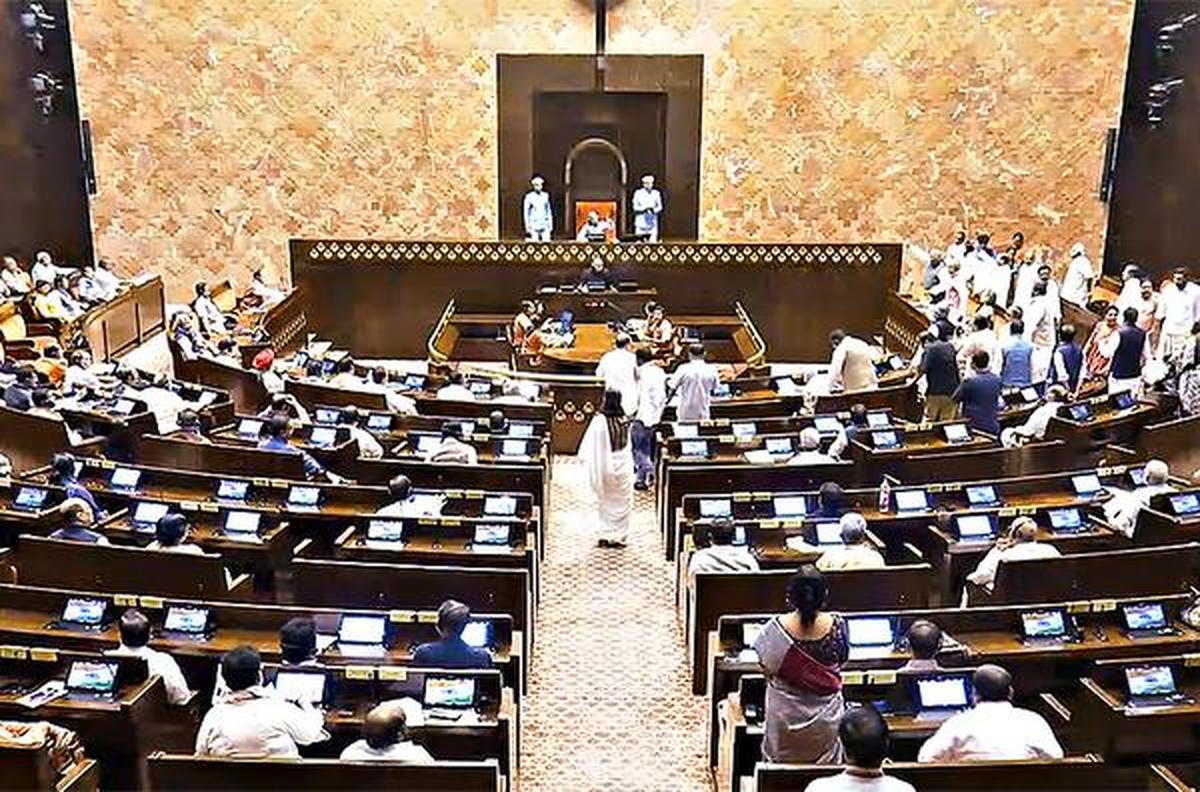
On Tuesday, voting will happen in the Parliament House from 10 AM to 5 PM. The counting of the votes will begin at 6 PM, and the results are likely to be available late in the evening.
Like the Rajya Sabha elections, the Vice Presidential election uses a secret ballot method. This means that party whips don’t have to tell Members of Parliament to vote for their party’s candidate. The anticipated numbers are based on the parties’ stated support, but the final count could be different if some people don’t vote or if some people vote for more than one party.
This election is very important for politics. It is not just about the new appointment, but it is also a test of how strong and united the government and opposition alliances are before future political confrontations.