

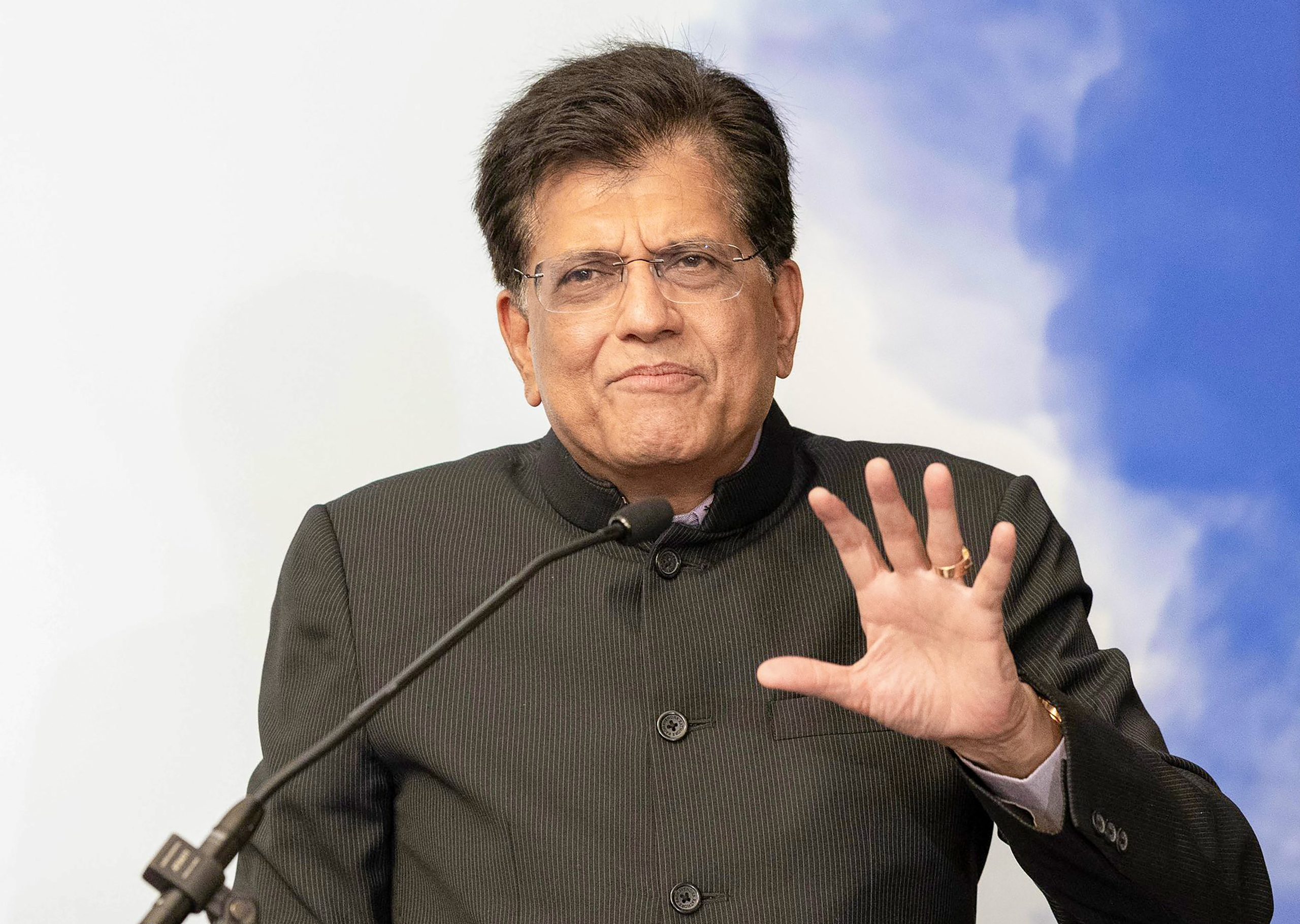

New Delhi — Commerce and Industry Minister Piyush Goyal expressed strong optimism on Monday that the much-anticipated India-European Union Free Trade Agreement (FTA) could be finalised by the end of this year, citing minimal divergences and high levels of complementarity between the two economic giants.
“There are not too many issues where we have divergence of opinion. We have both complementary economies,” Goyal said, adding, “What is of offensive interest to India does not hurt the European economy. Likewise, goods and services that Europe would like to provide to India only support our growth story.”
Sensitive Areas, But Strong Alignment
Goyal acknowledged that while some sensitive issues remain, the negotiation process is amicable and constructive. Both sides are committed to addressing concerns without compromising core interests.
“In any trading relationship, there are sensitive issues on both sides. These must be resolved in the interest of both the EU and India,” he stated.
India’s Assertive Stance on Key Principles
India is approaching negotiations with confidence, particularly on values such as gender equality and sustainability. Goyal said:
“We are proud of our sisters and women for the fantastic work they have done and continue to do… On subjects like gender and sustainability, India is on the front foot.”
He also acknowledged that each party has raised legitimate concerns:
“We have certain concerns about EU regulations. They also have issues to discuss. But we are confident of negotiating a fair and balanced agreement.”
FTA Independent of Domestic Business Reforms
Goyal clarified that FTAs are distinct from internal economic reforms:
“Free trade agreements stand on their own. They have no connection to our domestic efforts to attract business or investment.”
Rather, FTAs serve a broader purpose of market liberalisation, which leads to improved productivity, efficiency, and global competitiveness.
Broad-Based Economic Impact
The proposed FTA is expected to unlock wider trade and investment opportunities, spurring economic benefits across sectors.
“It opens doors to greater engagement in goods, services, investments, and more,” Goyal noted. “This will benefit 1.4 billion consumers.”
Significance of the India-EU Trade Deal
The India-EU FTA is poised to become a landmark agreement, deepening economic ties between one of the world’s largest democracies and one of the world’s largest trading blocs. The deal aims to:
- Reduce trade barriers
- Enhance mutual market access
- Promote sustainability and gender inclusivity
- Strengthen geopolitical and economic cooperation
With both sides approaching the table with goodwill and strategic alignment, a successful conclusion could reshape India-Europe trade dynamics and create new growth pathways for businesses and consumers alike.
Conclusion:
As negotiations enter the final stretch, Minister Goyal’s remarks reflect a shared confidence that a robust, forward-looking trade deal is within reach. If finalised on time, the India-EU FTA could usher in a new era of prosperity, innovation, and strategic cooperation between the two global powerhouses.