

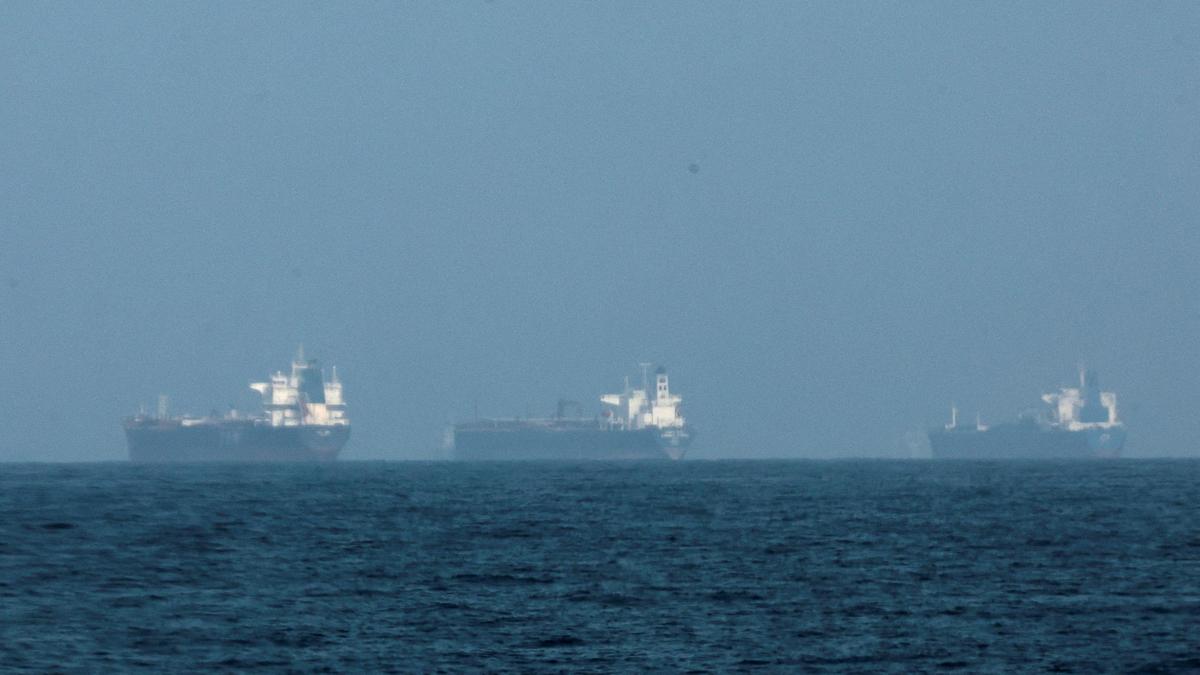

The Indian government is exploring options to escort Indian-flagged vessels out of the conflict-affected waters near the Strait of Hormuz, as escalating tensions between the United States–Israel alliance and Iran continue to disrupt maritime traffic along one of the world’s most crucial oil shipping routes.
According to senior officials, discussions are currently underway at the highest levels of government to ensure the safe passage of Indian ships operating in the region.
36 Indian-Flagged Vessels Currently in Region
Officials confirmed that 36 Indian-flagged vessels operating in and around the Strait and adjoining waters remain safe and adequately supplied, although none has been able to transit the area so far due to heightened security risks.
PC Meena, Deputy Director General (Crew) at the Directorate General of Shipping, said the government’s crisis response team is closely monitoring the situation.
“Discussions are on at the highest level on various options to help them navigate out of the region safely, including the possibility of escorting India-flagged assets out of the area. Nothing has been finalised so far,” Meena said.
He added that the government’s core response group is tracking vessel movement and crew safety around the clock.
Iran Threats Disrupt Major Oil Shipping Route
The developments come after Iranian forces warned they could target tankers passing through the Strait of Hormuz, a narrow but vital maritime corridor through which about a quarter of the world’s seaborne crude oil trade passes.
These threats have significantly disrupted shipping traffic through the waterway, affecting vessels carrying energy supplies and commercial goods across global markets.
Government Monitoring Situation Every Three Hours
India’s shipping authorities have set up a dedicated crisis monitoring system to track developments in the region.
According to an order from the Ministry of Ports, Shipping and Waterways, the response team must submit situational reports every three hours, detailing:
- The condition and location of Indian vessels
- Any incidents involving Indian seafarers
- Developments affecting maritime safety in the region
Officials said that no confirmed cases of casualties, detentions, or boarding incidents involving Indian-flagged ships have been reported so far.
Monitoring and verification remain the primary focus to ensure maritime safety.
Enhanced Safety Protocols for Indian Ships
Authorities have also introduced mandatory safety protocols for Indian vessels operating not only in the Strait of Hormuz but across the wider Gulf region, including the:
- Gulf of Oman
- Persian Gulf
- Nearby international sea lanes
Under these measures, ships must conduct ship-to-shore security drills following guidelines issued by the International Maritime Organization.
The drills include live communication with nearby ports and simulations of potential threats such as:
- Piracy attacks
- Unauthorised boarding
- Bomb threats
- Security breaches
Ships Must Report Daily to Indian Ocean Monitoring Centre
Captains of Indian merchant vessels in the region are also required to submit daily online ship reports to the Information Fusion Centre – Indian Ocean Region.
This reporting system helps authorities maintain a real-time database of vessel movements, enabling quicker coordination if the Indian Navy needs to respond to an emergency.
The system was originally introduced in 2024 during security threats in the Red Sea caused by attacks from the Houthi movement and has now been reactivated due to the latest crisis.
Advisory Issued for Emergency Situations
Shipping companies have also been advised that if an Indian merchant vessel comes under attack, the captain must immediately contact the nearest Indian Navy ship or coalition warship via VHF Channel 16, according to the government advisory issued on March 2.
With tensions in the Gulf continuing to rise, Indian authorities are prioritising the safety of seafarers and vessels while preparing contingency plans to ensure safe navigation through the volatile region.