

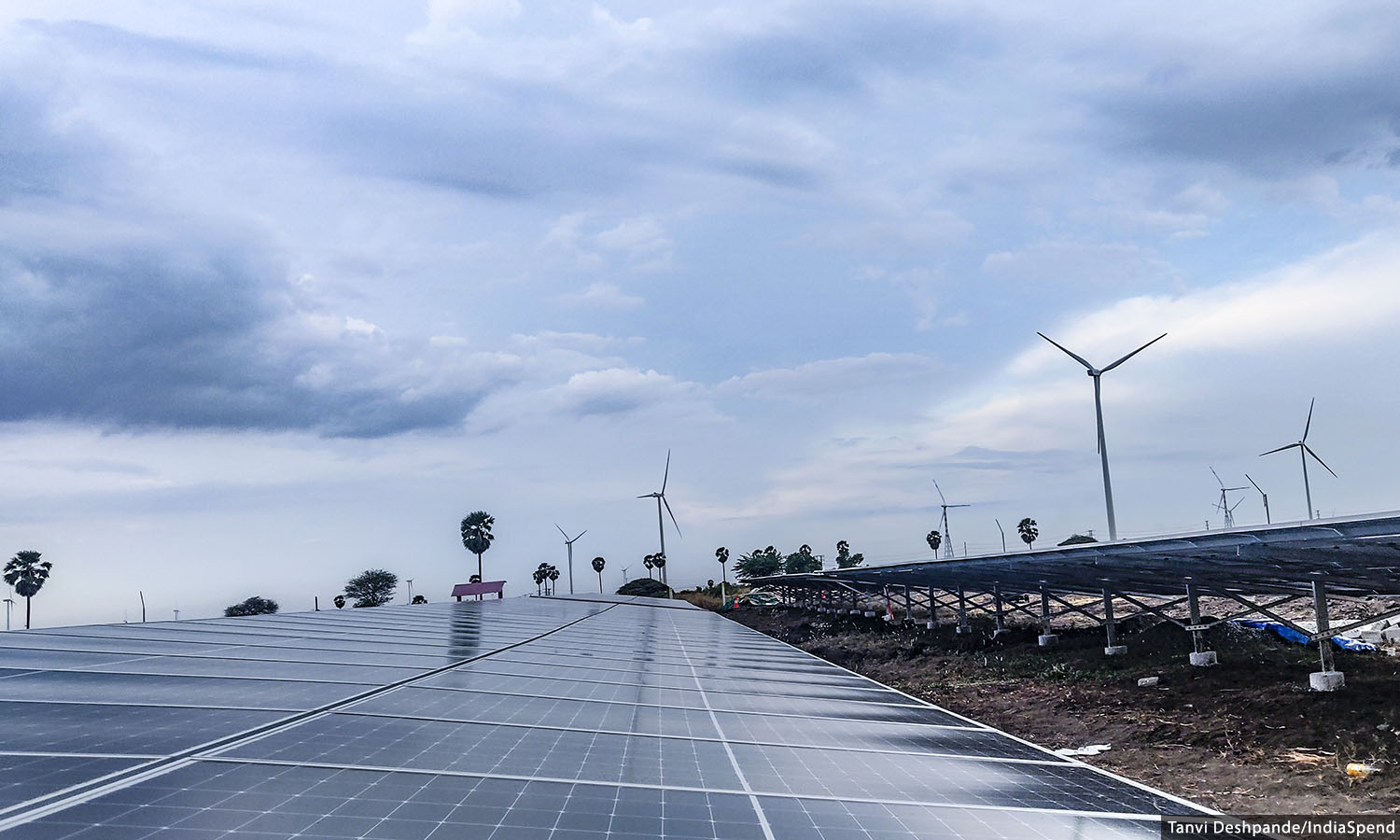

New Delhi – In a significant climate milestone, India has achieved its target of installing 50% of its power generation capacity from non-fossil fuel sources — five years ahead of the 2030 deadline set under the Paris Agreement, the Union Cabinet announced on Wednesday.
The government confirmed that the country is well on track to meet its broader climate commitments made during the 2021 United Nations Climate Change Conference (COP26) in Glasgow.
Union Minister for New and Renewable Energy Pralhad Joshi said:
“India’s achievement of 50% non-fossil fuel installed capacity ahead of the target year is a testament to its ambition, innovation, and commitment to sustainable development. It affirms that development and decarbonisation are not contradictory goals, but can in fact reinforce each other.”
He added that as India progresses towards its targets of 500 GW of non-fossil capacity by 2030 and net-zero emissions by 2070, the approach must be “bold, inclusive, and technology-driven.”
India’s updated Nationally Determined Contributions (NDCs), submitted in August 2022, aim to:
- Reduce emissions intensity of GDP by 45% by 2030 from 2005 levels,
- Achieve 50% installed capacity from non-fossil fuel sources by 2030,
- Create a carbon sink of 2.5 to 3 billion tonnes of CO₂ equivalent through forest and tree cover.
As of June 30, 2025, India’s total power capacity stood at 484.8 GW, of which:
- 242.04 GW (49.92%) comes from thermal/coal,
- 8.78 GW (1.81%) from nuclear,
- 234.00 GW (48.27%) from renewable sources, including large hydro.
The Cabinet emphasized that India is making substantial progress on Prime Minister Narendra Modi’s five-point climate pledge made at COP26, which includes:
- Achieving 500 GW non-fossil fuel energy capacity by 2030,
- Meeting 50% of energy needs from renewables,
- Reducing carbon emissions by 1 billion tonnes by 2030,
- Lowering carbon intensity of the economy by 45% by 2030,
- Achieving net-zero emissions by 2070.
Avantika Goswami, Programme Manager for Climate Change at the Centre for Science and Environment, commended the milestone but urged further efforts:
“As a commitment made to the Paris Agreement, the achievement of India’s NDC target is commendable and signals its intent to diversify its energy mix whilst continuing to tackle growing power demand. Having achieved this, all efforts must now be directed to raise the actual share of generation from renewables (combined with storage) in the power mix—which currently stands at 13% for solar and wind—to displace coal.”
Boosting Green Energy Investment
The Cabinet Committee on Economic Affairs (CCEA), chaired by PM Modi, has approved enhanced investment powers for NTPC Limited, allowing the state-run energy giant to invest up to ₹20,000 crore (up from the previous cap of ₹7,500 crore) in renewable energy via its subsidiaries NTPC Green Energy Ltd. (NGEL) and NTPC Renewable Energy Ltd. (NREL).
“The enhanced delegation given to NTPC and NGEL will facilitate accelerated development of renewable projects in the country. This move will also play a vital role in strengthening power infrastructure and ensuring investment in providing reliable, round-the-clock electricity access across the nation,” the Cabinet said in a statement.
In a parallel move, the Cabinet has granted investment exemption to NLC India Limited (NLCIL), formerly Neyveli Lignite Corporation, allowing it to invest ₹7,000 crore in its subsidiary NLC India Renewables Ltd. (NIRL). This exemption allows for direct and joint venture investments without prior approval and bypasses the 30% net worth ceiling usually imposed on CPSEs for JV investments.
“This investment is further exempted from the 30% net worth ceiling stipulated by the department of public enterprises (DPE)… providing NLCIL and NIRL greater operational and financial flexibility,” the statement added.