

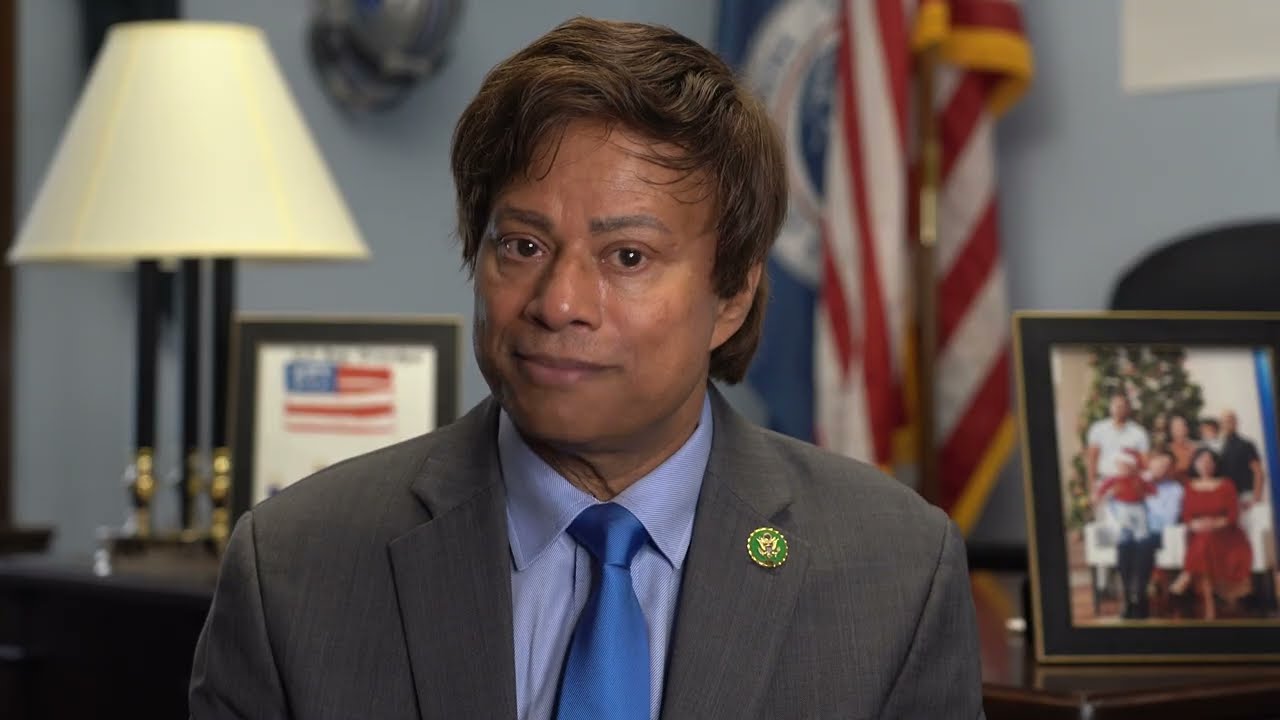

Indian-American Congressman Shri Thanedar expressed concern on Tuesday that the 5 million-strong Indian-origin community in the United States still lacks the political influence it ought to wield. Speaking candidly at an event hosted by an Indian community group in Washington, the Michigan representative emphasized the need for greater civic and political engagement.
“I will be candid with you. Our Indian American community is far from growing political muscle. We still don’t have the kind of political power we deserve,” Thanedar said.
Thanedar, who was elected to the U.S. House of Representatives in 2023 from Michigan’s 13th congressional district, pointed to a cultural focus on education, business, and family among Indian-Americans — but said this often comes at the expense of participation in political life.
“The focus has always been to get an education, get a good job, start a business, buy a home, raise your children… But one thing that we don’t focus on is wanting to be part of mainstream America. And we can only be part of mainstream America if we have political power in this country,” he added.
🇺🇸 Indian-Americans in U.S. Politics: The Landscape
Currently, six Indian-Americans serve in the U.S. House of Representatives, representing districts in states such as California, Illinois, Virginia, and Michigan. However, none hold seats in the U.S. Senate — although that could soon change.
- Rep. Raja Krishnamoorthi has announced his 2026 Senate bid from Illinois.
- Vivek Ramaswamy, a former Republican presidential hopeful, is now the frontrunner for Governor of Ohio, backed by Donald Trump.
- In New York City, Zohran Mamdani is the leading candidate for mayor after a major political upset.
- Aruna Miller, Maryland’s Lieutenant Governor, is part of a growing wave of Indian-American representation at the state level.
📣 Why Political Power Matters
Thanedar linked political power with community protection, especially amid recent immigration enforcement issues:
“You’re starting to see people being deported, ICE going indiscriminately, picking people up from Home Depots, schools, places of worship. Our freedom is never guaranteed. Our rights are never guaranteed. We have got to fight for it.”
A Carnegie Endowment report noted that Indian-Americans became the second largest foreign-born group in the U.S. after Mexicans in 2020. The community tends to lean Democratic, though Republican support has increased in recent years — especially during and after Donald Trump’s presidency.