

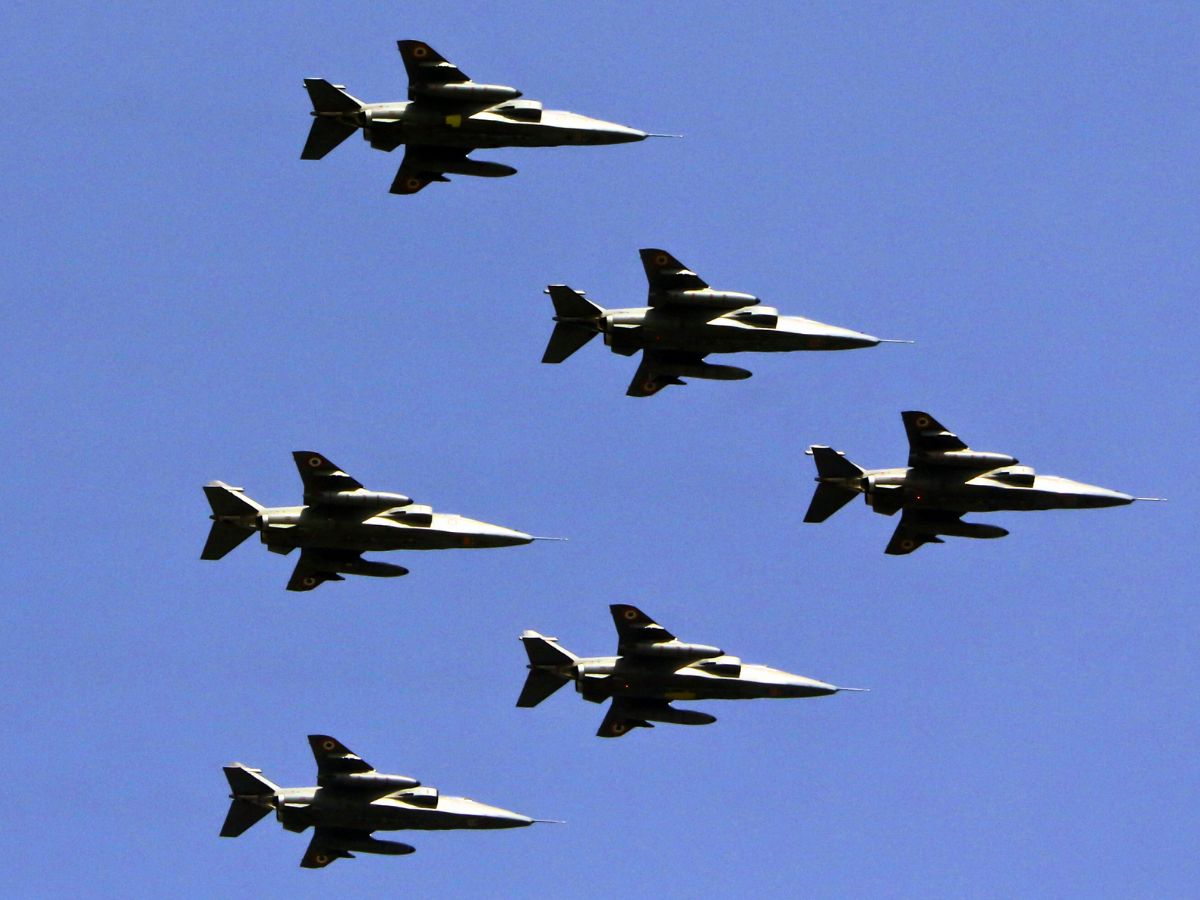

New Delhi: The Indian Air Force (IAF) will present a powerful new aerial display during the 2026 Republic Day flypast, unveiling a special ‘Sindoor’ formation that symbolises India’s air superiority and operational strength.
The seven-aircraft Sindoor formation will comprise some of the IAF’s most formidable frontline fighters — two Rafale jets, two Su-30 MKIs, two MiG-29s, and one Jaguar — flying in close formation to highlight the depth and diversity of India’s combat aviation capabilities.
Prahar And Garud Formations To Follow
Alongside the Sindoor formation, spectators will witness the Prahar and Garud formations, both designed in battle array to reflect joint-force coordination.
The Prahar formation will consist of three Advanced Light Helicopters (ALH) — two from the Indian Army and one from the Indian Air Force. The formation will be led by an aircraft carrying the Operation Sindoor flag, underscoring the mission’s strategic significance.
Flying immediately behind Prahar will be the Garud formation, maintaining a matching battle configuration and reinforcing the theme of integrated combat readiness.
26 Aircraft To Participate In Grand Flypast
In total, 26 aircraft will take part in the 2026 Republic Day flypast. The aerial spectacle will include:
- 16 fighter aircraft
- 4 transport aircraft
- 9 helicopters
The display is designed to reflect India’s evolving air power, joint-force integration, and readiness to respond to emerging security challenges.
Operation Sindoor: Background And Significance
The Sindoor formation commemorates Operation Sindoor, launched by India following the Pahalgam terrorist attack.
Beginning May 7, 2025, Indian armed forces conducted precision strikes deep inside Pakistan and Pakistan-Occupied Jammu and Kashmir (PoJK). Over a period of three days, Indian forces destroyed nine high-value terror launchpads belonging to Lashkar-e-Taiba (LeT), Jaish-e-Mohammed (JeM), and Hizbul Mujahideen.
The strikes extended hundreds of kilometres inside Pakistan, including targets in Punjab province, a region considered a strategic stronghold of Pakistan’s military establishment. Sensitive terror hubs such as Bahawalpur were struck — locations where even the United States had previously avoided deploying drones.
Pakistan Sought Ceasefire After Heavy Losses
Following the scale and precision of the Indian strikes, Pakistan’s Director General of Military Operations (DGMO) approached his Indian counterpart seeking a ceasefire. The ceasefire came into effect on the evening of May 10.
The Ministry of Defence later stated that Operation Sindoor achieved maximum damage to terrorist infrastructure while ensuring minimal civilian casualties.
‘Operation Sindoor Is Still Ongoing’: Army Chief
Last week, Indian Army Chief General Upendra Dwivedi confirmed that Operation Sindoor remains ongoing, with Indian forces maintaining heightened vigilance.
“Operation Sindoor is still ongoing, and we are keeping a close watch on every move of the enemy,” General Dwivedi said during an investiture ceremony at the South Western Command in Jaipur.
Highlighting the operation’s success, he added:
“Within 88 hours, our precision, professionalism and operational superiority forced Pakistan to agree to a ceasefire. This was a clear demonstration of the Indian Army’s decisive capabilities in upholding national sovereignty and national interests.”