

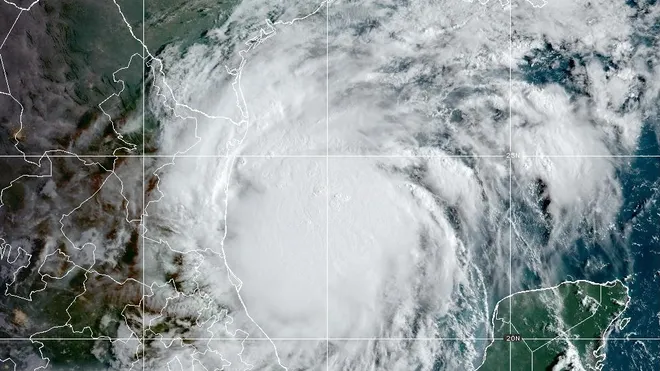

Tel Aviv, Israel — Tropical Storm Gil briefly intensified into a hurricane before being downgraded back to a tropical storm, as it churns far out in the eastern Pacific Ocean. According to ABC News, forecasters do not expect the storm to pose a threat to land and anticipate it will continue to weaken over the weekend.
As of Saturday, August 2, the National Hurricane Center (NHC) in Miami reported that the storm was located approximately 1,160 miles (1,865 kilometers) west of the southern tip of Mexico’s Baja California peninsula. No coastal watches or warnings have been issued.
The storm’s rapid change in strength was noted by USA Today, which reported that Gil was declared a tropical storm on Friday, strengthened into a hurricane overnight, and was downgraded back to a tropical storm by Saturday morning. The National Hurricane Center defines a hurricane as a tropical storm with maximum sustained winds of at least 74 mph. At its peak, Gil had maximum sustained winds of 75 mph.
The storm is currently moving west-northwest at 20 mph and is expected to continue on this path through the weekend. By Monday, August 4, it is forecast to slow down and shift to a more westward movement. The NHC predicts that Gil will continue to weaken and could become a post-tropical cyclone as early as Sunday.
Gil’s brief intensification comes during an active period for storms in the eastern Pacific. Another storm, Iona, also briefly became a hurricane before being downgraded to a tropical depression. Iona is located far west of Hawaii and is also not expected to threaten land. Forecasters are monitoring the region, suggesting that more storms could develop in the coming days.
For those in hurricane-prone areas, the National Oceanic and Atmospheric Administration (NOAA) offers several preparedness tips, including having an emergency plan, securing supplies, and reviewing insurance policies. Flood insurance, for example, typically has a 30-day waiting period, so it is crucial to prepare well in advance.