

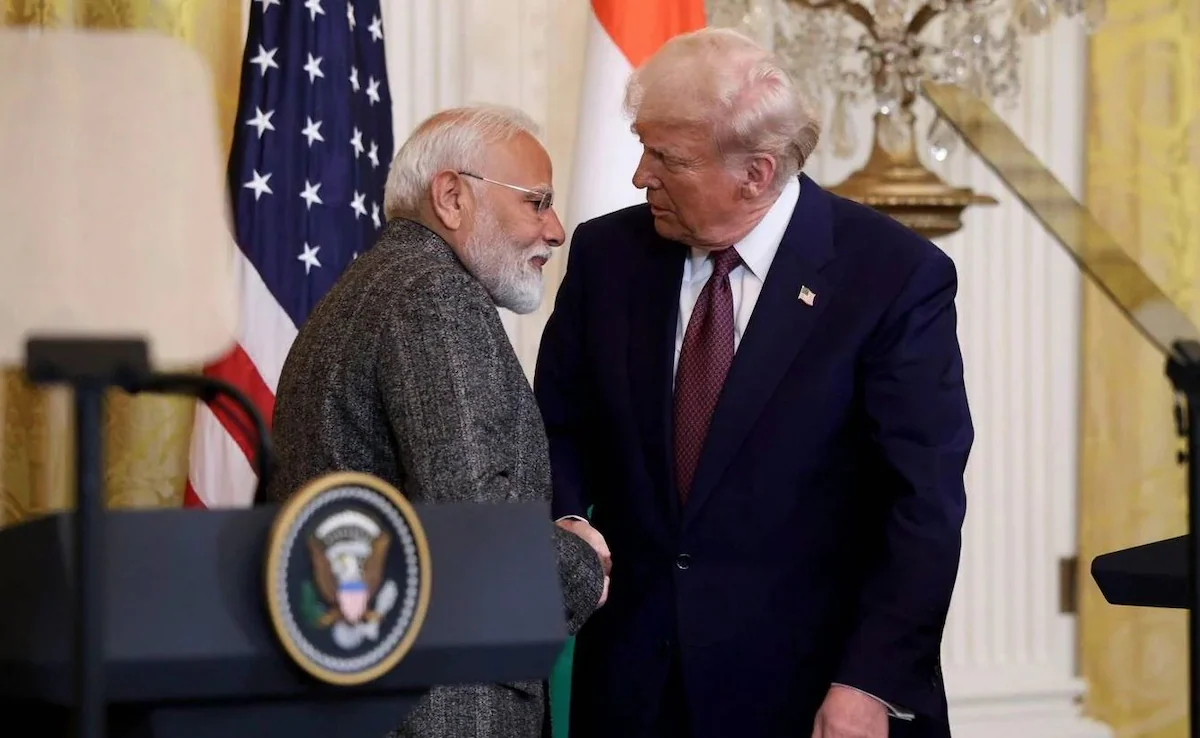

In early September, just weeks after Prime Minister Narendra Modi shared a visibly warm moment with Vladimir Putin and Xi Jinping at a summit in China, New Delhi quietly moved to arrest a sharp downturn in ties with Washington.
India’s National Security Adviser Ajit Doval was dispatched to the US capital on a sensitive mission: repair relations with an increasingly hostile Trump administration and reopen stalled trade negotiations. According to senior Indian officials familiar with the meeting, Doval conveyed New Delhi’s position during a private discussion with US Secretary of State Marco Rubio.
India, Doval said, wanted to move past the acrimony and return to the negotiating table. However, he made it clear that New Delhi would not be bullied by President Donald Trump or his aides, and was prepared to wait out his term if necessary—having weathered difficult US administrations in the past. At the same time, India wanted Washington to tone down public criticism, creating space for diplomacy to work.
Tariffs, Insults and a Diplomatic Low Point
The outreach came at a tense moment. In August, Trump had slapped 50% tariffs on Indian goods, branding India a “dead economy” with unfair trade practices and accusing New Delhi of indirectly financing Russia’s war in Ukraine through oil purchases.
Behind closed doors, Indian officials were deeply frustrated by the rhetoric. Publicly, the Modi government maintained silence while working to stabilise relations through diplomatic channels.
The first visible thaw came just days after Doval’s meeting. On September 16, Trump called PM Modi to wish him on his birthday, praising him for doing a “tremendous job.” By the end of the year, the two leaders had spoken four more times, slowly inching toward a broader trade understanding.
Neither the Ministry of External Affairs nor the Prime Minister’s Office commented on the backchannel talks. The US State Department, following standard diplomatic practice, declined to discuss private conversations.
Trade Deal Surprise and Tariff Rollback
On Monday, Trump unexpectedly announced on social media that he had reached a trade agreement with PM Modi, reducing tariffs on Indian goods to 18%, lower than many Asian peers. Crucially, a punitive 25% duty imposed over India’s Russian oil purchases was scrapped.
Trump claimed India had agreed to purchase $500 billion worth of US goods, shift to Venezuelan oil, and slash tariffs on American imports to zero. The Modi government has yet to confirm these specifics, and no formal documentation has been released by either side.
“The past year has been one where negotiators in both countries worked feverishly to get us to this point,” said Nisha Biswal, former US Assistant Secretary of State, in an interview with Bloomberg TV. “It benefits both nations that India is finally opening up more on global trade.”
Behind-the-Scenes Diplomacy and Strategic Calculations
Publicly, there were few signs that a deal was imminent. As recently as last week, US Trade Representative Jamieson Greer said India still had a long way to go in convincing Washington it was reducing Russian crude imports.
Even within New Delhi, Trump’s announcement caught many by surprise. Senior officials in the foreign and commerce ministries were reportedly unaware that a leaders’ call had been scheduled and struggled to confirm key details of the tariff rollback.
Yet behind the scenes, India had been steadily working to reset ties. Doval’s September meeting was meant to signal that the US remains a long-term strategic partner, essential to India’s economic and security ambitions.
The prevailing view in New Delhi was pragmatic: India needs US capital, technology and defence cooperation to counter China and achieve Modi’s goal of becoming a developed economy by 2047. Trump, officials felt, was a temporary disruption—not a determinant of long-term policy.
From Diplomatic Chill to Strategic Reset
Relations had deteriorated sharply after Trump claimed credit in May for ending a four-day India-Pakistan clash, a claim Modi publicly rejected. In June, Modi declined Trump’s invitation to the White House amid tensions, and later skipped a Malaysia summit to avoid an awkward encounter.
Momentum began to shift with the arrival of new US Ambassador Sergio Gor in December. A Trump loyalist close to Rubio, Gor framed tensions as disagreements between “real friends” and announced India’s invitation to join Pax Silica, a US-led supply chain alliance.
Last week, Gor met External Affairs Minister S. Jaishankar, discussing defence, trade and critical minerals. Jaishankar is currently in Washington, holding talks with Rubio on trade and supply chains.
“This appears to conclude a difficult six-month period for US-India relations,” said Alexander Slater, former India head of the US-India Business Council.
Strategic Autonomy Still Central to India’s Approach
Despite the rapprochement, India is keen to assert strategic independence. Modi’s widely circulated interaction with Xi and Putin was intended to signal that India has options beyond Washington. New Delhi has also diversified trade ties, clinching free trade agreements with the UK and the European Union, and strengthening ties with middle powers such as Canada and Brazil.
Still, the US remains indispensable. About 20% of India’s exports go to the US, especially electronics and mobile phones. American firms have pledged tens of billions in investments, including $52 billion from Amazon and Microsoft and $15 billion from Google for data centres.
“India needs capital, technology and investment,” said Milan Vaishnav of the Carnegie Endowment. “The US remains critical.”