

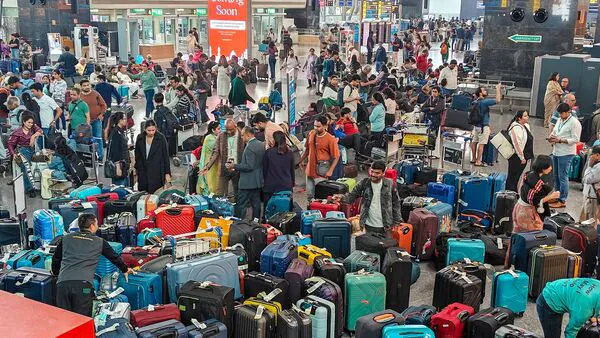

The massive, nationwide disruption of IndiGo flights, which has resulted in thousands of stranded passengers since Wednesday, was caused by a combination of poor internal planning and a technical failure, according to two officials. The dual problems involved flawed rostering under the new Flight Duty Time Limitations (FDTL) rules and a technical glitch in the airline’s crew-rostering and scheduling software.
In response to the crisis, Civil Aviation Minister Ram Mohan Naidu announced that the Government of India has decided to institute a high-level inquiry into the disruption.
Dual Causes of the Meltdown
Officials confirmed that the core issue was a domino effect starting with the technical and planning failures:
- Crew Rostering Glitch: A technical problem in IndiGo’s software responsible for crew scheduling led to widespread rostering errors, severely limiting the available pool of pilots and cabin crew required to operate flights.
- FDTL Miscalculation: This was compounded by poor rostering in the implementation of the new FDTL rules, which restrict pilot duty hours. The airline had previously acknowledged that its actual crew requirements were underestimated.
- Baggage System Strain: The operational meltdown was worsened by technical issues in the baggage systems at Delhi’s Terminal 3 and, more significantly, at Terminal 1. Although the technical baggage glitch was resolved, the overall cascading flight delays continued to affect baggage handling for passengers.
The officials noted that the operational strain and pressure on airport infrastructure prompted the Directorate General of Civil Aviation (DGCA) to order a probe into the airline’s failures.
Minister Naidu Orders High-Level Probe
Civil Aviation Minister Ram Mohan Naidu held a series of review meetings on Friday morning, including visiting the 24×7 control room (MoCA_GoI), and issued a strong statement outlining the government’s response.
“The Government of India has decided to institute a high-level inquiry into this disruption. The inquiry will examine what went wrong at Indigo, determine accountability wherever required for appropriate actions, and recommend measures to prevent similar disruptions in the future, ensuring that passengers do not face such hardships again,” the Minister said.
Crisis Escalation and Relief Measures
The operational decline intensified rapidly over three days, as confirmed by an aviation ministry official:
| Date | Scheduled Flights (AAI Airports) | Cancelled Flights | Delayed Flights |
| December 3 | 1,778 | 190 | 877 |
| December 4 | 1,585 | 396 | 791 |
| December 5 (by noon) | 1,354 | 682 | 244 |
The cascading impact was evident, forcing Pune airport to temporarily halt landings after all available parking bays were occupied by grounded IndiGo aircraft that lacked crew.
To mitigate passenger hardship, the Ministry announced clear relief measures:
- Refunds: In case of any flight cancellations, the airlines will issue full refunds automatically, without requiring passenger requests.
- Accommodation: Passengers stranded due to prolonged delays will be provided hotel accommodation arranged directly by the airlines.
Minister Naidu stated that flight schedules would begin to stabilize and return to normal by Saturday, with complete restoration of services anticipated within the next three days. Furthermore, airport directors of AAI were instructed to coordinate with IndiGo and ensure senior officials from AAI, IndiGo, and CISF are present at terminals to address grievances on the spot and ensure other airlines’ operations are not impacted.