

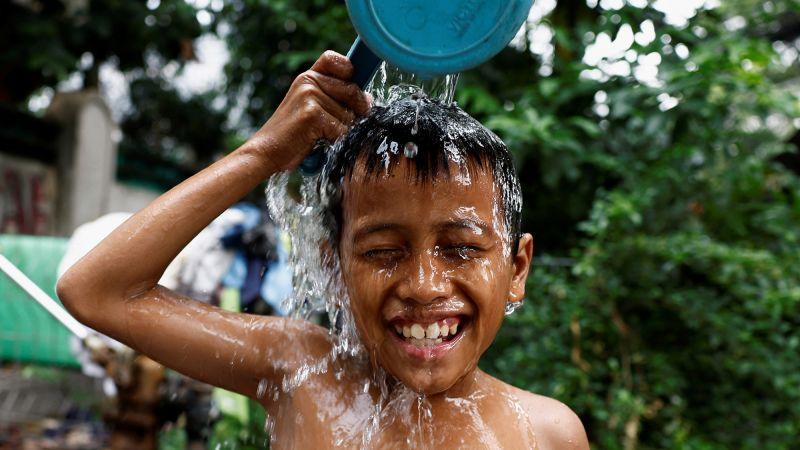

Climate change is threatening decades of progress in education, especially for children in low- and middle-income countries
New Delhi [July 20, 2025]: A new global report warns that children exposed to extreme heat may lose up to 1.5 years of schooling, as climate change increasingly disrupts education systems around the world.
The report, jointly released by UNESCO’s Global Education Monitoring team, the Monitoring and Evaluating Climate Communication and Education (MECCE) project, and the University of Saskatchewan (Canada), highlights the profound impact of climate-related events — from heatwaves to floods — on education outcomes globally.
Over the past two decades, schools were closed during at least 75% of extreme weather events that affected five million people or more. The consequences include learning loss, increased school dropout rates, and severe educational setbacks, especially in low- and middle-income countries.
Key Findings:
- Prenatal and early childhood exposure to extreme heat is linked to fewer years of education. In Southeast Asia, for instance, children exposed to temperatures two standard deviations above average are predicted to receive 1.5 fewer years of schooling.
- In China, extreme heat reduced high-stakes test performance, lowering graduation and college entrance rates.
- In the United States, schools without air conditioning saw a 1°C temperature rise result in a 1% test score drop, disproportionately affecting African American and Hispanic students — accounting for 5% of the racial achievement gap.
- In Brazil, students in the poorest and most heat-exposed areas experienced 1% annual learning loss due to rising temperatures.
Infrastructure Ill-Equipped
The report flags that nearly half of all public school districts in the U.S. need to upgrade or replace outdated HVAC systems, limiting their ability to adapt to rising temperatures.
It also emphasizes that marginalized and low-income communities are at the greatest risk. Of the 10 countries most affected by extreme weather in 2019, eight were low- or lower-middle-income nations. In 33 countries facing high climate risk for children, 29 are also fragile states.
Other Impacts
Climate change is also driving higher rates of childhood asthma, particularly among low-income households exposed to increasing levels of air pollution. In the U.S., individuals without a secondary school education are 15% more likely to live in these high-risk zones.
Natural disasters such as floods and cyclones have led to the deaths of students and teachers, and widespread damage to school infrastructure. After the 2013 Jakarta floods, many schools served as emergency shelters or were closed due to damage. However, schools with disaster preparedness plans were found to respond more effectively.
The report urges urgent investment in resilient education infrastructure, inclusive planning, and climate-responsive policies to ensure that children’s right to education is protected in the face of escalating climate threats.