

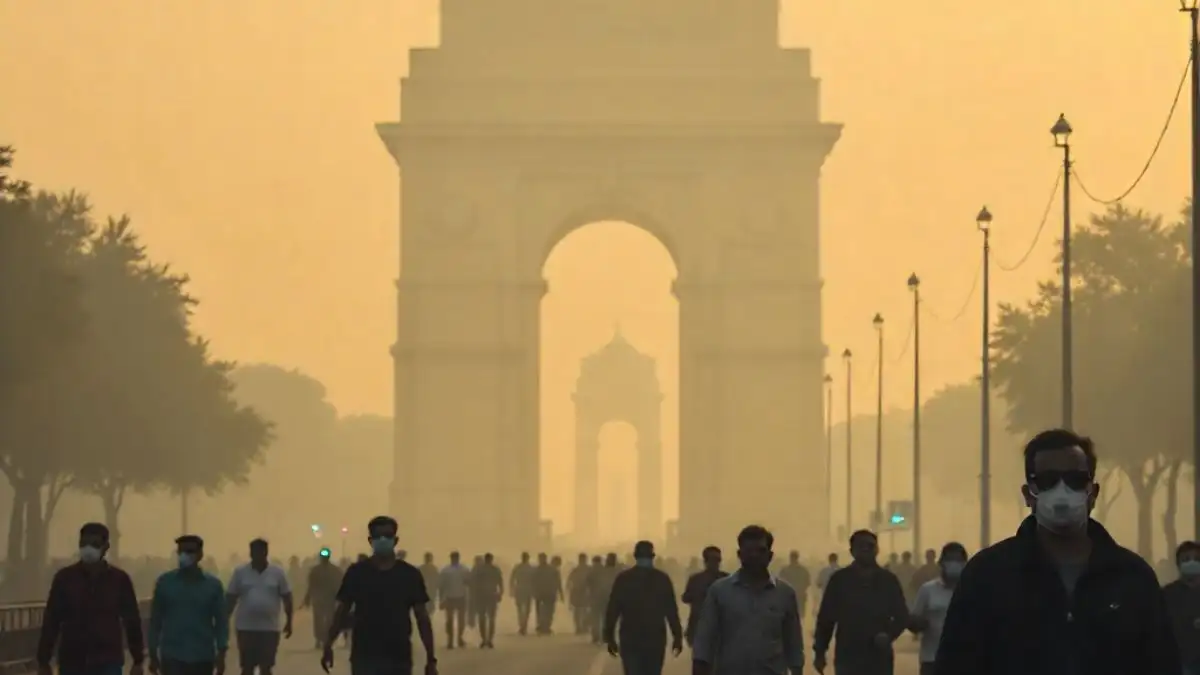

NEW DELHI: The national capital is once again grappling with a severe public health crisis as its air quality has deteriorated into the ‘very poor’ category following Diwali celebrations. Data from the Central Pollution Control Board (CPCB) on Tuesday, October 21, 2025, showed Delhi’s overall Air Quality Index (AQI) hitting 355.
Compounded by recent festival fireworks, specific meteorological conditions, and persistent stubble burning in neighboring states, the city’s air quality has created a hazardous environment, prompting urgent warnings from leading health experts.
Health Experts Detail Serious Risks
Medical professionals have highlighted the grave risks posed by the persistently high pollution levels, particularly for vulnerable populations:
- Heart and Respiratory Conditions: Dr. GC Khilnani, Chairman of PSRI Institute of Pulmonary, Critical Care & Sleep Medicine, cited a study indicating that pollution is causing a significant 22–25% rise in cases of heart attacks, asthma, and bronchitis.
- The Winter Effect: Dr. Nikhil Modi, Respiratory Medicine Specialist at Apollo Hospitals, explained the seasonal spike, noting that as winter approaches, cooler air traps pollutants close to the ground. He confirmed a surge in symptoms like coughing, watery eyes, and breathing difficulties, especially among those with allergies and existing lung problems, following Diwali. He strongly advised both children and the elderly to stay indoors and wear masks.
- Vulnerable Groups: Dr. Dhiren Gupta, Paediatric Pulmonologist at Sir Ganga Ram Hospital, emphasized the extreme vulnerability of children, pregnant women, and asthma patients. He warned that even otherwise healthy individuals risk developing lung changes that could lead to pollution-induced asthma, citing vehicular pollution as a major ongoing concern.
Life Expectancy and Local Impact
The long-term consequences of Delhi’s toxic air have been underscored by a recent report from the Air Quality Life Index (AQLI):
- Loss of Life Expectancy: The report revealed that Delhi residents are losing an average of 8.2 years of life expectancy due to exposure to high PM2.5 levels. Meeting the World Health Organization’s (WHO) standard of 5 $\mu$g/m³ could drastically reduce this loss.
- PM2.5 Concentration: Delhi’s annual average PM2.5 level in 2023 was a staggering 88.4 $\mu$g/m³, significantly higher than the national average of 41 $\mu$g/m³.
- Local Distress: Residents are feeling the immediate effects, with local runner Ashish Ranjan describing his struggles, saying, “I cannot breathe properly” during his morning routine. Other residents emphasized the necessity of individual responsibility in pollution control, including strictly adhering to green cracker guidelines.
‘Severe’ Hotspots Identified
By 10 AM on Tuesday, the CPCB reported Delhi’s overall AQI at 359, with several areas already reaching the ‘Severe’ category (AQI 401-500), where prolonged exposure can lead to serious respiratory illness. Key hotspots included:
- Bawana: 432
- Jahangirpuri: 405
- Ashok Vihar: 408
- Wazirpur: 408
Fire Service Reports Fewer Incidents
In a comparatively positive note, Delhi’s fire services reported fewer emergencies during the festival compared to the previous year, responding to 269 calls on Diwali day versus 318 in 2024. Despite the drop, a major incident required the rescue of seven people in Janakpuri, and two firefighters sustained minor injuries in Rupnagar.