

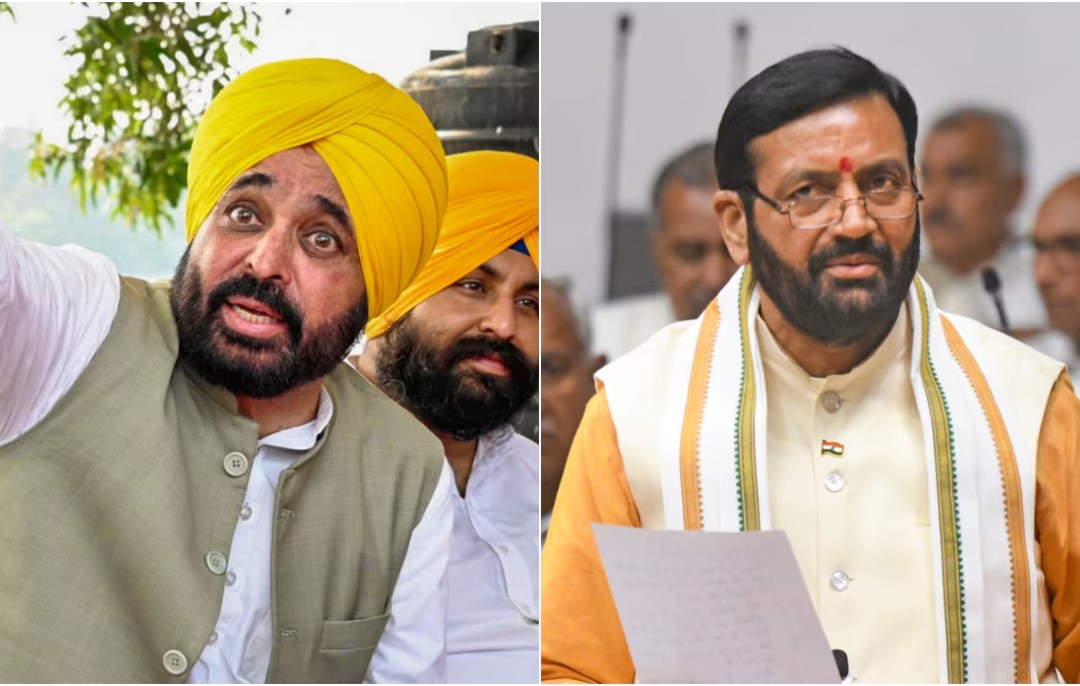

Haryana Chief Minister Nayab Singh Saini has criticised Punjab Chief Minister Bhagwant Mann over his recent remarks in the ongoing water-sharing dispute between the two states.
On May 1, Bhagwant Mann raised alarms about the declining water levels in Punjab’s major reservoirs, stating that Pong Dam, Bhakra Dam, and Ranjit Sagar Dam are currently 32 feet, 12 feet, and 14 feet below their respective levels from the previous year.
Reacting strongly, CM Saini said the issue of water should not be politicised as it directly affects lives. He called Mann’s comments “unfortunate”, urging restraint and cooperative dialogue.
“One should not talk like this because a person’s life depends on water. It is not that we do not have even a drop of water; I request everyone not to do politics. This is unfortunate because this type of politics does not last long. It harms the state, and oneself as well,” Saini told media during the ‘Walk for Drug Free Chandigarh’ event.
Tensions further escalated after the Bhakra Beas Management Board (BBMB) ordered Punjab to release 8,500 cusecs of water to Haryana. Mann strongly objected, citing Punjab’s own water crisis caused by declining groundwater and the upcoming paddy sowing season.
In response, CM Bhagwant Mann has convened an all-party meeting on May 2 to address the state’s water rights. The Punjab government is also considering a special session of the state assembly on Monday to formally table its stance on the matter.
Supporting the Punjab government’s position, Punjab Congress chief Amarinder Singh Raja Warring said:
“We never stopped the water for 10 years… But if there is a water shortage in Punjab, it is natural that we will prioritise Punjab… Maybe Delhi and Haryana need more water, but we have already released their share of water. We are with the people of Punjab and the Punjab government on this topic. If they will steal our water too, then what will be left of the state?”
The situation remains tense as both states weigh their water needs against environmental realities and legal obligations.