

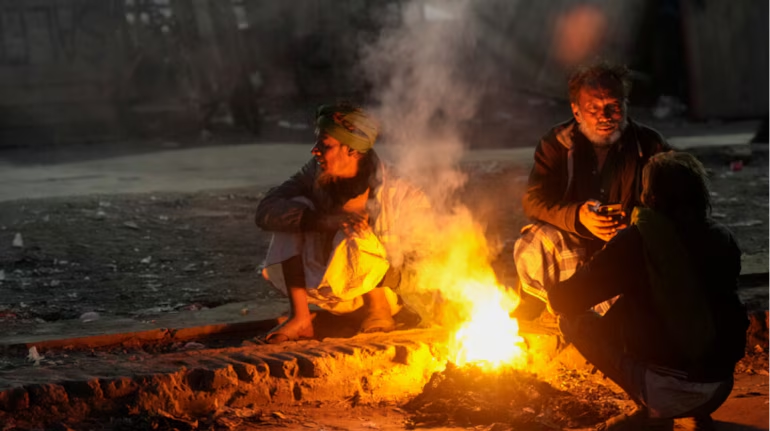

Gurugram and Delhi experienced an intense cold wave on Tuesday, recording temperatures lower than several popular hill stations, as residents across the National Capital Region battled near-freezing conditions. Gurugram touched a historic low of 0.6 degrees Celsius on Monday, its coldest January temperature in nearly 50 years, while Delhi recorded a minimum of 3 degrees Celsius.
According to India Meteorological Department (IMD) data, Gurugram’s temperature matched its previous low recorded on January 22, 1977. Such extreme cold has been seen only three times earlier in the city’s history. Remarkably, the city was colder than hill destinations such as Shimla, which recorded 8.8 degrees Celsius, and Mussoorie, which stood at 7.7 degrees Celsius. Other hill locations including Mukteshwar, Tehri and Jollygrant also remained warmer than the NCR.
Explaining the unusual weather pattern, IMD Director General M Mohapatra said that cloud cover over the higher Himalayan regions, caused by an active western disturbance, prevented heat from escaping at night. This kept minimum temperatures in hill stations relatively higher. In contrast, clear skies over the plains combined with cold northwesterly winds led to strong radiative cooling, causing temperatures to plunge sharply in cities like Gurugram and Delhi.
The cold wave left visible impacts across Gurugram and nearby areas, with frost forming on crops, grasslands and vehicle windshields. Residents described numbing cold, dense fog and hazardous travel conditions, especially during early morning hours. Several commuters reported poor visibility on elevated roads due to frost and fog.
IMD has issued an orange alert for parts of Haryana, Delhi and neighbouring states, warning of cold wave to severe cold wave conditions, dense fog and ground frost until January 13. Health officials have cautioned that prolonged exposure to such cold can lead to frostbite, flu and worsening respiratory issues, particularly among children and the elderly.
Meteorologists said temperatures are likely to remain abnormally low over the next couple of days, with no significant change expected in minimum temperatures across northwest India. A gradual rise of 2 to 4 degrees Celsius may follow later in the week as cloud cover increases. A fresh western disturbance expected around January 15 could bring some relief.
Experts also noted that the severity of the cold wave has been amplified by an unusually dry winter, with northwest India recording a rainfall deficit of over 80 percent in December and early January, resulting in little snowfall in the hills.