

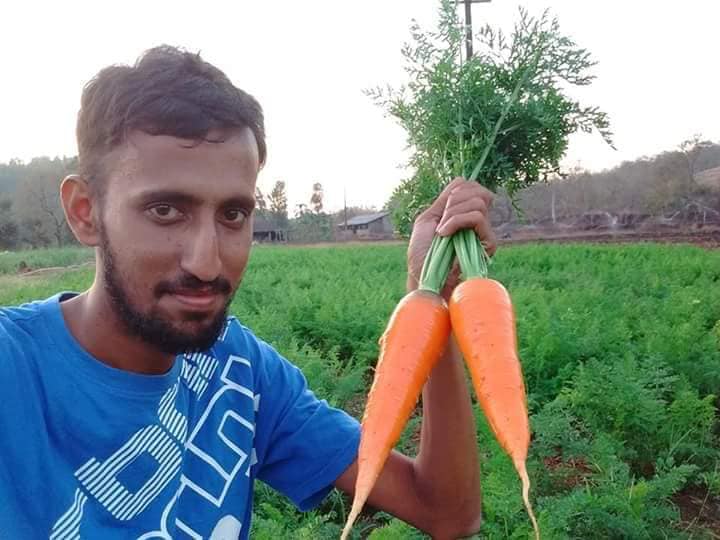

PANAJI – In a strategic move to inspire the state’s youth, the Goa government officially named Varad Samant, a 32-year-old farmer from Dharbandora, as its Agriculture Brand Ambassador on Friday, January 9, 2026.
Chief Minister Pramod Sawant made the announcement, citing Samant as a prime example of how innovation and mechanization can turn agriculture into a highly lucrative career. Samant is the first individual to be appointed to this newly created role in Goa.
The Success Story: From Reluctant Cultivator to “Agripreneur”
Varad Samant’s journey is a testament to the “Waste-to-Wealth” philosophy in the agricultural sector.
- The Turnaround: After completing his B.Com in 2012, Samant initially shunned farming. However, following the 2012 mining halt in Dharbandora, his family pivoted to full-time cultivation.
- Breaking Myths: He became a local sensation by successfully growing carrots in Goa—a crop previously thought impossible for the state’s soil.
- The Revenue: The state horticulture department paid Samant ₹65 lakh, ₹60 lakh, and ₹58 lakh over the last three consecutive years for his produce.
- Profitability: Samant manages 10 acres (roughly 60,000 sq. meters) with 20–22 workers, generating a net profit of approximately ₹30 lakh annually.
Key Crops & Innovative Techniques
Samant supplies 70–80 tonnes of cabbage and nearly 10 tonnes of carrots annually to the Goa State Horticulture Corporation.
| Crop | Cycle Duration | Profit Potential (per Samant) |
| Cabbage | 70 Days | High volume, consistent demand. |
| Watermelon | 60 Days | ₹6 Lakh from 20 tonnes (at ₹30/kg). |
| Carrots | 20 Days (Maturity) | Niche market, first-mover advantage in Goa. |
| Bhindi (Okra) | Year-round | Assured price of ₹50/kg via State Govt. |
Modern Methods: Samant utilizes drip irrigation and organic pesticides, blending traditional knowledge with technology to reduce labor energy and water waste.
The “Swayampurna” Mission
Agriculture Director Sandeep Phaldesai noted that Samant will now conduct demonstrations and lectures across all talukas of Goa.
- Objective: To make Goa self-sufficient in vegetable production and reduce dependence on neighboring Karnataka and Maharashtra.
- Incentives: Samant highlighted Goa’s Assured Price Mechanism—which offers fixed year-round rates for crops like bhindi—as a unique benefit not available in other Indian states.
“Anyone with land and water can take up farming and become self-reliant. Agriculture today requires both brawn and brain.” — Varad Samant