

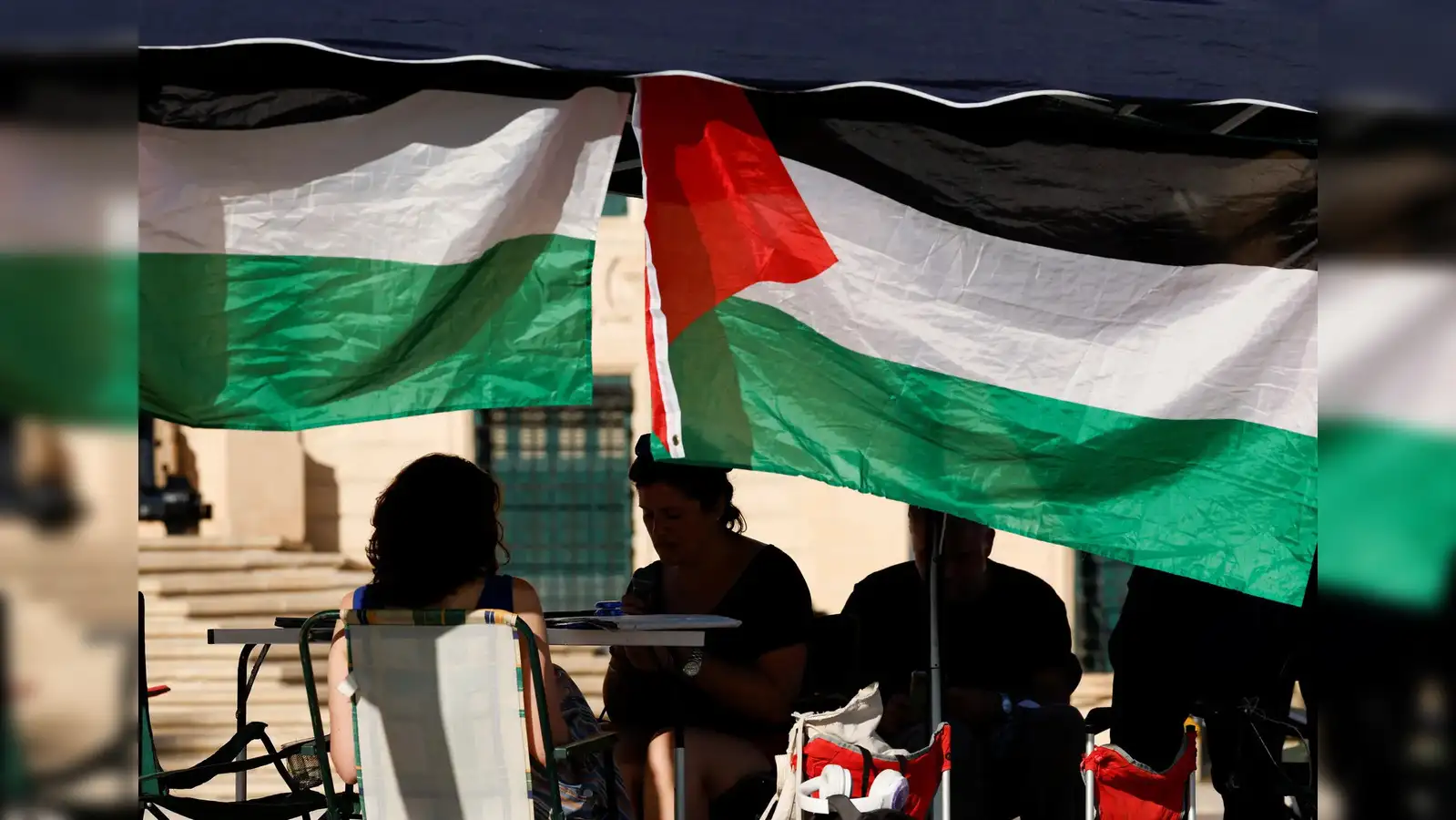

UN Headquarters, New York: A major diplomatic shift is underway as a growing number of Western nations formally recognize a Palestinian state. The movement gained significant traction at a world summit convened on Monday by France and Saudi Arabia, just a day after Australia, Britain, Canada, and Portugal took the historic step. This coordinated push by key US and Israeli allies has sparked an international diplomatic scramble and intensified global pressure on Israel.
The recent wave of recognition, which follows similar moves by Ireland, Norway, and Spain in May 2024, is largely a response to the devastating war in Gaza and Israel’s continued expansion of Jewish settlements in the occupied West Bank. While Israel views this as an “absurd prize for terrorism,” countries making the move say it’s intended to revive the long-dormant peace process and preserve the possibility of a two-state solution.
The Current Status of Palestinian Statehood
The formal recognition of Palestine is a complex issue. The Palestine Liberation Organization (PLO) declared an independent Palestinian state in 1988, and to date, about 150 of the 193 U.N. member states have done so. The “State of Palestine” currently holds observer status at the United Nations but lacks full voting rights. Attaining full U.N. membership would require approval from the Security Council, where the United States has a veto.
The Palestinian Authority (PA), led by President Mahmoud Abbas, is recognized as the international representative of the Palestinian people and exercises limited self-rule in parts of the Israeli-occupied West Bank. However, the PA has no authority in the Gaza Strip, which has been administered by Hamas since 2007.
The Purpose and Impact of Recognition
Countries like France and the UK have stated that the aim of recognition is to:
- Pressure Israel: The move is a strong diplomatic signal intended to force Israel to end its military operations in Gaza, curtail the building of new settlements, and return to peace negotiations.
- Support Palestinian Governance: French President Emmanuel Macron noted that recognition comes with a commitment from the PA to enact reforms, which would improve governance and make it a more credible partner for a post-war administration of Gaza.
While those who view the gesture as largely symbolic point to the fact that countries like China, India, and Russia have recognized Palestine for decades with little practical effect, proponents argue it is more than an empty gesture. Husam Zomlot, head of the Palestinian mission to the UK, suggested it could lead to partnerships between entities on an equal footing. It might also pressure recognizing countries to review their relationships with Israel, such as by banning products from Israeli settlements in occupied territories.
In practice, a key change is that Palestinian diplomatic missions in countries that recognize the state are expected to be upgraded to full-fledged embassies. However, countries are not expected to be able to open new embassies in Palestinian territories, where Israel controls access.
Reactions from Israel and the United States
The recognition has been met with anger and strong condemnation from Israel. Prime Minister Benjamin Netanyahu has called it a “prize for terrorism” and vowed that “a Palestinian state will not be established west of the Jordan River.” Hardline members of his coalition, including far-right ministers Itamar Ben-Gvir and Bezalel Smotrich, have called for the immediate annexation of the West Bank in response.
The United States, Israel’s main ally, also opposes the recognition moves by its European allies. The Trump administration, which has long argued that a Palestinian state can only be established through direct negotiations, has called the moves “performative gestures.” It has imposed sanctions on Palestinian officials and even revoked visas for President Abbas and other PA figures, preventing them from attending the UN General Assembly.
The new wave of recognition has created a significant rift between the US and its closest allies, leaving the US and Israel increasingly isolated on the world stage.