

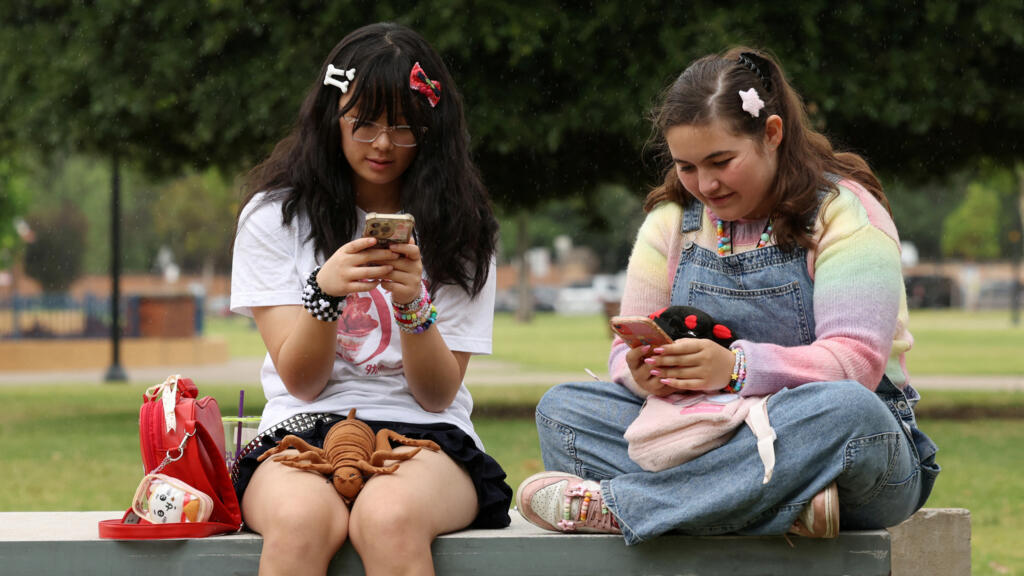

Paris: France has taken a major step toward regulating children’s access to social media after the National Assembly voted in favour of legislation that would ban under-15s from using social networking platforms. The move reflects growing concern over online bullying, mental health risks, and the impact of excessive screen time on young people.
Lawmakers voted 116 to 23 in support of the bill, which now heads to the Senate before returning to the lower house for a final vote. If passed, the law would prohibit children under 15 from accessing social media platforms, including social networking features embedded within other digital services.
French President Emmanuel Macron has repeatedly linked social media exposure to rising violence among youth and has pushed for decisive action. He wants the ban implemented by September, in time for the start of the next academic year.
Inspired by Australia’s landmark ban
France’s proposal closely follows Australia’s world-first ban on social media use for children under 16, which came into effect in December. Platforms affected by Australia’s law include Facebook, Instagram, Snapchat, TikTok and YouTube. Several European countries—including Britain, Denmark, Spain and Greece—are now studying similar measures.
Centrist lawmaker Laure Miller, who presented the bill to the Assembly, said the legislation was about protecting children’s well-being.
“With this law, we are setting a clear boundary in society and saying social media is not harmless,” Miller said.
“Our children are reading less, sleeping less, and comparing themselves to one another more. This is a battle for free minds.”
Broad political and public backing
Support for the ban cuts across party lines. Far-right lawmaker Thierry Perez described the issue as a “health emergency,” arguing that unrestricted online expression has come at a high cost for children.
A Harris Interactive survey conducted in 2024 found that 73% of French citizens support banning social media access for under-15s, highlighting strong public backing for tougher rules.
The proposed law would require platforms to introduce age-verification systems that comply with European Union data-protection standards. However, enforcing such measures remains a challenge. Australia’s experience showed that many children continued accessing platforms despite the ban, exposing enforcement loopholes.
Smartphone restrictions extended to high schools
In addition to social media restrictions, the legislation would expand France’s existing ban on smartphones in junior and middle schools to also include high schools, further tightening limits on students’ screen use during school hours.
Teenagers interviewed on the streets of Paris expressed mixed reactions. While some acknowledged the mental health risks and pressures created by social media, others argued that a complete ban goes too far and could limit social connection.
The European Parliament has previously urged the EU to establish minimum age limits for social media access, though enforcement remains the responsibility of individual member states.