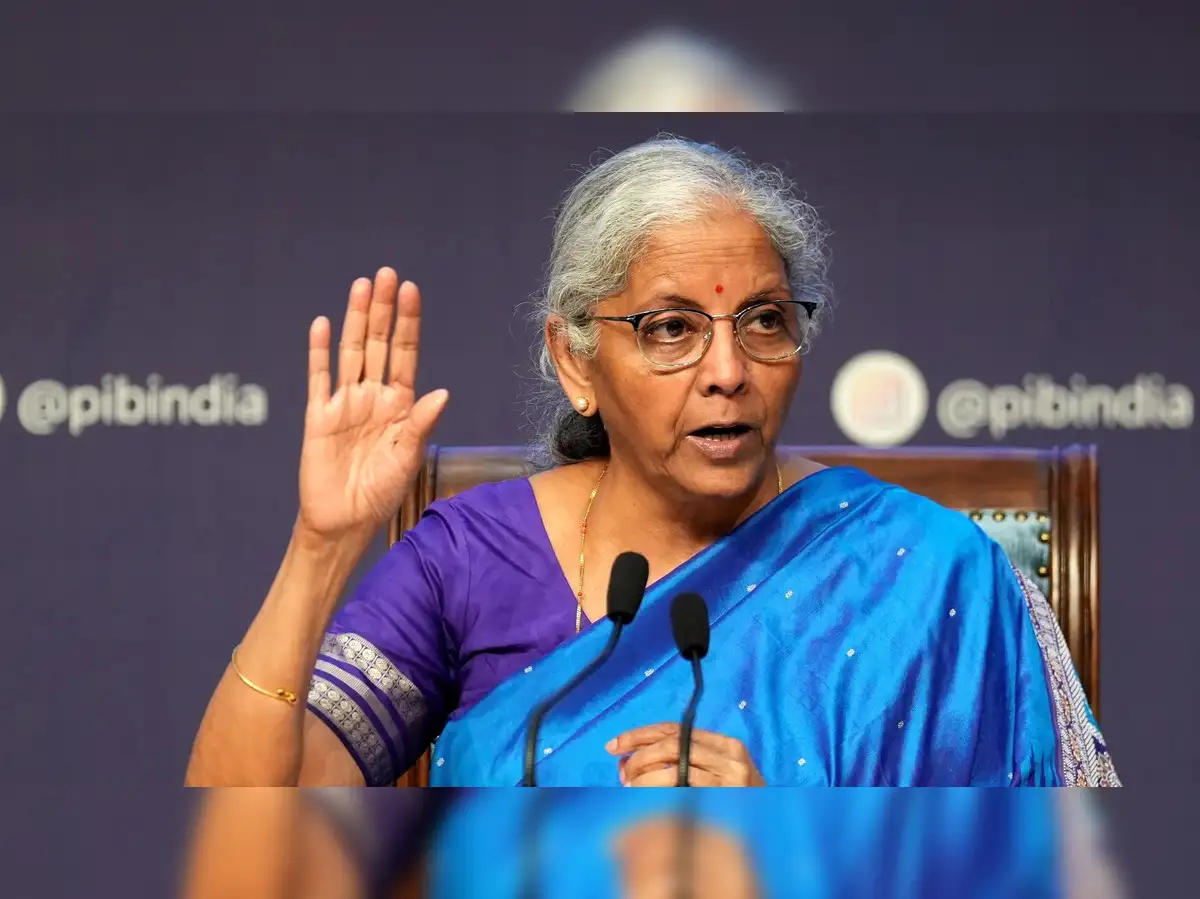
NEW DELHI — Union Finance Minister Nirmala Sitharaman on Tuesday directly addressed and dismissed the “Centre versus states” narrative, clarifying the reason behind the discontinuation of the GST compensation cess and its implications for state revenues. Speaking at the NDTV Profit GST Conclave, she asserted that the decision was a shared one, rooted in the need to repay loans taken during the pandemic.
The compensation cess was an additional levy introduced in 2017 to ensure that states were financially protected for five years after the rollout of the GST. This was to compensate for any potential revenue loss they might face under the new unified tax regime. According to Sitharaman, this compensation to states ended on June 30, 2022.
“In 2022, we could not pay states any compensation because we had to borrow,” she explained. She added that the collection of the compensation cess was therefore continued to ensure that these loans, taken during the COVID-19 pandemic, could be repaid.
Sitharaman said that she would “like to correct state FMs” who are expressing concern that their revenue will decline. She argued that any potential shortfall can be easily offset by “better collection efficiency,” which would improve the overall revenue generated. “If states lose revenue, then the Centre will lose revenue too,” she said, emphasizing that “the Centre versus states is not the point here, all of us are together in it.”
The Finance Minister further clarified that the collection of GST compensation cess is set to end in this calendar year, 2025. This timeline is a shift from previous expectations, which had indicated that the collection would continue until March 2026. The last GST Council meeting, she noted, “gave us clarity” to end it in 2025.
GST Reforms were 1.5 Years in the Making
During her address, Sitharaman also provided insight into the background of the latest GST reforms. She stated that the overhaul of the indirect taxation regime was a long-term plan initiated approximately one and a half years ago. She credited Prime Minister Narendra Modi with continuously nudging the finance ministry to move forward with the changes.
Sitharaman revealed that the Prime Minister had reminded the finance ministry about the need for GST reforms after the massive income tax cuts were announced during the presentation of the 2025-26 Union Budget in February.
Under the revised GST regime, the tax slabs have been streamlined from four—5%, 12%, 18%, and 28%—down to just two: a standard 18% and a merit rate of 5%. This simplification has led to a reduction in taxation rates on most products and services, aiming to boost consumption and simplify compliance for businesses.
No ‘Centre Vs States’ Divide: FM Nirmala Sitharaman Clarifies GST Compensation Cess Ending In 2025