


Early dinners are becoming increasingly popular, and for good reason. Finishing your last meal between 6 pm and 8 pm — ideally two to three hours before bedtime — aligns better with your body’s natural circadian rhythm. This practice can help stabilise blood sugar levels, improve digestion, optimise metabolism, and even enhance sleep quality.
However, many people face one common problem: hunger strikes again just before bedtime. What starts as a small craving often turns into mindless snacking, leading to excess calorie intake and undoing the benefits of eating early.
If this sounds familiar, you’re not alone. The good news? A few simple habits can help you stay full, satisfied, and on track.
Why Late-Night Hunger Happens
When you shift dinner earlier, your body may need time to adjust. If your meal isn’t balanced or filling enough, or if you’ve undereaten during the day, your hunger hormones can spike late at night. Stress, boredom, dehydration, and poor meal timing also play a major role.
Instead of ignoring the hunger or giving in to junk food, try these practical, sustainable strategies.
7 Practical Tips To Prevent Late-Night Snacking
1. Make Your Early Dinner Truly Filling
If you’re eating dinner at 6:30–7:00 pm, it needs to be nutritionally balanced. A light, carb-heavy meal won’t keep you full for long.
Focus on:
- Protein: Dal, paneer, tofu, eggs, chicken, or fish (slower digestion keeps you fuller longer)
- Complex carbohydrates: Roti, brown rice, millets, oats
- Healthy fats: A small amount of ghee, nuts, seeds, or avocado
- Fibre-rich vegetables: Add volume and satiety
A well-balanced plate prevents hunger spikes between 9–11 pm and reduces cravings for chips or sweets.
2. Plan a Small, Smart Evening Snack
Sometimes your body genuinely needs something small before bed — and that’s okay. Instead of resisting and later overeating, plan a mindful mini snack 1–2 hours after dinner.
Healthy options include:
- Curd with chia or flax seeds
- A fruit paired with a handful of nuts
- Warm milk with turmeric
- A boiled egg
Keep portions small and eat slowly. Planning ahead prevents impulsive, high-calorie choices.
3. Drink Water Before You Reach for Food
Thirst is often mistaken for hunger, especially in the evening. If you haven’t hydrated properly during the day, your body may send mixed signals.
Before grabbing a snack:
- Drink a full glass of water
- Wait 10–15 minutes
If the craving disappears, dehydration was likely the cause. Also avoid heavy caffeine or sugary drinks late at night, as they can disrupt sleep.
4. Set a “Kitchen Closed” Time
Establish a cut-off time for eating — for example, 9 pm if your bedtime is 11 pm. This helps train both your body and mind.
Initially, you may feel mild hunger, but within 1–2 weeks, your body clock adapts. During this adjustment period:
- Sip herbal tea
- Drink warm water
- Distract yourself with a calming activity
Consistency is key.
5. Replace Snacking With a Relaxing Night Routine
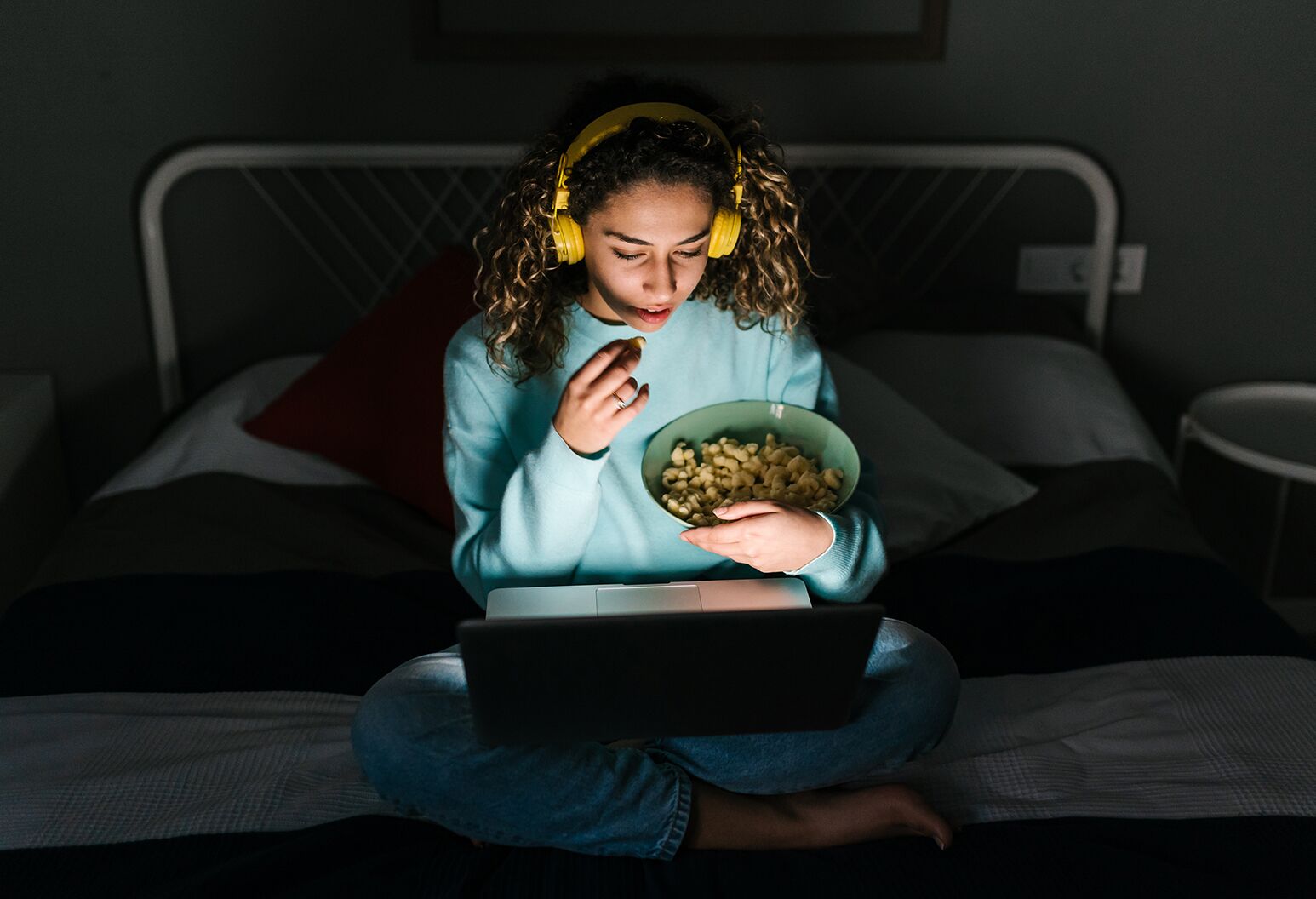
Late-night eating is often habit-driven rather than hunger-driven. Many people snack while scrolling on their phones or watching TV.
Swap food with:
- Light stretching
- Journaling for 10 minutes
- Reading a book
- Taking a warm shower
- Listening to calming music
Creating a soothing wind-down routine helps your brain associate evenings with relaxation — not eating.
6. Identify Emotional or Stress Eating Triggers
Stress, fatigue, or emotional discomfort often drive nighttime cravings. If you notice stronger urges on stressful days, pause and reflect.
Instead of food, try:
- Deep breathing exercises
- A short walk
- Calling a friend
- Writing down your thoughts
Over time, healthier coping mechanisms reduce emotional snacking.
7. Eat Balanced Meals Throughout the Day
If you skip meals or eat too little during the day, your body will compensate at night.
Aim for:
- 3 balanced meals
- 1–2 healthy snacks
- Protein and fibre in every meal
For example:
- Breakfast: Oats with nuts and fruit
- Lunch: Dal, vegetables, curd, and whole grains
- Evening snack: Nuts or fruit
Steady energy intake prevents extreme hunger later.
The Bottom Line
Eating an early dinner offers real health benefits — from better digestion to improved sleep. But the strategy only works if you manage late-night cravings effectively.
Instead of fighting hunger or feeling guilty about it, focus on balanced meals, proper hydration, and mindful habits. Small adjustments can help you enjoy the benefits of early dining without unnecessary snacking.
Disclaimer
This content provides general information only and is not a substitute for professional medical advice. Consult a qualified healthcare provider for personalised guidance.