

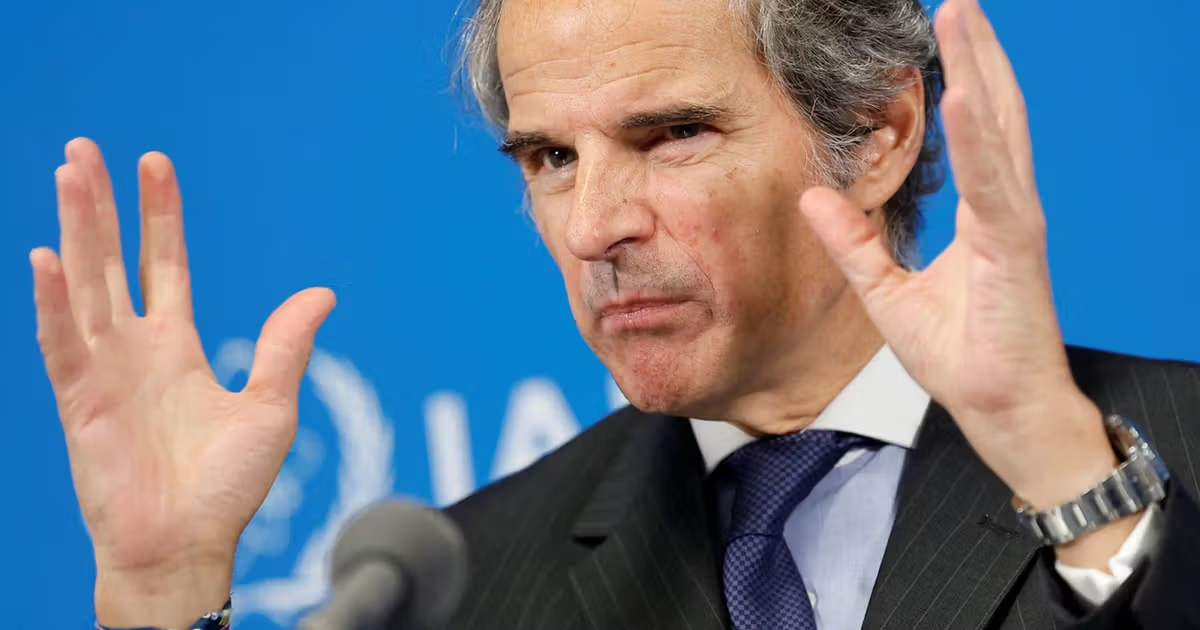

The head of the International Atomic Energy Agency (IAEA), Rafael Mariano Grossi, has called for “utmost restraint” amid escalating military exchanges involving the United States, Israel, and Iran.
Addressing an extraordinary closed-door session of the IAEA’s 35-nation Board of Governors in Vienna, Grossi described the current security environment in the Middle East as deeply alarming. The meeting was convened at Russia’s request following concerns raised by Tehran over reported strikes near sensitive nuclear infrastructure.
The warning comes after Iran’s ambassador to the IAEA, Reza Najafi, alleged that US–Israeli strikes targeted the Natanz nuclear facility. While the agency has not confirmed direct destruction of nuclear installations, Grossi acknowledged a troubling communication gap with Iranian nuclear regulatory authorities. Despite repeated outreach attempts, the IAEA has not received official updates from Tehran, complicating efforts to independently verify the situation on the ground.
Grossi stressed that operational nuclear power plants, research reactors, and fuel storage sites across the region are not built to withstand modern military attacks. Any strike near such facilities could trigger containment failures or accidental radiological releases.
He cautioned that the possibility of a serious radiological incident “cannot be ruled out” if hostilities continue near nuclear infrastructure. In the worst-case scenario, a significant release of radioactive material could force evacuations on the scale of major cities, leading to a humanitarian and environmental crisis that would extend beyond national borders.
The IAEA remains on high alert and has offered technical assistance in case of any nuclear safety emergency. However, Grossi underscored that prevention through de-escalation remains the only viable safeguard against catastrophe.