

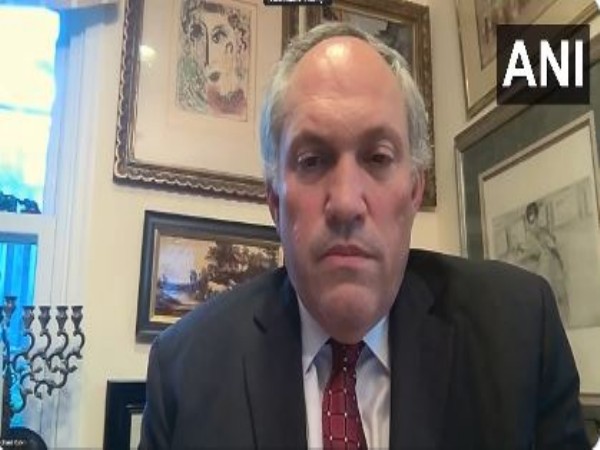

Former Pentagon official and American Enterprise Institute senior fellow Michael Rubin has launched a strong critique against former Canadian Prime Minister Justin Trudeau, accusing him of appeasing radical Sikh extremists and using India as a scapegoat instead of addressing Canada’s internal issues. Rubin also praised Indian Prime Minister Narendra Modi’s strategic diplomacy, describing his approach as influential and globally respected.
“The grievances about Hardeep Singh Nijjar and the Khalistan movement were not real,” said Rubin, criticizing Trudeau for “appeasing radical Sikh extremists in Canada and shifting blame to India rather than acknowledging domestic issues.”
Rubin commended Modi’s leadership, stating:
“Even Prime Minister Narendra Modi’s critics will acknowledge that he has grown tremendously in office and he’s now one of the most influential statesmen not only in Asia but in the world. The fact of the matter is that this magnanimity is strategic and it also forces the Canadians to recognise that the problem all along was in Canada and not with India. So, kudos to Prime Minister Modi for this strategy and for rejoining and agreeing to go to Alberta and the fact of the matter is that a strong relationship between India and all of North America is within everybody’s interests, especially given the rise of China.”
On the issue of Khalistani extremism, Rubin called for decisive and coordinated action from Canada:
“It is so essential that India continued to press Canada to address the Khalistan movement head-on — to designate the Khalistan movement and extremists as terrorists, to uproot terror finance and to stigmatize forever these groups that really have no popular legitimacy back home in Punjab or for that matter, among the larger peaceful Sikh community in Canada. It’s time to stop allowing the loud, extreme voices to win and instead recognise that those same loud, extreme voices oftentimes deserve to be in prison for their involvement in terror, tax fraud and organised crime in Canada, in San Francisco and elsewhere.”
Reiterating his condemnation of Trudeau’s policies, Rubin said:
“The grievances about Hardeep Singh Nijjar and the Khalistan movement were not real. They were exaggerations that Justin Trudeau amplified…Justin Trudeau may have wanted so much to appease radical Sikh extremists in various constituencies that he was willing to take an organised crime hit between various Sikh groups and mafias and blame an outside power for it, rather than acknowledge the problem and the fault was Canada’s alone. That is Justin Trudeau’s problem. But now that Justin Trudeau is gone and likely will never return to power, Prime Minister Carney is taking a sober approach and recognising that he is not going to be tied to Justin Trudeau’s fictions…”
Rubin’s remarks come as Indian Prime Minister Narendra Modi accepted Canadian Prime Minister Mark Carney’s invitation to attend the G7 Summit in Alberta from June 15 to 17. He interpreted Modi’s participation as a sign of confidence and transparency.
“India has nothing to hide,” Rubin remarked.
Speaking to media, Rubin drew a comparison between Carney and Trudeau, stating:
“Canadian PM Mark Carney originally is a banker. He understands the importance of India. Justin Trudeau was a politician who peddled in image and imagination, and therefore it makes sense that Carney wants to restore maturity to the relationship.”
“It actually makes sense for Prime Minister Modi to show that the problem was not Canada itself, but the immaturity and unprofessionalism of Justin Trudeau,” he added.
Rubin highlighted India’s readiness for constructive engagement, akin to its cooperation with the U.S., saying:
“What Prime Minister Modi is showing is that India has nothing to hide. If you’re going to have a serious law enforcement dialogue, it’s got to be two-way. We’ve got to talk about illegal immigration into Canada, terror finance in Canada, radical Sikh mafias and how the Khalistan movement is tied to organised crime and terrorism.”
Rubin also warned about the broader consequences of harboring extremist elements:
“When you give safe haven to any terror group, ultimately, your own interests are going to be subverted.”
He concluded by criticizing the historical tolerance of Khalistan elements by Canadian leadership:
“Justin Trudeau and frankly Pierre Trudeau before him, by embracing and tolerating the Khalistan movement in the face of some of the worst terrorist attacks in the 20th century, what they did is ultimately undermine Canada’s moral authority and its strategic importance.”