

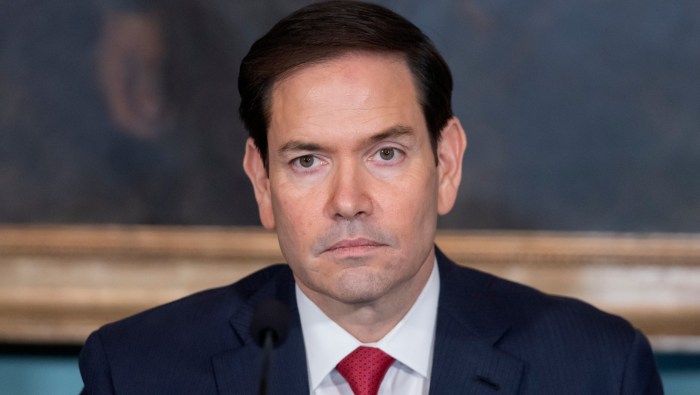

MUNICH — The diplomatic friction between Washington and New Delhi intensified this weekend as US Secretary of State Marco Rubio publicly claimed that India has agreed to stop buying “additional” Russian oil. These comments, made on February 14, 2026, come just days after the Trump administration announced a historic trade deal that slashed tariffs on Indian goods.
While the US treats this as a solidified pledge, the Indian government has maintained a calculated silence on the specifics of the oil “commitment,” instead doubling down on its right to choose its energy partners.
1. Rubio’s Claim in Munich
Speaking to global leaders, Rubio linked India’s energy pivot directly to the broader Western effort to isolate Moscow.
“In our conversations with India, we’ve gotten their commitment to stop buying additional Russian oil.” — Marco Rubio, US Secretary of State
Rubio’s phrasing—specifically the use of the word “additional”—suggests that while existing contracts might be honored, the US expects India to refrain from new spot-market purchases or expanded volume.
2. The Trump Trade Deal & “Tariff Carrot”
The US claim is rooted in an Interim Trade Agreement announced on February 6, 2026. Under the deal:
- Tariff Cuts: Reciprocal tariffs on Indian exports were slashed from 50% to 18%.
- Penalty Removal: President Trump signed an executive order lifting a 25% punitive levy that had been imposed on India in August 2025 specifically as a penalty for Russian oil imports.
- The Condition: The White House Joint Statement explicitly stated that this relief was “in recognition of India’s commitment to stop purchasing Russian Federation oil.”
3. Jaishankar’s Defense of “Strategic Autonomy”
Appearing on the same stage in Munich alongside German Foreign Minister Johann Wadephul, S. Jaishankar refused to directly confirm or deny Rubio’s assertion. Instead, he framed India’s energy policy as a matter of cold, commercial logic.
- Market Dynamics: Jaishankar argued that oil companies (both Indian and European) make choices based on availability, cost, and risk.
- Sovereignty: He emphasized that India remains “wedded to strategic autonomy,” a policy he described as deeply ingrained in India’s history.
- National Interest: Foreign Secretary Vikram Misri echoed this, stating that “national interest” remains the “guiding factor” for procurement to ensure energy security for 1.4 billion people.
4. Political Fallout in India
The perceived “deal” has triggered a political storm in New Delhi.
- Opposition Backlash: The Congress-led opposition has accused the Modi government of “capitulating” to US pressure. Leaders like Rahul Gandhi have criticized the move as one-sided, while others have described it as “treacherous.”
- Economic Pivot: As part of the trade framework, India has reportedly signaled its intent to purchase over $500 billion in US energy, ICT, and coal products over the next five years to diversify away from Russia.