

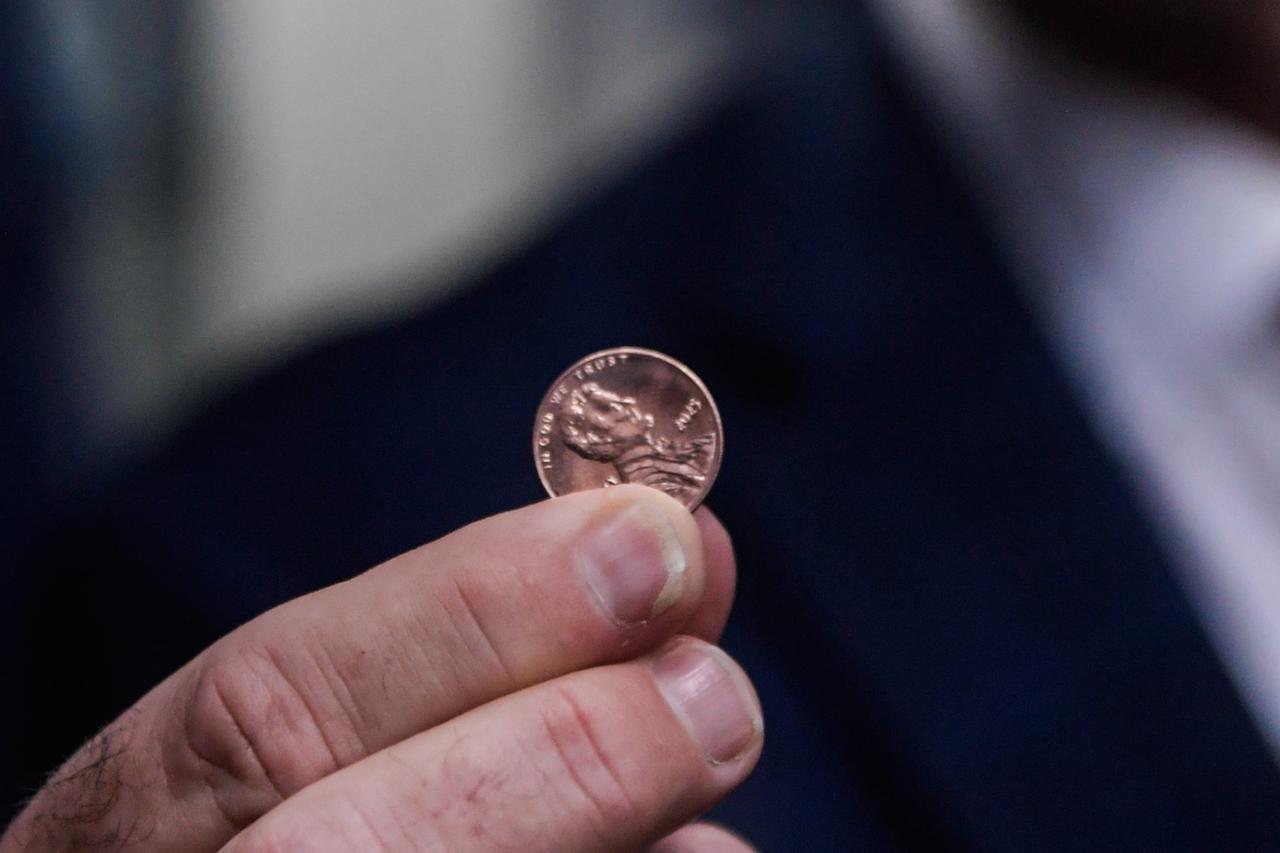

The United States has officially ended the production of the humble penny, marking the close of an era that lasted nearly 232 years. The final 1-cent coin intended for circulation was minted on Wednesday at the US Mint in Philadelphia, overseen by US Treasurer Brandon Beach.
Why the Penny Was Discontinued: Simple Economics
The core reason for the penny’s retirement is straightforward and financial: it simply costs too much to produce compared to its negligible value.
- Cost vs. Value: The penny reportedly costs nearly four cents (specifically, 3.69 cents as of 2024 figures) to manufacture and distribute. This means the US government incurred a loss on every single one-cent coin produced. The US Mint’s loss on penny production alone reached $85.3 million in fiscal year 2024.
- Presidential Order: The decision to cease production was initiated by US President Donald Trump, who ordered the Treasury Department to stop minting new pennies in February. The President articulated his reasoning on Truth Social, stating: “For far too long the United States has minted pennies which literally cost us more than 2 cents. This is so wasteful! I have instructed my Secretary of the US Treasury to stop producing new pennies.”
- Diminishing Utility: The coin is not widely used in transactions and is often found relegated to “junk drawers or coin jars,” reflecting its diminished purchasing power in the modern economy.
By halting the production of new pennies, the US Treasury expects to achieve an immediate annual savings of around $56 million.
Future of the Coin
While the production of new pennies for circulation has ended (with the final circulating coins expected to deplete their inventory by early 2026), the following key facts about the coin’s status remain:
- Legal Tender: The penny remains legal tender. Americans can continue to use the estimated 114 billion existing pennies in transactions.
- Rounding: For cash transactions, businesses are expected to begin rounding totals to the nearest five cents (the nearest nickel), a model successfully adopted by countries like Canada and Australia when they eliminated their lowest-denomination coins. Electronic and card payments will remain unaffected.
- Collectability: The news has prompted questions on social media about the penny’s future as a collectable item. The US Mint is expected to continue minting pennies specifically for collectors (numismatic purposes), provided the sales cover the cost of production.
A Long History Ends
The penny was first introduced in 1793 and was one of the first coins struck by the US Mint after it was founded. In those early days, a single penny held significant value, enough to purchase a candle, a piece of candy, or a biscuit.
The last coin to be discontinued by the US government prior to the penny was the half-cent in 1857.