

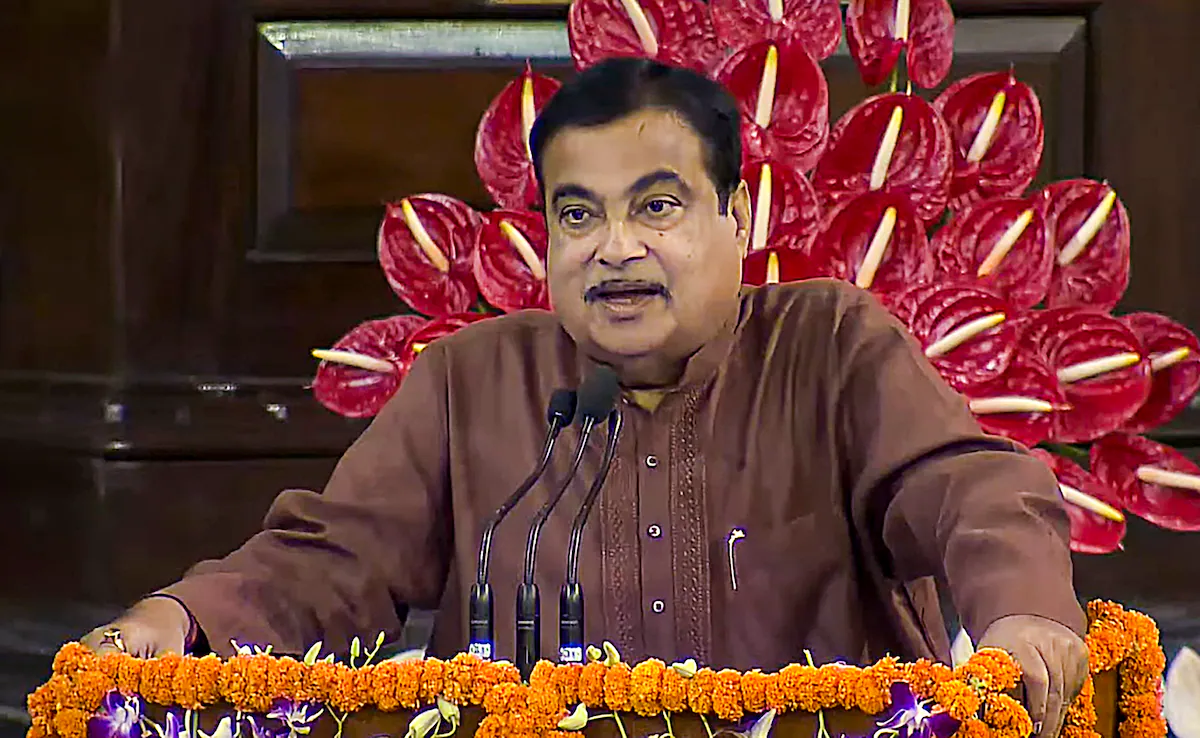

Nitin Gadkari, the Union Road Transport and Highways Minister on Monday, said that the pricing of electric cars (EVs) in India are anticipated to be the same as those of petrol-powered vehicles in the next four to six months.
Gadkari spoke at the 20th FICCI Higher Education Summit 2025 and said that India’s reliance on fossil fuels is bad for the environment and costs a lot of money. He stressed the need to switch to clean energy.
Gadkari added, “In the next 4–6 months, the cost of electric vehicles will be the same as the cost of gasoline vehicles.” This shows that the government is committed to making EVs cheap for everyone.
India’s high cost of importing fuel and push for green energy
Gadkari said that India spends around ₹22 lakh crore per year on fuel imports, which is a big problem for the economy. He said again that switching to electric vehicles (EVs), biofuels, and green energy projects is important for both the environment and the country’s economy.
He also said that making ethanol from corn has made Indian farmers ₹45,000 crore, which shows how clean fuel projects can help rural areas and the farming sector directly.
India’s car industry wants to be the best in the world.
The Union Minister was sure that India’s car industry would become the biggest in the world in the next five years.
“When I became the minister of transportation, the Indian car sector was worth ₹14 lakh crore. He stated, “It has now grown to ₹22 lakh crore.”
The United States is currently the world’s largest car market, at ₹78 lakh crore. China is second with ₹47 lakh crore, and India is third with ₹22 lakh crore. Gadkari claimed that the gap will keep closing quickly because of the quick growth of EV technology, sustainable fuels, and Make-in-India projects.
EV Price Parity: A Big Change for India’s Mobility Industry
The predicted pricing difference between EVs and gasoline cars is a big step forward for India’s green transportation program. The change is anticipated to help the government reach its net-zero goals by cutting carbon emissions, getting more people to buy electric vehicles, and getting more private investment.
India’s shift to electric transportation might speed up a lot in the next several months as battery prices drop and charging stations become more common across the country.