

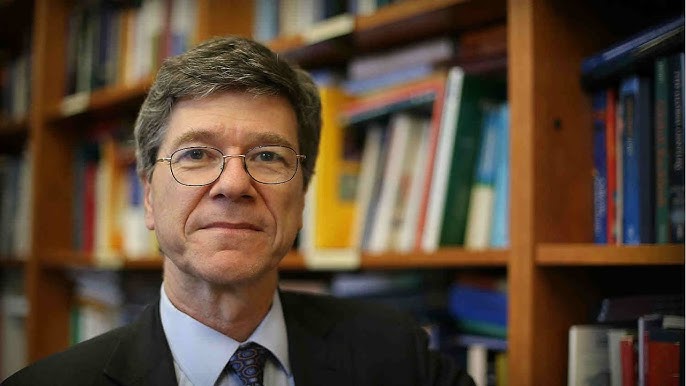

NEW DELHI – Jeffrey Sachs, a well-known American economist, has warned India strongly not to anticipate long-term security or economic benefits from working with the United States. Sachs’s statement came after US President Donald Trump decided to put a 50% tax on goods coming from India, which some people said was unfair because it hurt India’s ability to buy Russian energy.
Sachs was very critical of US foreign policy against India in a recent interview with Hindustan Times. “Politicians in the US don’t care at all about India.” “Please understand this,” he said, adding that “India is not going to get long-term security by siding with the US in the Quad against China.” Sachs instead stressed that India is a “great power” with its own place in the world and should not be utilized as a pawn in geopolitical conflicts.
The economist also told India to be honest about its economic ties with the US. He said that New Delhi might want to be a significant partner in helping the US rely less on Chinese supply chains, but it shouldn’t expect a “great trade relationship” with Washington. He remembered saying, “Don’t count on that,” while he was in India in the spring.
India’s Reaction to Trump’s Tariffs
The Trump administration put the tariffs in place because India was still buying Russian crude oil. The action basically quadrupled the current duties, making India’s exports to the US one of the most severely taxed, along with Brazil. Experts have called the move “hypocritical” because other countries, like China, are still trading with Russia but are not facing the same sanctions. The tariffs also come at a time when the two countries were supposed to be close to reaching a trade deal.
In reaction, India’s Ministry of External Affairs (MEA) said that the new tariffs were “extremely unfortunate.” The MEA said again that India’s oil imports are based on market conditions and are necessary to keep the energy supply safe for its 1.4 billion population. The statement ended by saying that India will do everything it needs to do to preserve its own interests.