

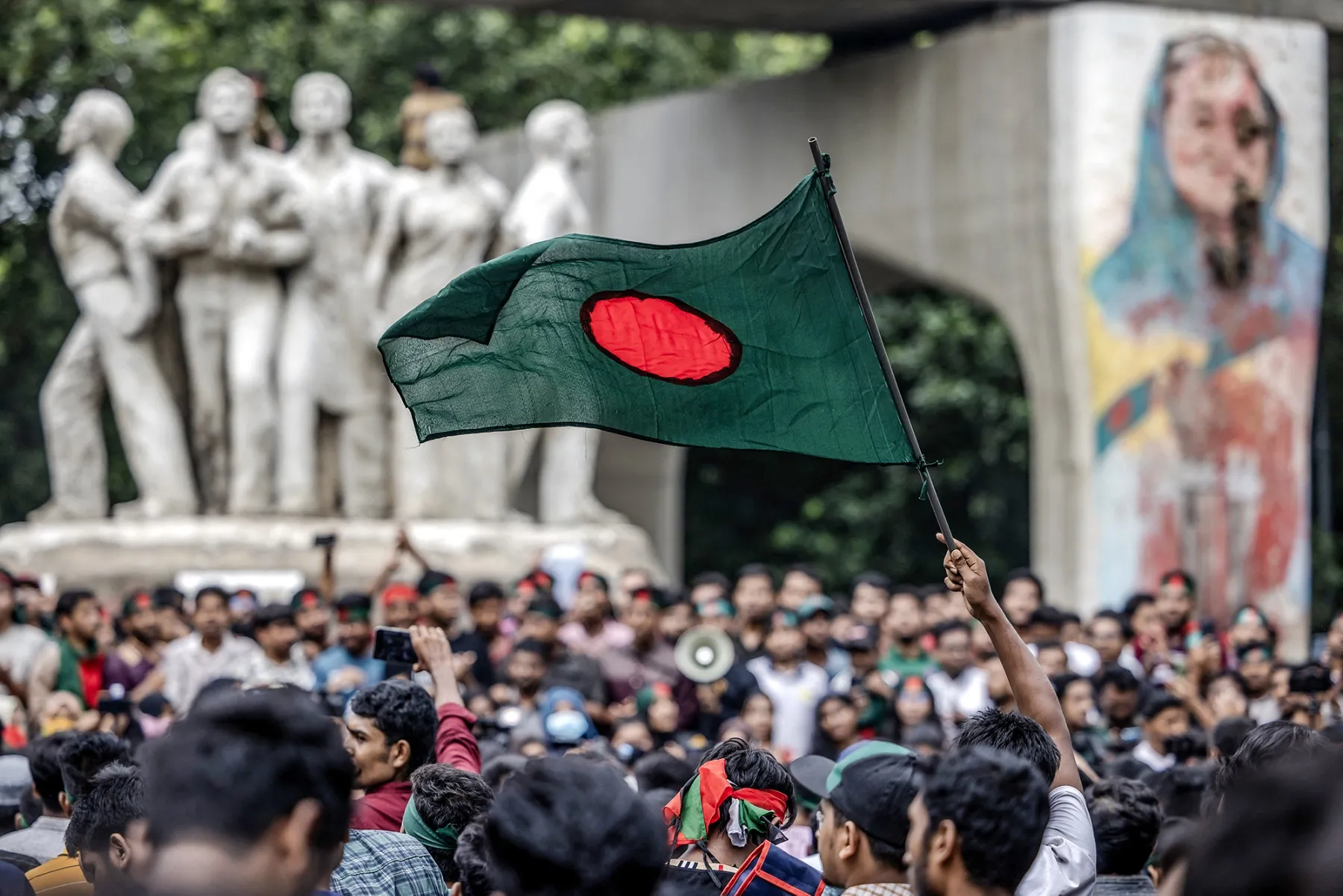

The National Citizen Party (NCP), the student-led political force born from the July Uprising that ousted Sheikh Hasina, is facing a significant internal crisis. The party is currently divided over ongoing discussions regarding an electoral alliance and seat-sharing deal with the Islamic conservative party, Jamaat-e-Islami, for the upcoming February 2026 national elections.
Prominent Resignation: Tasneem Jara to Run Independent
In a major blow to the party’s unity, prominent NCP leader Tasneem Jara announced she is rejecting the party’s candidacy.
- Independent Bid: Jara will now contest the Dhaka-9 seat as an independent candidate.
- Reasoning: In a social media post, Jara stated that “current realities” made it impossible to run under a specific party or alliance banner, though she remains committed to building a “new political culture.”
Internal Backlash Against the Alliance
Senior leader Samanta Sharmin has also issued a scathing critique of the proposed partnership with Jamaat-e-Islami. Her opposition highlights a fundamental ideological rift:
- Ideological Incompatibility: Sharmin argued that Jamaat is not a “reliable ally” and that their conservative ideology conflicts with the NCP’s core vision of a “Second Republic” built on justice and reform.
- Obstruction of Reform: She accused Jamaat of hindering the reform process by insisting on Proportional Representation (PR) in the lower house, a move the NCP convener previously labeled as a deal-breaker.
- Commitment to 300 Seats: Sharmin reminded the leadership that the NCP had originally pledged to field single candidates independently across all 300 constituencies.
“Any alliance with either BNP or Jamaat would mean deviating from NCP’s organisational and political policies.” — Samanta Sharmin, NCP Senior Leader
Key Sticking Points in the Alliance Talks
| Issue | NCP Position | Jamaat-e-Islami Position |
| Constitutional Vision | Establishment of a “Second Republic” | Islamic conservative framework |
| Electoral System | Focus on reform and constituent assembly | Proportional Representation (PR) |
| Independence | Originally planned to contest all 300 seats | Seeking seat-sharing and alliances |
Growing Discontent Among Female Leaders
The division appears particularly sharp among the party’s female leadership. Many who stood at the forefront of the July Uprising fear that allying with a conservative religious party would compromise the progressive and justice-oriented goals of the student movement.
As the February 2026 election draws closer, the NCP faces a critical moment: maintain its independent identity as the face of the “Second Republic” or risk fragmentation by entering traditional power-sharing alliances.