


ISRAEL – The United Nations Security Council (UNSC) has, for the first time, directly linked The Resistance Front (TRF), a proxy group for the Pakistan-based Lashkar-e-Taiba (LeT), to the terrible terror attack that happened on April 22, 2025, in Pahalgam, Jammu and Kashmir. This is a big step forward in India’s diplomacy. This is a big win for India’s ongoing fight against cross-border terrorism. It is part of the Security Council’s monitoring team’s biannual report on sanctions against al-Qaeda and the Islamic State.
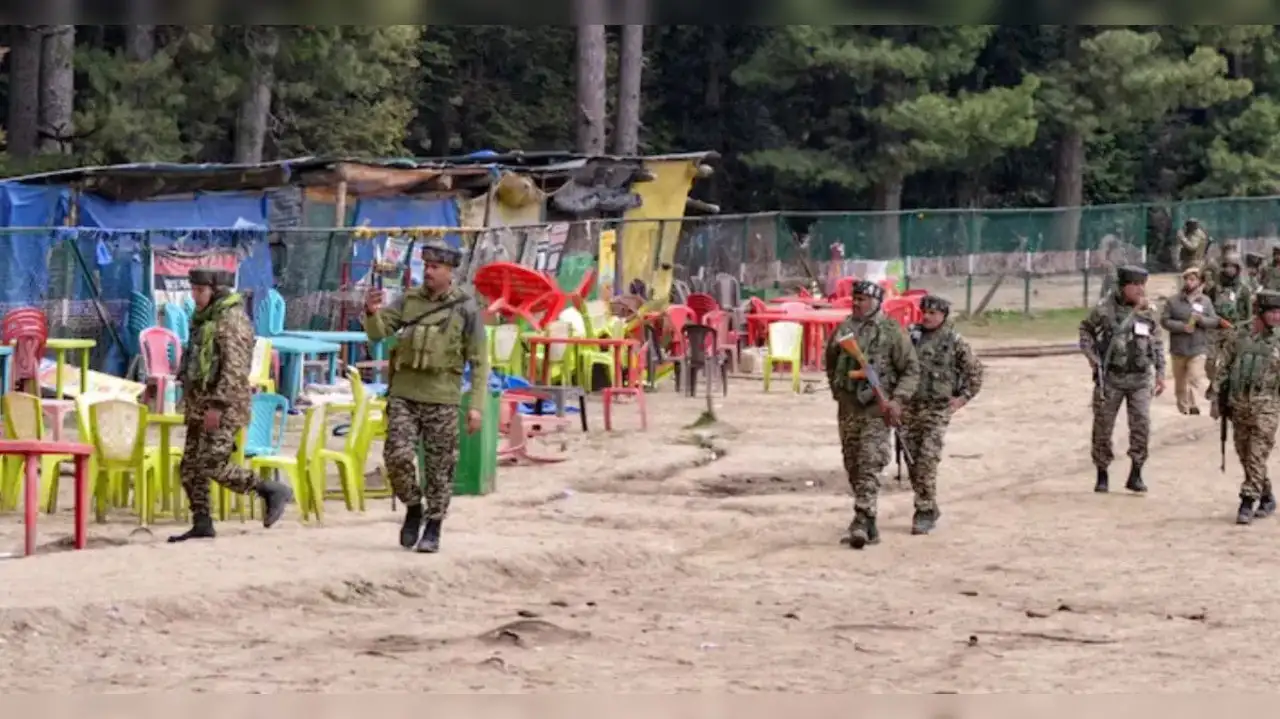
The Monitoring Team (MT) of the 1267 Sanctions Committee sent a report on July 29, 2025, that said, “On April 22, five terrorists attacked a tourist spot in Pahalgam, Jammu and Kashmir.” Twenty-six people who weren’t soldiers died. That same day, The Resistance Front (TRF) said they were responsible for the attack and also released a picture of the scene. It also said, “The claim of responsibility was made again the next day.” But on April 26, TRF took back its assertion. TRF did not get back to us, and no other group said they were responsible. The relationships between regions are still weak. Terrorist groups could take advantage of these regional tensions.
Getting over Pakistan’s problems and China’s help
It’s especially interesting that TRF was named because Pakistan, which is not a permanent member of the UNSC, tried to stop any mention of TRF or even Pahalgam in a press statement from the Security Council three days after the attack. Ishaq Dar, who was Pakistan’s foreign minister at the time, even bragged in parliament about how he had effectively removed the TRF reference from that statement. But the MT report, which all members of the Security Council, including Pakistan and its close ally China, agreed on, could not be stopped in the same way. People regard Pakistan’s failure to stop TRF from being included in a consensus document as a big diplomatic failure for Islamabad.
The study included a clear but subtle allusion to Pakistan’s long-standing tactic of denial. It didn’t name any specific countries, but it did say that one UN member state said the Pahalgam attack “could not have happened without Lashkar-e-Tayyiba (LeT) support, and that there was a relationship between LeT and TRF.” Another member state said the “attack was carried out by TRF, which was synonymous with LeT.” People who knew about the situation said that these two countries were India and the United States, respectively. The report also added, “Yet one member state rejected these views and said that LeT was defunct,” which clearly refers to Pakistan’s official position that LeT is no longer functioning, even though it is still operating on Pakistani soil.
Wider Effects and Pressure from Other Countries
The US called TRF a Foreign Terrorist Organization (FTO) and a Specially Designated Global Terrorist (SDGT) on July 17, 2025. This UN report follows that decision and also mentions the Pahalgam incident. India’s claim that TRF is a terrorist group and a front for LeT is greatly strengthened by this dual recognition at important international forums.
The addition of TRF and the clear connection of the Pahalgam attack to groups based in Pakistan are the first times since 2019 that Lashkar-e-Taiba-linked action has been included in a UNSC report. For almost ten years, China, a permanent member of the Security Council, used “technical holds” to stop India from putting Pakistan-based terrorists on the list. This included Masood Azhar, the head of Jaish-e-Mohammed (JeM). China’s choice not to prohibit the TRF reference in this consensus report suggests a possible change or further pressure from other countries.
Indian officials see this as a key move to break Pakistan’s “strategy of plausible deniability,” which uses secular and modern names like “The Resistance Front” or “People Against Fascist Front” for its jihadi proxies to hide their true origins and make terrorist activities in Jammu and Kashmir look like they are coming from the area.
After the incident in Pahalgam, India started “Operation Sindoor” on May 7, 2025. This involved military strikes on terrorist infrastructure in Pakistan and Pakistan-occupied Kashmir. This led to four days of heavy strikes and counterstrikes before both sides agreed to stop military actions on May 10, 2025.
Since December 2023, India has been working closely with the 1267 Sanctions Committee, giving them detailed reports on TRF’s actions and affiliations to LeT. In mid-May 2025, a group of Indian officials went to the US to inform the monitoring team and other partner countries. They made a solid case for TRF’s identification as a global terrorist group. This new UN report backs up India’s ongoing diplomatic and intelligence work.