

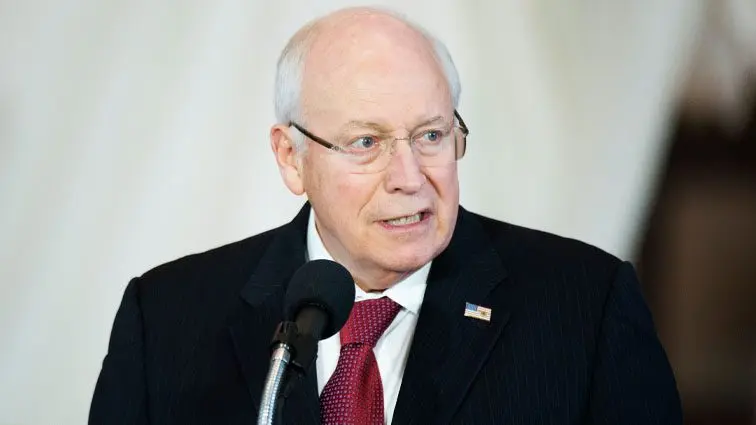

Dick Cheney, the hard-charging conservative who became one of the most consequential and polarizing figures in modern American political history, has died. The former Vice President of the United States passed away on Monday, November 3, 2025, at the age of 84.
According to a statement released by his family on Tuesday morning (local time), Cheney died due to complications of pneumonia and cardiac and vascular disease. Cheney had battled cardiovascular disease for much of his adult life, surviving multiple heart attacks and undergoing a heart transplant in 2012.
A Career Defined by Power and Influence
Cheney’s political career spanned over three decades, marked by immense influence in multiple Republican administrations:
| Role | Administration / Years Served | Significance |
| Vice President | George W. Bush (2001–2009) | Redefined the role, becoming the chief strategist and architect of the “War on Terror.” |
| Secretary of Defense | George H.W. Bush (1989–1993) | Led the armed forces during the Persian Gulf War (Operation Desert Storm). |
| White House Chief of Staff | Gerald Ford (1975–1977) | Became one of the youngest individuals to ever hold this powerful position at the age of 34. |
| U.S. Congressman | Wyoming (Served six terms starting in 1978) | Served as Wyoming’s sole representative in the U.S. House. |
The family’s statement hailed his decades of service, describing him as a “noble giant of a man” and expressing gratitude for his contributions to the country.
Redefining the Vice Presidency in the Post-9/11 Era
Cheney’s two terms as the 46th Vice President alongside President George W. Bush were particularly historic, largely defined by the “War on Terror” following the September 11, 2001, attacks.
- Chief Strategist: Cheney recast the Vice Presidency from a ceremonial role into a powerful network that profoundly influenced policy, particularly on Iraq, presidential powers, and counter-terrorism.
- Controversial Policies: He was a staunch defender and primary architect of controversial policies, including the push for the Iraq War based on faulty intelligence regarding weapons of mass destruction, the expansive use of domestic surveillance (like the warrantless Stellar Wind program), and the endorsement of “enhanced interrogation” methods (which critics defined as torture).
- Security Concerns: His heightened role in the age of terrorism was underscored by the revelation that he had the wireless function of his defibrillator turned off out of fear that terrorists could remotely send his heart a fatal shock.
Later Years: Turning Against Donald Trump
In a significant and highly publicized shift, the staunchly conservative Cheney became one of the most vocal critics of his own party’s populist figurehead, Donald Trump, later in his life. This criticism intensified after his daughter, Liz Cheney, became a leading Republican examiner of Trump’s attempts to overturn his 2020 election defeat and his actions during the January 6, 2021, Capitol riot.
- Trump Condemnation: In a powerful television advertisement for his daughter, Cheney issued a scathing assessment: “In our nation’s 246-year history, there has never been an individual who was a greater threat to our republic than Donald Trump… He is a coward.”
- Voting for Democrats: In a final political twist that shocked many, Cheney announced that he would vote for the Democratic presidential candidate, Kamala Harris, against Donald Trump in the 2024 election, prioritizing traditional conservative values and the preservation of democratic institutions over party loyalty.