

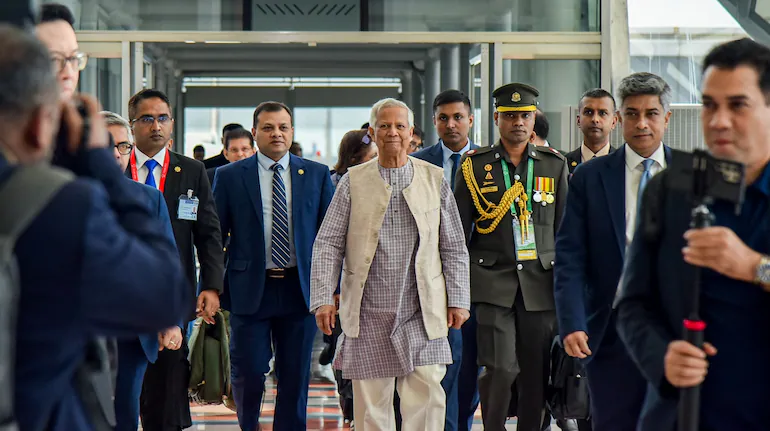

DHAKA — Just 72 hours before Bangladeshis head to the polls for the first time since the “Monsoon Revolution,” the country’s interim government is preparing to sign a sweeping trade agreement with the United States. Commerce Secretary Mahbubur Rahman confirmed that a high-level delegation will finalize the pact in Washington, D.C., on Monday, February 9, 2026.
The rush to seal the deal has ignited a firestorm of criticism from business leaders and political observers, who question the “extreme secrecy” of an agreement that will bind the hands of the incoming elected government.
1. The “Secrecy” Row: NDA Under Scrutiny
Unlike the recent highly-publicized trade deals signed by India and the UAE, the Bangladesh-U.S. pact is shrouded in mystery.
- The Gag Order: Dhaka has signed a Non-Disclosure Agreement (NDA) with Washington, preventing any draft of the agreement from being shared with the public, parliament, or industry stakeholders.
- Industry Alarm: The BGMEA (Bangladesh Garment Manufacturers and Exporters Association) has expressed deep concern, with Senior VP Inamul Haque Khan stating that those most affected by the deal “remain in the dark.”
- Timing: Critics argue that an unelected interim administration should not be signing long-term strategic treaties at the “twilight” of its tenure.
2. The Economic Stakes: Chasing a 15% Tariff
The primary motivation for the rush appears to be the India-U.S. Trade Deal signed on February 2, which slashed tariffs on Indian goods to 18%.
- The Current Gap: Bangladesh currently faces a 20% reciprocal tariff (down from a peak of 37% in early 2025).
- The Goal: The Yunus government is reportedly pushing to lower this to 15% to ensure Bangladeshi garments remain competitive against a resurgent Indian textile sector.
- The “Cotton-for-Garments” Clause: Speculation suggests the U.S. is offering duty-free access for apparel specifically made using American cotton, a move designed to boost U.S. agricultural exports.
3. Washington’s Demands: Beyond Just Tariffs
Reports from Prothom Alo and trade analysts suggest that the U.S. “price” for lower tariffs includes significant geopolitical and economic concessions:
- Military Procurement: Washington is reportedly pressing Bangladesh to increase purchases of U.S. military equipment and reduce its long-standing reliance on Chinese hardware.
- Market Access: Demands include easier entry for U.S. automobiles without extra local certifications and a permanent moratorium on e-commerce tariffs.
- IPR Laws: Bangladesh may be required to implement much stricter Intellectual Property Rights (IPR) laws, which could impact the local pharmaceutical and software industries.
4. A Tale of Three Trade Deals (Early 2026)
| Feature | India-USA Pact | Bangladesh-USA Pact | India-EU Pact |
| Status | Signed Feb 2, 2026 | Signing Feb 9, 2026 | Signed Jan 27, 2026 |
| Effective Tariff | 18% | Target: 15% (Currently 20%) | 0% (Duty-Free) |
| Transparency | High (Publicly announced) | Low (Under NDA) | High |
| Key Trade-off | US Energy & Agriculture | US Cotton & Security Pivot | Labor & Environmental Standards |