

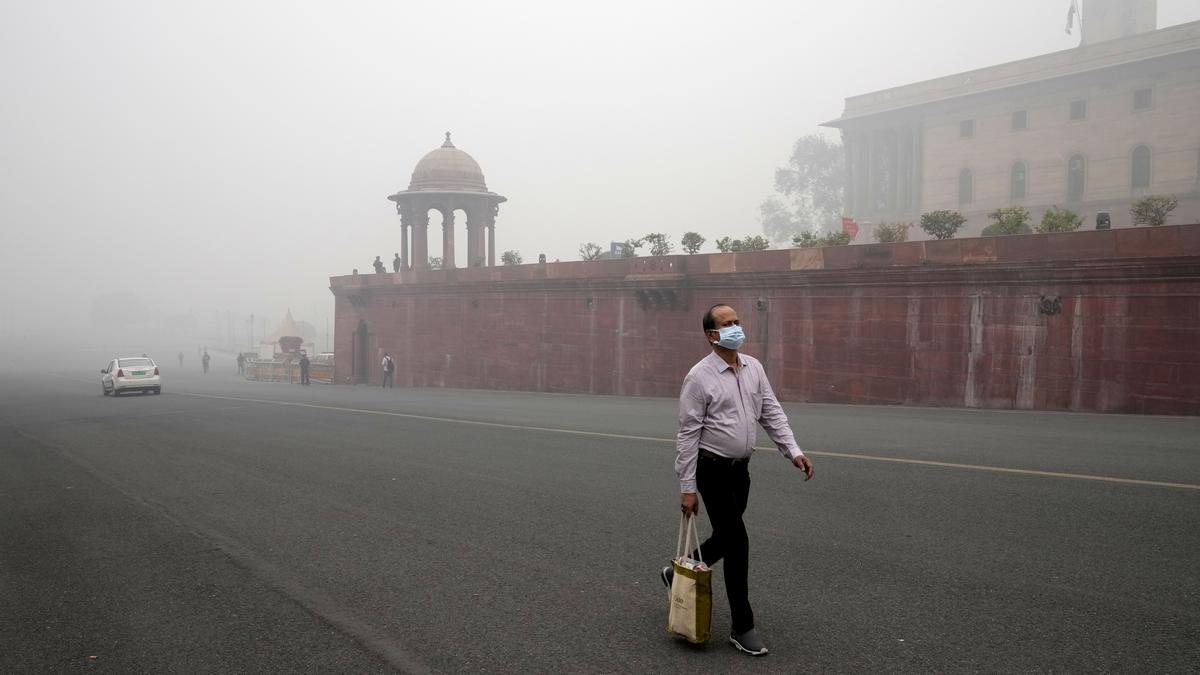

New Delhi: The Delhi government is preparing to launch its first cloud seeding experiment in a bid to induce artificial rain and reduce the city’s hazardous air pollution levels. The announcement was made by Environment Minister Manjinder Singh Sirsa on Friday.
Originally scheduled for early July, the pilot project has been rescheduled to early September following inputs from India Meteorological Department (IMD), IIT-Kanpur, and Indian Institute of Tropical Meteorology (IITM), Pune. The new timeline coincides with the retreating monsoon, when cloud conditions are expected to be more favourable.
“This is a scientific intervention to combat air pollution. If successful, it will open a new avenue for Delhi to deal with hazardous air quality, especially during the post-monsoon period,” said Sirsa.
The Department of Aerospace Engineering at IIT-Kanpur is implementing the ₹3.21 crore project. The Directorate General of Civil Aviation (DGCA) has provided full operational clearance. A Cessna 206-H (VT-IIT) aircraft has been equipped with cloud seeding instruments and will conduct five sorties over pollution hotspots including:
- Rohini
- Bawana
- Alipur
- Burari
And nearby regions in Uttar Pradesh like Loni and Baghpat.
During these sorties, silver iodide, sodium chloride, and other hygroscopic particles will be released below the cloud base to enhance the formation of ice crystals and stimulate precipitation.
The aircraft will avoid prohibited zones and conduct no aerial photography, in compliance with DGCA guidelines.
🌧️ What is Cloud Seeding?
Cloud seeding is a form of weather modification that releases particles into clouds to stimulate rainfall. The particles act as nuclei for moisture condensation, which can lead to rain. In Delhi’s case, the goal is to wash out airborne pollutants and improve air quality.