

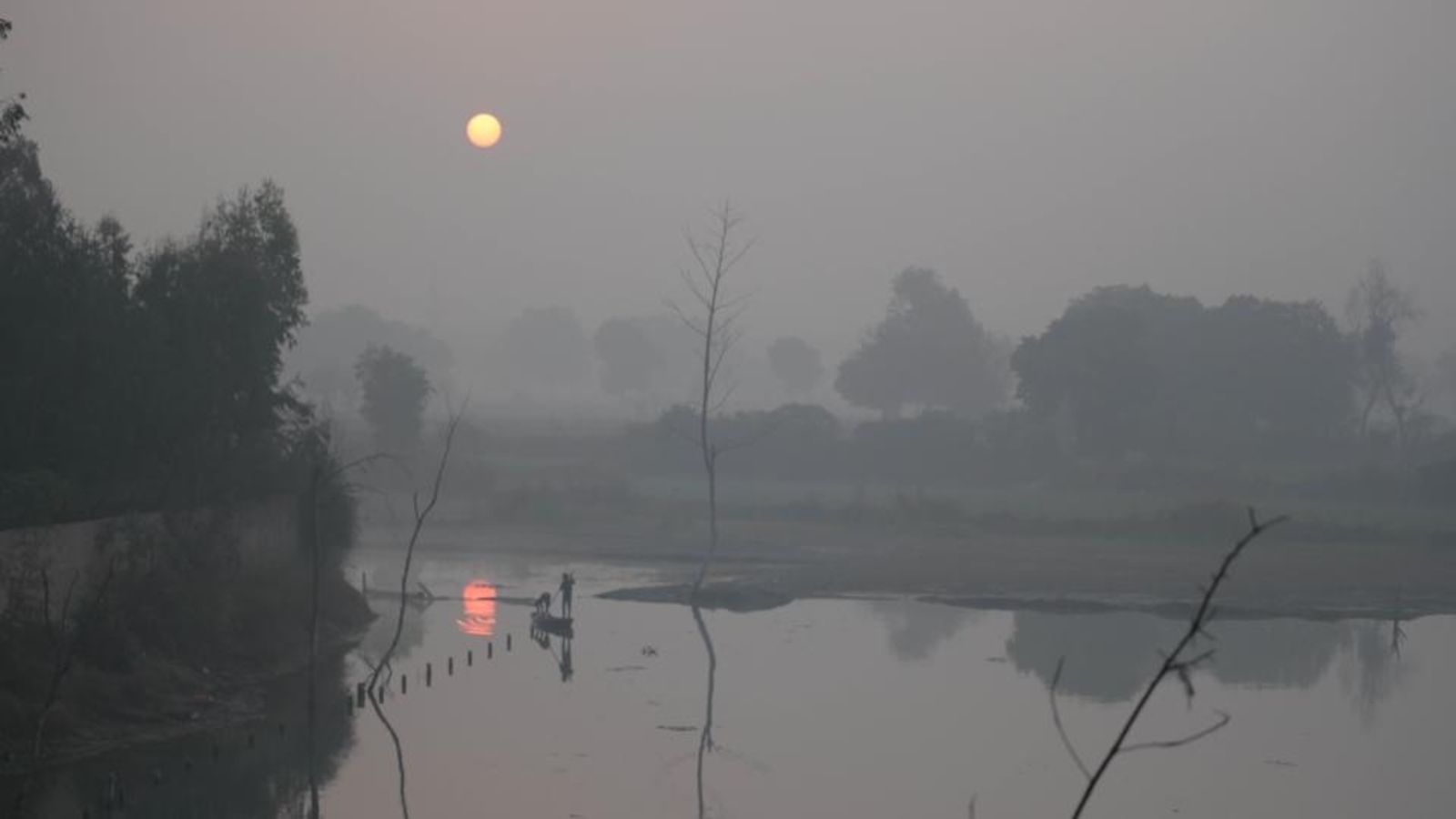

New Delhi: Delhi’s annual winter pollution crisis has tightened its grip once again, with the capital now engulfed in a thick layer of toxic haze. While air quality typically worsens after the monsoon, the real decline begins when winter temperatures drop—triggering a dangerous rise in particulate matter. This year, AQI levels have repeatedly crossed 400, falling under the ‘severe’ category that poses health risks even for otherwise healthy residents.
The worsening smog has led to widespread protests across the city. Demonstrators at India Gate and Jantar Mantar held placards reading “We Can’t Breathe”, with many wearing gas masks to draw attention to the hazardous air. Several protests turned tense, with reports of police detentions and the use of pepper spray to disperse crowds.
How Falling Temperatures Trigger Severe Pollution
As December begins, the temperature in Delhi has fallen to around 5°C, while AQI continues to stay above 300—well within the ‘very poor’ and ‘severe’ categories. This pattern repeats every winter due to temperature inversion: cold air traps pollutants near the ground, preventing dispersion and creating a stagnant layer of smog.
Fresh analysis from the Central Pollution Control Board (CPCB) and the India Meteorological Department (IMD) reveals a clear inverse relationship between temperature and AQI between October 1 and December 5, 2025. As temperatures gradually decline from around 20°C to single digits, pollution levels rise aggressively.
October brings moderate pollution, November sees a sharp spike into hazardous levels, and by December, the cold and still air locks pollutants in place—turning the city into a gas chamber.
What the Numbers Reveal
October: From Mild Smog to First “Severe” Spike
Early October temperatures ranged between 22°C and 25°C, and AQI remained relatively manageable at 80–150.
But as the month progressed and temperatures slipped to 18–20°C, AQI soared to 230–310.
On October 30, Delhi recorded its first major smog episode of the season, with AQI touching 373.
A key contributor during this period is stubble burning in Punjab and Haryana, which peaks in October and reduces by mid-November.
November: Pollution Hits Hazardous Levels
November ushers in the steepest deterioration in air quality each year.
- Early November temperatures: 16–19°C
AQI: 290–360 - Mid-November temperatures: 10–12°C
AQI recorded some of its highest readings this year:- 428 on November 11
- 418 on November 12
- 404 on November 13
- Late November temperatures: 8–10°C
AQI stayed dangerously high between 350–390
The sharp cooling, combined with low wind speed and high humidity, created ideal conditions for smog accumulation.
December: The Pollution Lock-In Begins
With the arrival of December’s coldest days, temperatures in the first week have dipped to 5–6°C. AQI has hovered between 300 and 370, and this trend is expected to worsen as the month progresses.
Winter inversion, stagnant air, and trapped pollutants mean that Delhi’s toxic haze is unlikely to lift anytime soon.