

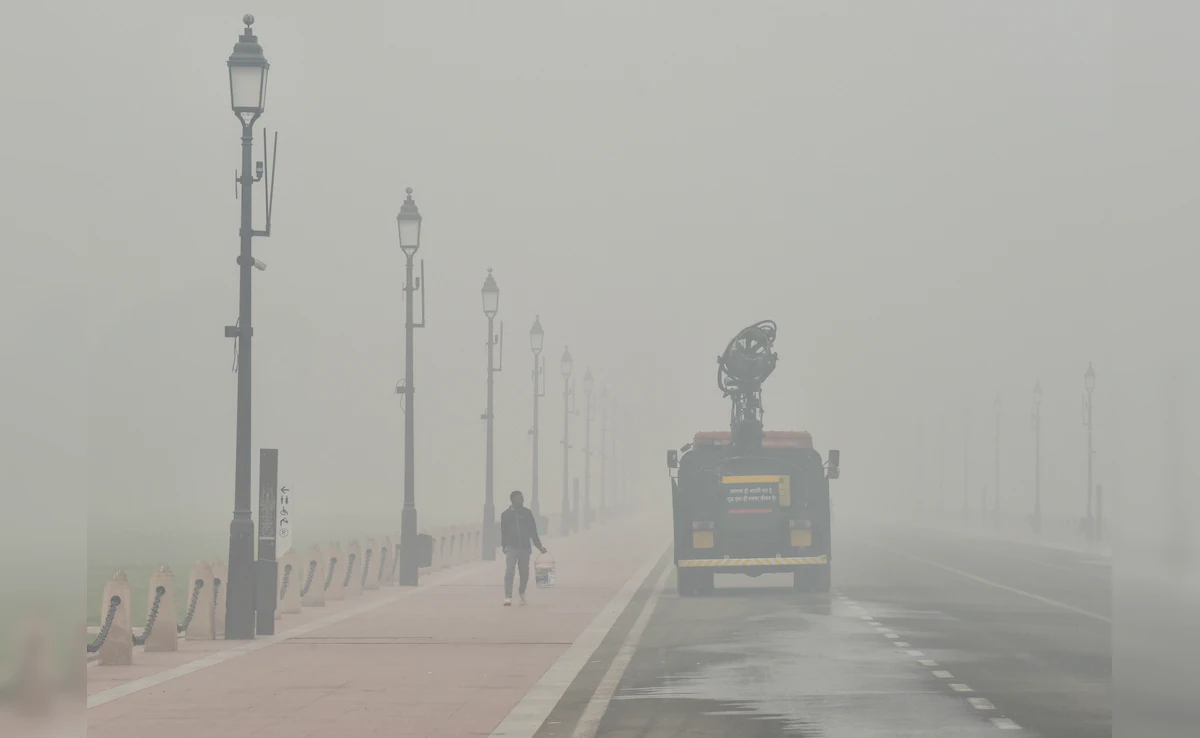

Northern India woke up to another smog-choked morning on November 8, as a thick haze continued to linger over the Delhi-National Capital Region (Delhi-NCR) and surrounding states. Data from the Central Pollution Control Board (CPCB) confirmed that numerous locations were reporting an Air Quality Index (AQI) ranging from ‘Poor’ to ‘Very Poor,’ underscoring the severity of the region’s pollution crisis.
According to CPCB standards, air quality is considered “good” when the AQI falls between 0 and 50, and it turns “severe” when the index crosses 400. On Saturday morning, readings across ten monitored locations remained far beyond the safe thresholds, highlighting widespread environmental stress across Delhi, Haryana, and Uttar Pradesh.
Delhi Tops the Pollution Chart
The capital city led the pollution chart, with several hotspots registering dangerously high AQI levels, placing them firmly in the “Very Poor” category—a level of pollution that can seriously affect even otherwise healthy individuals.
- As of 8 AM, ITO in Delhi reported the highest AQI at 373.
- Mundka was close behind with a reading of 363.
- Another key Delhi hotspot, Anand Vihar, also ranked among the most polluted areas, recording an AQI of 352.
Widespread Regional Degradation
The air quality crisis extended well beyond the immediate boundaries of the National Capital, impacting major cities and areas in neighboring states:
- In Ghaziabad, the Vasundhara area recorded an AQI of 353, making it one of the most polluted spots of the day.
- Noida’s Sector 62 followed closely with a reading of 309.
- In Western Uttar Pradesh, the Sardar Patel Inter College area in Baghpat remained among the worst-hit pockets, confirming persistent pollution across the region.
- Hapur’s HUDA Sector registered an AQI of 280, falling into the ‘Poor’ category.
Haryana also experienced extremely degraded air quality:
- Panipat’s Sector 18 logged an AQI of 310, hitting the ‘Very Poor’ threshold.
- Jind’s Police Line area reported an AQI of 294.
- Fatehabad’s HUDA Sector recorded 292.
- In Panchkula, Sector 6 logged 268, and Sirsa’s F Block reported an AQI of 225, both categorized as “Poor.”
Health and Government Action
In light of the worsening air conditions, health experts continue to strongly urge residents, especially vulnerable groups such as children, the elderly, and individuals with respiratory illnesses, to limit outdoor exposure as much as possible.
Responding to the crisis, the Delhi government and the Municipal Corporation of Delhi have taken action by revising office timings in the national capital to minimize the public’s exposure during peak pollution hours.