

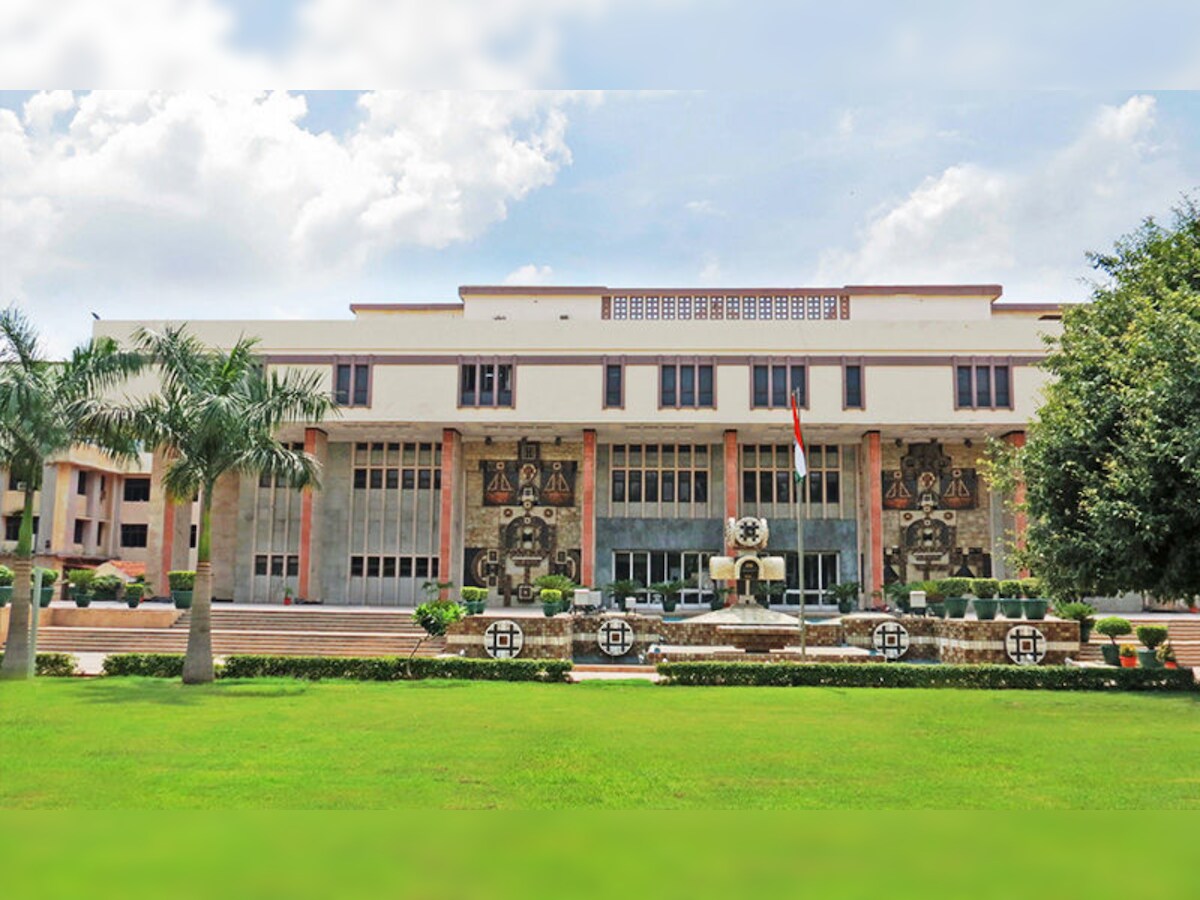

NEW DELHI, India – This week, the Delhi High Court got a lot stronger. On Thursday, Chief Justice D.K. Upadhyay swore in Vinod Kumar, Shail Jain, and Madhu Jain as new judges. With this new hire, the court now has 43 judges, which is less than the 60 justices it is allowed to have.
The Chief Justice of India Bhushan R. Gavai-led Supreme Court Collegium suggested these three judges’ nominations on July 1 and 2. On Tuesday, the Union administration formally approved these suggestions, paving the way for their promotion.
The Delhi Judicial Service welcomed all three new judges in 1992. Before they were promoted, they were all main district and sessions judges. Before this, Vinod Kumar worked at Karkardooma Courts, Madhu Jain worked at Tis Hazari Courts, and Shail Jain worked at Saket Courts.
These three judges were sworn in on Monday, along with six others. On that day, Justices V. Kameshwar Rao, Nitin Wasudeo Sambre, Vivek Chaudhary, Anil Kshetrapal, Arun Kumar Monga, and Om Prakash Shukla were sworn in as judges of the Delhi High Court. Their accession had already caused a big change in the judicial roster, which is the list of judges who are assigned to hear certain types of cases. This helped the court’s strength, which had been low before.
The Delhi High Court now has about 71.66% of its approved capacity thanks to the induction of these nine judges in just one week. This continual rise is projected to be very important in lowering the number of cases each judge has to deal with, which could speed up the resolution of cases that are still open.
The strengthened power has also caused the court to change how it works. There are now nine division benches, each with one senior judge and one junior judge. This is up from eight. Also, the number of judges who only deal with criminal matters has gone up from nine to ten. This shows that there is a purposeful attempt to deal with the backlog in different types of courts.