

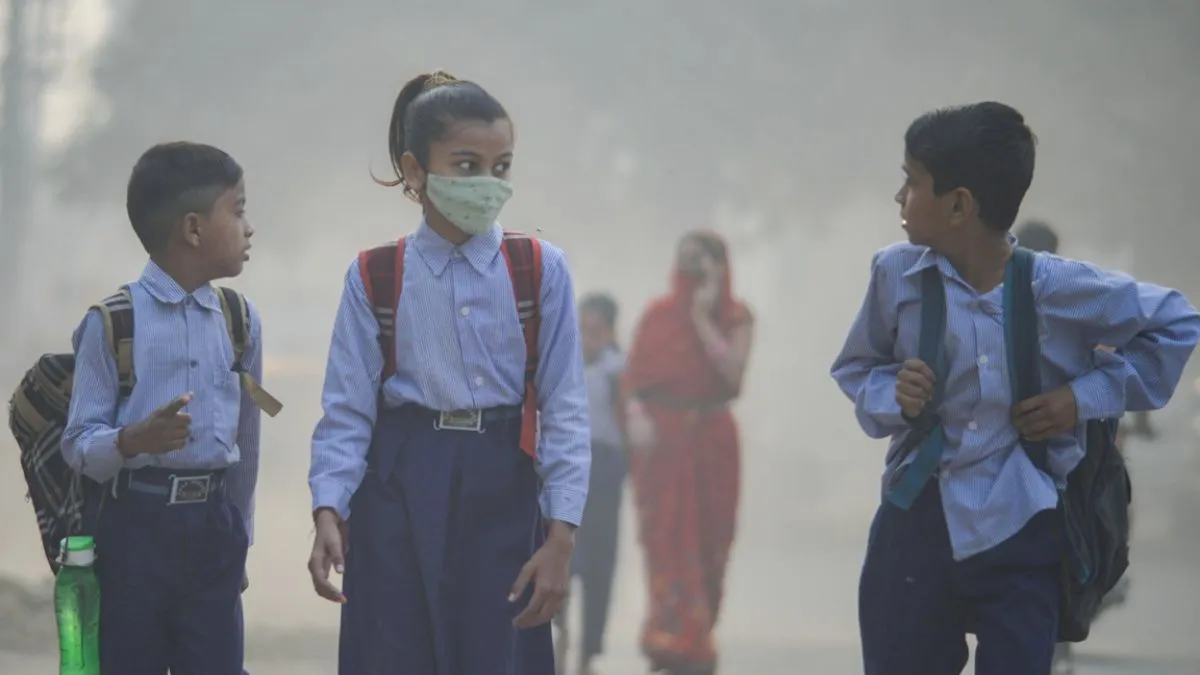

New Delhi: As Delhi continues to battle dangerously high pollution levels, the city government has announced a major initiative to safeguard students’ health. Air purifiers will be installed in 10,000 classrooms across government schools in the first phase of a citywide plan, Education Minister Ashish Sood confirmed on Friday.
The tenders for Phase 1 have already been floated, and the programme will be expanded to cover all government and aided schools in a phased manner.
“Air purifiers will be installed in 10,000 classrooms in Phase 1. We will cover all government schools gradually,” Sood said, underlining the administration’s commitment to student safety.
Children Most Vulnerable to Delhi’s Toxic Air
Medical experts have repeatedly warned that children are among the most vulnerable groups affected by air pollution. Students spend nearly five to six hours daily inside classrooms, and prolonged exposure to polluted air can impair lung development, weaken immunity, and negatively impact concentration, learning outcomes, and overall growth.
In recent weeks, several schools were forced to shift to online classes as Delhi’s Air Quality Index (AQI) hovered in the very poor and severe categories, highlighting the urgency of protective measures.
Delhi AQI Continues to Remain Hazardous
According to data from the Central Pollution Control Board (CPCB), Delhi’s overall AQI stood at 387 at 6 am on Friday, categorised as very poor. Areas such as Anand Vihar and Vivek Vihar recorded AQI levels of 442, the highest in the city, falling under the severe category.
Phase-Wise Implementation Across Schools
The Education Minister noted that Delhi has approximately 38,000 classrooms in government and aided schools. The installation of air purifiers will be carried out in stages, with funding coming from the environment cess. However, officials have not yet announced a detailed timeline for full implementation.
“This is not about campaigns. We are taking administrative action to actually protect children,” Sood emphasised.
Experts Caution: Purifiers Are Only a Partial Solution
While public health experts have welcomed the move, they caution that air purifiers alone cannot solve Delhi’s pollution crisis. The effectiveness of the initiative will depend on factors such as proper maintenance, classroom ventilation, outdoor exposure, and pollution during school commutes.
Experts stress that long-term relief for children will require broader pollution control measures, including vehicular emission reduction, construction dust management, and regional coordination to curb winter smog.
For now, the Delhi government’s air purifier plan offers some immediate relief to students as the capital struggles with worsening winter pollution and persistently high AQI levels.