

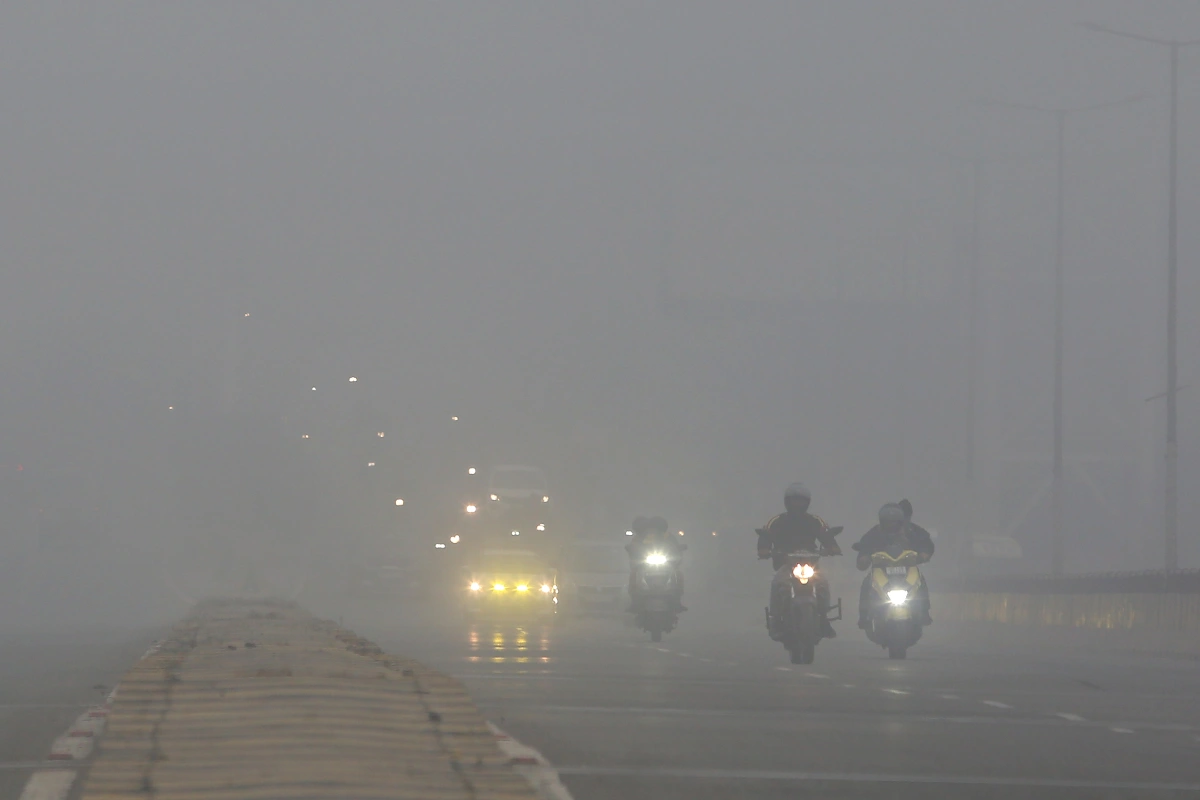

The relief of clear skies was short-lived for the national capital as air quality plummeted on Saturday, December 27, 2025, with the 24-hour average Air Quality Index (AQI) surging to 385. Just days after the revocation of GRAP-4 restrictions, the city is once again on the brink of a public health emergency, as nearly half of its monitoring stations recorded “Severe” levels of pollution.
The AQI Spike: A Return to the Red Zone
After dipping to a “Poor” 234 on Thursday, the air quality has deteriorated daily due to dropping wind speeds and an approaching Western Disturbance.
- Average AQI: 385 (at 4:00 PM), up from 332 on Friday.
- Severe Hotspots: Of the 40 monitoring stations, 20 logged AQI readings above 400.
- Worst Affected Areas:
- Vivek Vihar: 424 (Highest in the city)
- Jahangirpuri: 417
- Anand Vihar & Akshardham: 410
- Bawana: 404
Who is Responsible? Source Apportionment
Data from the Decision Support System (DSS) indicates that local urban emissions, rather than farm fires, are currently the dominant factors choking the city.
| Pollution Source | Contribution Percentage |
| Vehicular Emissions | 16.2% (Top internal source) |
| Industries (Delhi & Periphery) | 8.5% |
| Residential Emissions | 4.0% |
| Biomass Burning | 1.6% |
Neighboring Impact: Among the NCR districts, Jhajjar (Haryana) remained the single largest external contributor, accounting for 17.5% of Delhi’s total pollution load, followed by Sonipat and Rohtak.
Weather Outlook: Fog and “Yellow Alert”
The India Meteorological Department (IMD) has forecasted that the current “Very Poor” conditions are likely to persist through the New Year.
- Temperature: Saturday’s maximum was 22.2°C (1.8 degrees above normal), while the minimum settled at 7.8°C.
- The Fog Factor: Relative humidity hit 100% by Saturday evening, creating a dense “smog” blanket. A Yellow Alert has been issued for Sunday and Monday, with visibility expected to drop below 50 meters in the early morning hours.